


New models of connected care offer a transformation moment for most of our hospitals, but do these giant healthcare oil tankers have too institutional and cultural momentum to overcome?
On 16 October this year, TMR’s sister publication Health Services Daily will be putting on a new summit which looks specifically at emerging and innovative models of connected care which have the potential to reshape the future of how hospitals operate across this country.
Among the many immediate problems hospitals have operationally, being clogged up with patients who could be cared for outside the hospital environment is maybe the most immediate, and at the same time the one with the most potential to now change.
That is if hospitals, and their state government minders, can get their heads around better embracing the rapidly evolving world of connected-care models, and thinking harder about how to more rapidly build better connection to community-based care provision.
The problem isn’t technology. These new models work and we see them working spectacularly in pockets around the country where some of the more creative hospital networks are pushing the boundaries of a restrained funding environment.
It’s much more about culture, money (funding) and institutional thinking.
How do you begin to eat this elephant given the long history of our hospitals as the epicentre of our care system, as the devourer of the majority of our Medicare budget, and with so many political and personal careers at stake if they risk too much and get change wrong?
In the late 1980s, as a young journalist working on an electrical engineering magazine, I was sent to Tasmania to do a story on the Hydro Electric Commission of Tasmania. The organisation was one of the most highly tuned and efficient engineering groups in the world, mostly full of creative, energetic and highly skilled engineers. It was impressive.
The problem was they were all engineers who built dams.
The HEC wasn’t an electricity provider, it was a dam-building conglomerate. They only saw answers to Tasmania’s economic and energy problems as “build more dams”. They of course had no external perspective on the problem.
It obviously wasn’t the right way to go for Tasmania at that point in its economic evolution. Tasmania needed to develop alternative models for their economy, and a big one would end up being tourism, something that a voracious dam-building conglomerate wasn’t much aligned to.
You can see some of the patterns of culture and institution of the HEC in Tasmania in the late 1980s in Australia’s hospital sector today. There is a lot of history, culture, excellence in old means of care delivery, anchoring elements of our hospital system to its past – a past which we largely should be proud of, but now, we should be getting very wary of.
A recent post from an influential NHS systems thinker, David Moss, who was posting about the UK not Australia is, nonetheless, pretty relevant to our problem in Australia today.
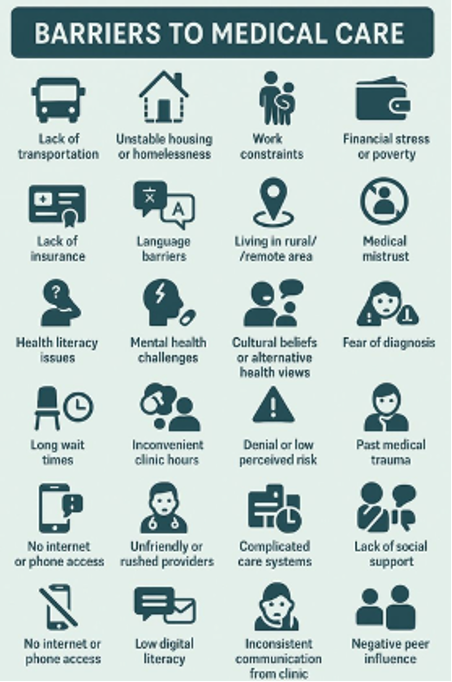
“People don’t ‘fail’ healthcare. They’re often just blocked by social conditions that healthcare hasn’t accounted for.
“This isn’t about noncompliance. It’s about no transport, no childcare, no stable housing, no trust, no safe time to be sick.
“These are social problems. And they’re the real reasons people can’t engage with care—not ignorance, not laziness, not cost alone.
“Yet clinical systems still design pathways assuming that if we just offer more services or spend more money, outcomes will improve.
Related



“But health doesn’t happen in the clinic. It happens in the neighbourhood, long before (or if) someone ever walks through the door.”
Moss isn’t just talking about hospitals, of course. But he’s mainly thinking about hospitals, and you suspect, all those policy wonks in government who are planning for more of them.
He asks his audience, “what needs to change in boardrooms?”
Boardrooms aren’t where community care is being planned. Boardrooms are where big institutions of care do their planning.
Moss goes on:
“Too often, power and control sit far from the lived realities of patients.
“We need:
– Investment in community-rooted care models, not just institutional ones;
– Inclusion of neighbourhood voices in decision-making;
– Metrics that reflect social impact, not just throughput or compliance;
– Systems that accommodate, not punish, social complexity.
“If healthcare wants different results, it must design for the world people actually live in—not the one we assume they do.
“It’s not about ‘fixing patients’, it’s about dismantling the barriers to what health can offer people.”
The offer of various new models of connected care is to close the gap between that patient stuck for whatever reason out in the community, or who turn up to their local hospital for care which doesn’t need a hospital.
A hospital with a great connected care framework can manage patients in the community a lot more and prevent a lot of them from turning up in ED when they don’t need too.
It’s clear that even such high-level and lofty system thinking is weighing on the minds of many of our policy people and our hospital leadership.
Some in our system are thinking hard about eating this elephant, at least.
Interestingly, often that thinking and experimentation is coming from outside the public health sector – the not-for-profits and the private providers. This is probably because both these care providers are far more at the coalface of the burning platform that is the failing economics of our current hospital paradigm. They need to act faster.
In response to the above Moss post, local hospital systems thinker, Rob Marshall (chief strategy officer with St Vincent’s Health) commented that St Vincent’s is hard at work attempting to reimagine both its at-home care offerings into the future.
Marshall says St Vincent’s would like to disrupt “the idea that a hospital is the best, safest or most convenient site for care (it’s often none of these) [and] reflect these concepts in the built environments of our health innovation precincts so they are genuinely part of the local neighbourhood and not an island surrounded by it”.
Sounds a lot like a more modern model for how to see our hospitals.
Stop building dams and think of those pesky wild rivers and valleys as tourism dollars, not ugly new lakes that make more electricity for your voters.
It’s not likely that public hospitals can stay in their institutional cocoon forever given the innovation, often loss-making innovation, that many of the private health insurers and hospital providers, and the not-for-profits like St Vincent’s are pursuing.
In the case of the private health insurers, their frustration is so palpable they are openly pushing the edges of the Health Insurance Act, by buying up and starting to vertically integrate in any way they can provider services: Medibank and Bupa have both committed to large bricks-and-mortar general practice networks in their strategies, to sit alongside already comprehensive telehealth offerings, and of course, private hospitals. They aren’t waiting for public hospitals to get better connected with primary care. They are going to try to do it themselves for their members.
Medibank’s bulk-billing private hospital is a particularly fascinating “push-the-envelope” experiment which illustrates just how innovative some of these private and not for profit providers are getting.
Bupa is even sizing up the idea of swallowing Healthscope and aligning it with its rapidly evolving community care offering, which includes telehealth and a GP network.
None of this is to say that there aren’t a lot of clever thinkers and doers in the public hospital system who aren’t trying for innovation in connecting their institutions much more tightly to local communities.
Victoria’s slowly evolving Virtual Emergency Department is proving out some of the more obvious value of connected care models, as contrained as it is by the hospital funding model, which rewards filling up real beds, not virtual ones.
And in a lot of the rural hospital networks you see decidedly guerilla-like tactics on the part of the local hospital administrators and boards to do all they can within a highly constrained funding paradigm to optimise the value of connected care models to manage things out in their communities.
A big issue is a culture of vertically integrated fear that exists in at least some of the state health systems.
You can walk into a big public hospital and talk on background about very practical solutions to the big problems like access block from mental health and aged care patients, but stepping out of line, or speaking out of turn in a state system can literally get you black-balled.
Everyone is a little bit scared. They’re also all very busy just keeping their heads above water with what they’ve been tasked with – doing a lot more with a lot less. Who has time to innovate in this environment?
Who might black-ball you, or make sure your career path isn’t what you’d planned, if you wander off the politically correct reservation?
Ultimately, it’s fear of the health minister in each state, or who you report to who reports to someone who ultimately reports to the health minister in some way, and what they want and need for you to do politically. And that is “behave”.
It’s not actually even the health ministers who are at fault here. It’s the system. A system in which the politics of healthcare are so raw and potentially vote-changing that anyone perturbing it at any level of the public hospital system can find themselves isolated.
In state health politics runs hard from the top to the bottom of the system. Everyone has to be cognisant of what they say and do, and what, ultimately, the minister and the government might think of what you say and do – even lower-level administrators can be targeted, but certainly at the higher levels of policy and management people have to be very politically aware.
Why is it so much more raw and deep-seated at the state level as opposed to the federal level?
It’s most likely that hospitals as we have known them, like those dams in Tasmania, are the ultimate symbols of success in state healthcare as far as voters are concerned – physical, giant, shiny manifestations of how much your state government cares about you, there in towering bricks and mortar like a pyramid, that no one can miss.
This all goes to culture and institution.
It somehow has to be set on a different path and fast.
One of the issues for Joe Patient who can’t afford to drive, park or pay for their local edifice to great state healthcare policy is that changing this long-established political dynamic from within the states is nigh-on impossible.
Big new hospital infrastructure equals votes in the next election.
So as much as we’d all love to say that our state politicians are uncaring, non-visionary numbnuts, they aren’t most of the problem (the odd good healthcare leader or premier who gets the health problem long-term wouldn’t hurt of course).
A carefully curated connected care strategy to balance care much more sensibly between hospitals and the community is a long-term strategy which does not talk to a state election cycle.
Potentially the most important strategy for unleashing the power of new connected care models in our state hospital system is what power the federal government and the Department of Health, Disability and Aged Care is prepared to try on the states via the next National Health Reform Agreement.
In simple terms, is the federal government and DoHDA, who understand what needs to be done and the power of a better connected hospital system — everyone does in fact, even the state politicians – prepared to say in the case of connected care in the next NHRA, “no play, no pay”?
Is the federal government prepared to make its not insignificant contribution to state hospital funding, dependent on some important modifications to the hospital funding framework, which would significantly incentivise the states to move forward with these new models?
And if they don’t play along, because the new way of doing things is tied directly and proportionally to funding money, they don’t get paid – at least they don’t get paid as much as they could be.
It’s a very tricky thing to try, because if the states want to try to call the feds’ bluff, things in the hospital system could turn out pretty messy. As usual, our federated healthcare system isn’t helping too much.
Everyone needs to keep their ear to the ground on what is actually going to be in the next NHRA.
Do what you can to promote innovation and change where you can and when you can, being careful not to be caught out of course, if you’re in a state health department.
If things don’t start changing soon, the window for hospital transformation will be lost in a mess of failing and unaffordable state health systems that have missed the obvious revolution that is community based connected care.
Note: If you’re interested in canvassing some of the latest models of connected care being used in hospitals, including case studies, and the sort of funding alignment changes and political will that might be needed to expedite hospital connectivity and transformation, then maybe have a look at our upcoming summit: New Models of Care Reshaping the Future of Hospitals, October 16, Aerial Centre, UTS, Sydney, HERE. Use this code – FUTURE20 – for a one off 20% off our Early Bird Tickets. If you have any queries on the summit, content or sponsorship you can contact greta@healthservicesdaily.com.au.
