

Australian experts weigh into the issue following the FDA’s move to update the drug’s indication to authorise its use in some people with ASD.
Australian experts have widely urged caution around the use of leucovorin for people with autism, saying the research of its efficacy is far from conclusive and needs to be kept in perspective.
The US Food and Drug Administration this week approved an update to the drug leucovorin’s indication, authorising its use in the treatment of cerebral folate deficiency, a condition frequently observed in children with autism spectrum disorder.
The change, announced by US president Donald Trump and US Health and Human Services secretary Robert F. Kennedy, Jr. establishes the first FDA-recognised therapeutic pathway for children with ASD exhibiting speech-related deficits.
“For too long, families have been left without answers or options as autism rates have soared,” Mr Kennedy Jr. said.
“Today, we are taking bold action – opening the door to the first FDA-recognised treatment pathway, informing doctors and families about potential risks and investing in groundbreaking research. We will follow the science, restore trust and deliver hope to millions of American families.”
The announcement was part of a press conference held by the pair on Tuesday, which continues to make headlines around the world and has sparked fierce debate, centred mainly on Mr Trump’s claim that taking paracetamol while pregnant can cause autism.
In a statement released this week, HHS cautioned that leucovorin was not going to be for all people with ASD.
“While promising, it is important to note that leucovorin is not a cure for ASD and may only lead to improvements in speech-related deficits for a subset of children with ASD,” the statement said.
“Furthermore, this treatment must be administered under close medical supervision and in conjunction with other non-pharmacological approaches for children with ASD (e.g., behavioural therapy).”
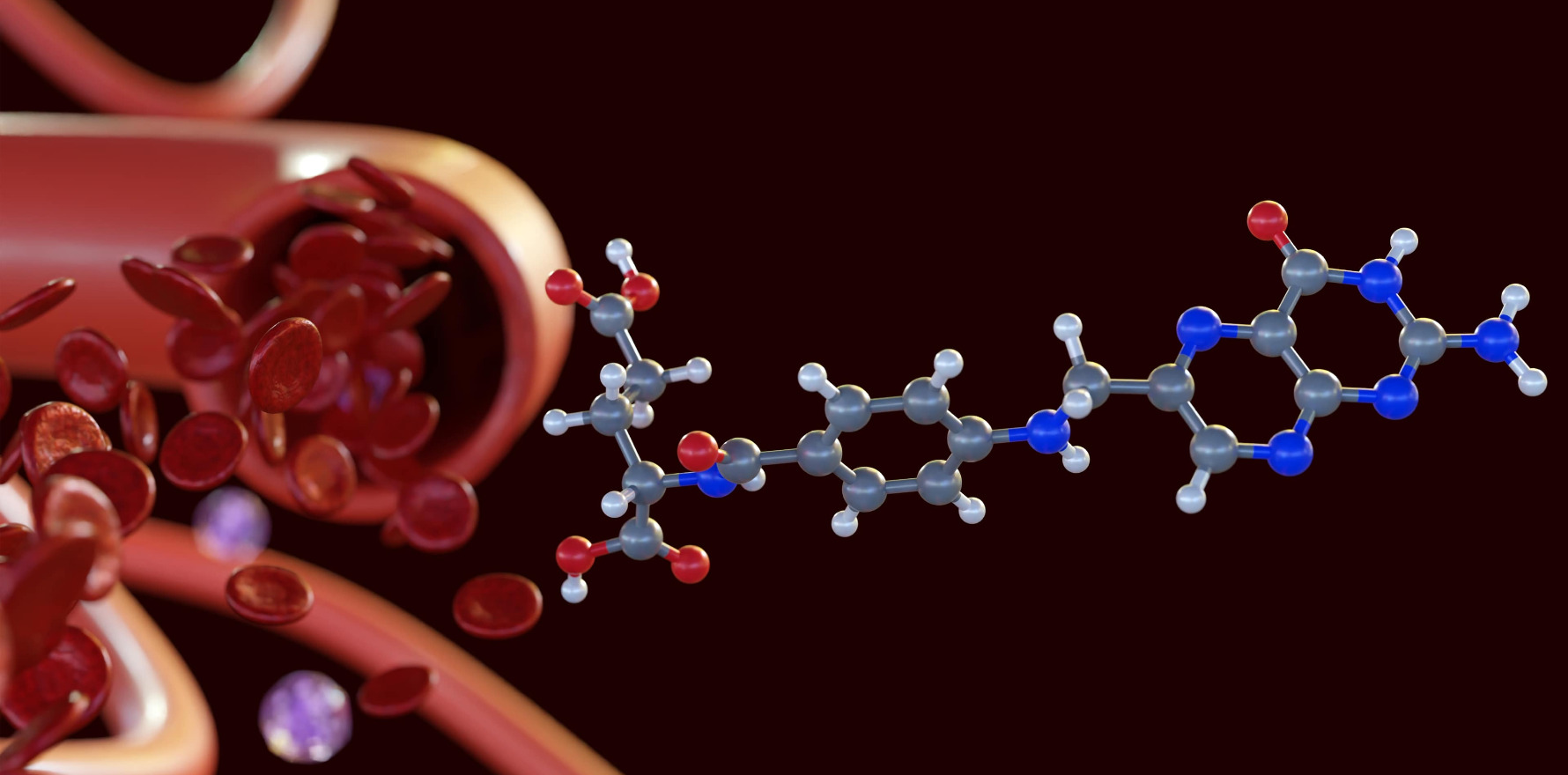
Leucovorin is chemically related to vitamin B9, or folate. It is currently used to help patients with side effects from chemotherapy.
Leucovorin calcium is approved for use in Australia and indicated to diminish the toxicity and counteract the action of folic acid antagonists such as methotrexate in cytotoxic therapy and overdose in adults and children.
The FDA’s label update now formally recognises its use in ASD in the US when cerebral folate deficiency is present, with treatment continuation contingent on demonstrable gains in language, social, or adaptive functioning.
Professor Andrew Whitehouse, Angela Wright Bennett Professor of Autism Research at The Kids Research Institute Australia, said the evidence for leucovorin “remains experimental”.
“Leucovorin (folinic acid) has been promoted as a ‘treatment’ for autism, but the evidence is weak,” he said.
“A few small trials suggest possible small improvements in behavioural outcomes, yet these studies are limited by small numbers, inconsistent findings and a lack of independent replication.
“Right now, the science does not come close to the standard needed to recommend leucovorin in the clinical management of autism.
“The field lacks large, multisite, rigorously controlled trials that could confirm whether benefits are real, reproducible and meaningful in everyday life.”
Professor Whitehouse urged caution, saying “there are already many support programs with strong scientific backing that reliably support development in autistic children”.
“Compared to these proven approaches, leucovorin is still very much unproven,” he said.
Professor Adam Guastella, Michael Crouch Chair in Child and Youth Mental Health at Children’s Hospital Westmead Clinical School and the University of Sydney, agreed.
“The evidence about the use of leucovorin as a treatment for autism, either provided in pregnancy or to children with autism, is preliminary and requires stronger scientific studies to ensure safety and effectiveness,” he said.
There were some promising studies suggesting possible benefits, but these studies had many limitations that suggested that further research was needed and were not at the quality needed for widespread use, Professor Guastella said.
“There are also some studies suggesting negative side effects. More work is needed to be certain about the correct dose and timing, particularly when given in pregnancy and early childhood, before being taken up as a treatment for the community,” he said.
“At a time when scientific research has been severely underfunded and challenged internationally, this work further highlights the importance and need for high quality scientific studies that can provide data to governments, policy makers, health practitioners and families about evidence-based practice.”
Related



Professor Dawn Adams, endowed chair in Autism Research in the Olga Tennison Autism Research Centre at La Trobe University said the lack of research was not the only cause of her concern.
“The suggestion of using leucovorin to ‘treat’ autism is worrying,” she said.
“Firstly, because the research in this area is poor quality and not at the level that we would expect when making recommendations for approvals. It is also worrying because such statements impact how people understand and perceive autism.
“Autism is not something that needs treating or to be cured, it’s a neurodevelopmental difference. When we frame it as a condition that needs ‘fixing’, we risk adding to the stigma autistic people already face.”
Professor Adams said the right supports were what made the difference in the lives of individuals with autism – such as inclusive classrooms, workplaces that adapt to needs, communities that understand communication and sensory differences and policies shaped by good-quality research.
“These are the things that help autistic people thrive and the things that governments have the opportunity to create,” she said.
“Autistic people don’t need treatments or cures. They need a world that accepts and values them for who they are.”
Associate Professor Alex Polyakov, a Clinical Associate Professor from the Faculty of Medicine, Dentistry and Health Sciences at the University of Melbourne said the FDA’s move was an “important development, but it needs to be put into perspective”.
“Leucovorin is an active form of folate that has shown promise in some children with autism, particularly those with evidence of cerebral folate deficiency or antibodies that block folate transport to the brain,” he said.
“Early studies suggest that it may improve communication and social interaction in a subset of patients. However, it is important to stress that this is still an emerging area of research.
“Larger, well-designed clinical trials are needed to confirm how effective leucovorin really is, which children are most likely to benefit, and what the long-term outcomes might be.
“Autism is a complex condition, with most cases strongly influenced by genetic factors and a range of environmental influences. This means that while leucovorin may help with certain symptoms in some individuals, it is unlikely to be a broadly effective treatment for all.”
Professor David Trembath, head of Autism Research and senior principal research fellow at CliniKids, The Kids Research Institute Australia, told The Medical Republic caution was needed.
“My understanding is that the hypothesis is that autism is caused by low levels of folic acid or folate, and that this drug could somehow change those levels and therefore lead to better outcomes,” he said.
“I’ve seen some preliminary research and suggestions of some small positive effects, but it’s far from a clear and large effect, if there is one. We need to tread cautiously with this.
“As a science and research community, whenever there’s a suggestion that has any degree of plausibility, there’s a proper process to go through and to design the well-controlled studies that take into account all of the possible explanations and considerations to come up with really clear, proper advice.
“There may be some further research on this, but the priority must continue to be on developing new and better ways to support autistic people and their families in day-to-day life, and that answers the questions that are most important to them.”
Adjunct Associate Professor Kevin Yap, a Digital Health Futurist from the School of Psychology and Public Health at La Trobe University, said it was too early to consider leucovorin as a “treatment” for autism.
“There have been small-scaled studies suggesting that leucovorin (folinic acid) may improve communication and social symptoms in some children with autism spectrum disorder,” he said.
“Some research has suggested improvements in autism-related measures, particularly in children with specific biomarkers. However, the studies in the literature have limitations, including small sample sizes, inconsistent results, dosing variations and variations in outcomes.
“The evidence is still limited and requires caution when translating to broader use. Furthermore, long-term clinical trial data for leucovorin use in autism is lacking.
“For general health and pregnancy needs, folic acid is still the appropriate choice.
“Larger-scaled, longer term and higher quality studies are needed to determine its proper use and safety profile for autism treatment.”
