


The latest Close the Gap report has laid out where healthcare needs to reform to ensure the best First Nations patient care.
Moving beyond policy promises is the key takeaway from the latest Close the Gap Report, which reiterates the importance of community-led solutions.
Rural and Indigenous health bodies have welcomed the report as vital information to direct the future of reforms and improve healthcare for First Nations communities.
“Closing the Gap will not be achieved by promises alone,” Australian Indigenous Doctors’ Association (AIDA) CEO Dr Peter Malouf said.
“It requires structural reform, shared power, and governments that are accountable to Aboriginal and Torres Strait Islander Communities.”
Moving away from symbolic recognition to greater structural change was the theme for the priority reform areas, helping to embed Aboriginal and Torres Strait Islander rights further into Australia’s healthcare.
AIDA said it was “an important step forward in creating systemic accountability.”
The report also outlined its rationale for health sector reform, along with an endorsement to implement the recommendations of the 2025 Health Inequities Australia report.
“The report provides strong evidence that Aboriginal and Torres Strait Islander community-led initiatives lead to positive outcomes,” Dr Malouf said.
“This evidence now demands a proportionate response through legislative backing and structural reform.
“Racism within the medical training environment, including the specialist training pipeline, must be addressed directly if equity, retention and Indigenous leadership in health are to be realised in practice.”
ACRRM has also welcomed the report’s findings, arguing that it provides further argument to invest in strengthening rural workforces.
“The burden of disease for First Nations people remains around 2.3 times higher than for other Australians,” ACCRM president Dr Rod Martin said.
“The report highlights that around 35 per cent of the health gap is driven by social determinants such as housing, education, income and access to food.
“These factors, along with chronic disease and mental health conditions, contribute to more than one-third of deaths among First Nations people.
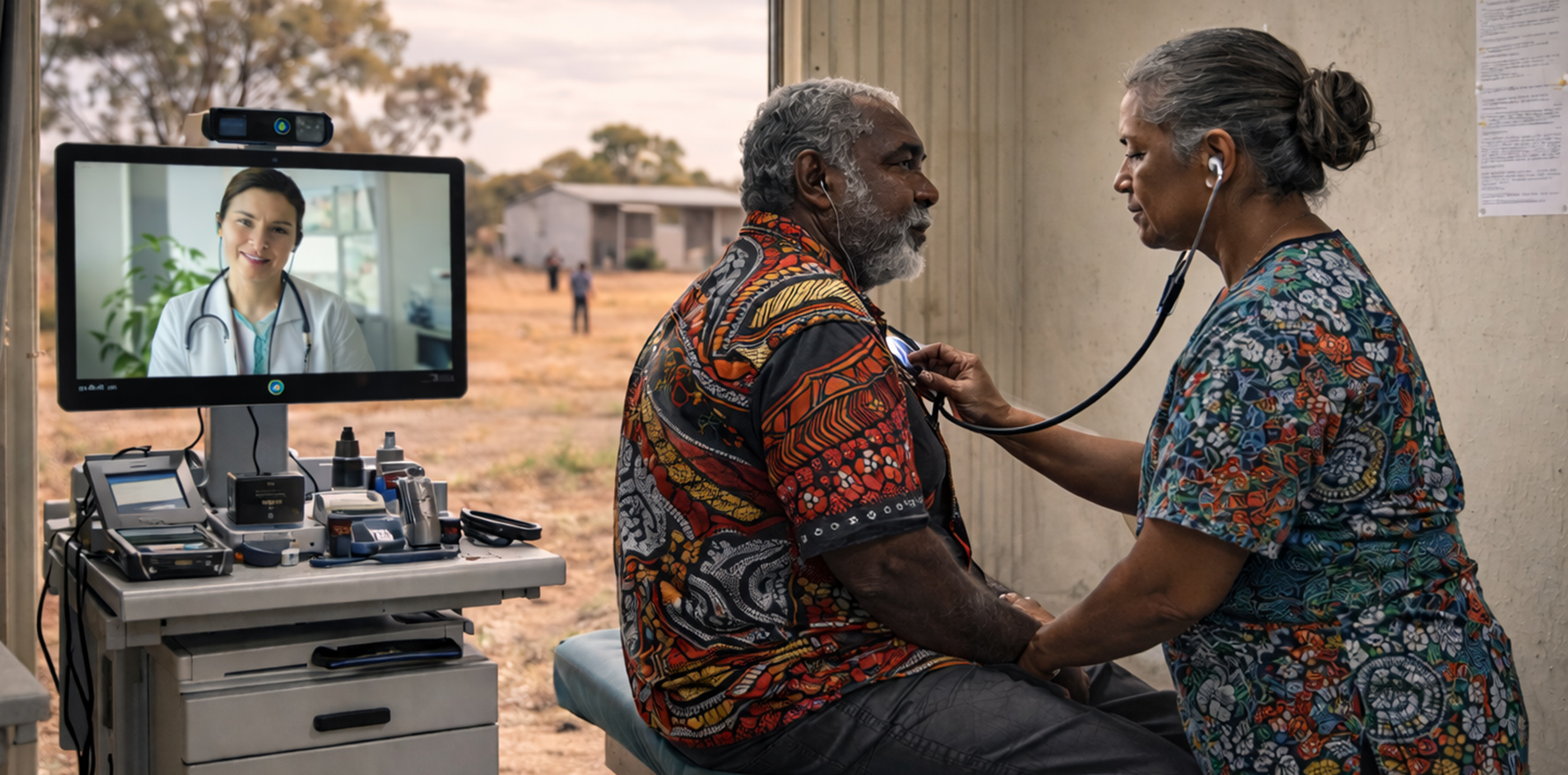
“Aboriginal Community Controlled Health Organisations are critical to delivering culturally safe care and improving health outcomes.”
Related

In response to the report, the Rural Doctors Association of Australia stressed the importance of cultural safety training at all levels of healthcare.
“We need to get beyond the mindset that Western healthcare simply ‘works’ for First Nations people, and they need to just receive that care without questioning it, or without having a say in what treatment they receive or how they receive it – it shouldn’t be that way,” RDAA president Dr Sarah Chalmers said.
“If you want to practice patient-centred care, you must take your patient’s own beliefs and healthcare preferences into account.
“You must also regularly check your own privilege and wonder – what is it about me and my upbringing that makes me view a patient’s situation the way I do?
“The more we take this approach to First Nations healthcare, the bigger steps we’ll take toward Closing the Gap on health outcomes.”
