


Let’s all accept that cannabis is a two-edged sword. It has been subjected to legislative double standards mainly as the result of historical political antagonism, the result of rigid dogmas.
I recently attended the 2026 Australian Medicinal Cannabis Association – United in Compassion conference in Brisbane.
It is Australia’s premier annual gathering for the medicinal cannabis sector. The conference provided me with some new knowledge and reflections, which I will share.
BACKGROUND
It may be fashionable to say that cannabis has been used as medicine for “thousands of years”. There is clear evidence of cannabis use in ancient cultures including China, Egypt, and India. However, we do not know the circumstances, how it was used or what dose of THC was involved.
In those times medicine was closely related to mystic and shamanistic ritual, so the context and finer details of cannabis use are not known with any certainty.
Modern use of cannabis as medicine began in 1837 with William O’Shaughnessy in Britain. Keep in mind that in that era, it was arguable whether you as a patient were better off not seeing a doctor than seeing one.
The legal medicinal cannabis story began in Australia with Dan Haslam who, at age 19, was diagnosed with bowel cancer. It was 2010 and mainstream medicinal therapies could not manage his severe chemotherapy-induced nausea, vomiting, mouth ulcers, weight loss and chronic fatigue.
Dan’s father, Lou Haslam, a former police officer who had spent decades arresting people for cannabis, made the desperate decision to supply his son with black-market cannabis to stop his suffering. The weed worked like a medical miracle giving Dan “the best two years of his life”, enabling him to travel and get married. Dan, from Tamworth in NSW, survived until 2015.
Following his death, his parents, Lucy and Lou Haslam, became staunch advocates for legalised medicinal cannabis, petitioning the NSW government and meeting with the then premier Mike Baird, who cited his meeting with Dan as the reason for his change of heart on the issue. Their efforts directly led to the legalisation of medicinal cannabis in NSW, which became known as “Dan’s Law”.
This is a similar story to that of Charlotte Figi (2006–2020) who was the American child with Dravet Syndrome, a rare and severe form of intractable epilepsy that caused her to have hundreds of seizures per week, taking a massive toll on her cognitive and physical development. Charlotte’s severe epilepsy was successfully treated with high-CBD cannabis oil and she became the catalyst for the modern medicinal cannabis movement in the US.
It’s remarkable how a personal heart-wrenching narrative trumps science in progressing government policy and law reform.
In Australia the legislative change that ensued was messy and effectively gave the medicinal cannabis industry a free kick. The result created gold-rush fever and a new wild west.
The Special Access and Authorised Prescriber schemes ended up being pretty ordinary. Reining in the stray cats, carpetbaggers, natural therapy acolytes, and entrepreneurial class will be tricky.
THE DUAL MARKETPLACE CHALLENGE
The first quandary is that cannabis shares a place in both the recreational and medical market.
Patients and recreational users have different goals. Patients want to feel well or at least normal; recreational users want to feel high. Listening to Miles Davis, Chick Corea, or Pink Floyd without a toke would be, for some, utterly unconscionable. The recreational feel-good model works on the premise that more is better. Flooding the human brain with a feel-good reward risks a functional disruption of the human neurological reward centre and sometimes dependence.
Individual harm can occur from developing or abetting an existing cannabis addiction. I personally have little faith in the term “cannabis use disorder” as defined by DSM-V, as it is too easy to fall foul of this categorical instrument and it is flawed by harbouring an historic antagonistic view of cannabis use. Misdiagnosis of CUD is a real concern.
I couldn’t help but get the impression that most of the industry sponsors at the conference saw medicinal cannabis as the gateway into the much more lucrative recreational market.
THE RISK BENEFIT PROFILE
Cannabis is contraindicated in adolescents and pregnancy.
Cannabis-related mental health risks appears to be dose dependent, and include the development of tolerance and dependence, with worsening anxiety/depression. Timing of consumption also appears to be important with a worse risk profile for those consuming during the day, and especially those who begin the day with a brekky-bong.
The purported consequences of cannabis addiction are poor performance at school/work, social dysfunction, medical dysfunction such as cannabinoid hyperemesis syndrome, and learning/memory issues which are more likely in teens. Amotivational syndrome is also associated with use but is likely to be multifactorial.
Progression to severe mental health conditions such as psychosis is real in vulnerable groups. The jury is still out on anxiety and depression, although there exists a statistically strong correlation.
The second quandary is that there are definite individual and social harms associated with cannabis.
The obvious social harm in those jurisdictions where it is still a criminal offence to use recreational cannabis means some interaction with the black market and consequences from the criminal justice system. This is especially problematic when it comes to motor traffic laws.
There is no valid biomarker (eg, breathalyser, saliva test) to indicate the level of driver impairment. The only default is to resort to the older road-side sobriety testing. I can see no major problem with that.
A contemporary evidence-based summary of the risk-benefit of medicinal cannabis indicates that there is incontrovertible evidence of efficacy in the case of neurological spasticity as in multiple sclerosis and some forms of treatment-resistant epilepsy; there is strong evidence for chemotherapy-induced nausea and vomiting; and some encouraging evidence in certain types of persistent pain, but with caveats.
Related

Persistent pain is a complex nervous condition and, in many instances, the unpleasant experience is produced by a combination of visceral pain and psyche ache. The efficacy of treatments is heavily influenced by patient expectation. Cannabis shows moderate evidence of benefit for anxiety and insomnia. Most of the studies are short-term because long-term studies are prohibitively expensive and have high dropout rates.
While there has been a tsunami of scientific literature produced it is equally split between funders who still carry an antagonistic attitude born out of a prohibitionist legacy, and industry which has a strong profit motive. I would guess that 95% of the papers would not survive rigorous scientific scrutiny.
It is right for the Therapeutics Goods Administration to wade in. If cannabis is a medicine, then it should be treated like all other medicines. Our patients deserve that. They also deserve to be protected from politically motivated TGA overreach.
THE PHILOSOPHICAL TAKE
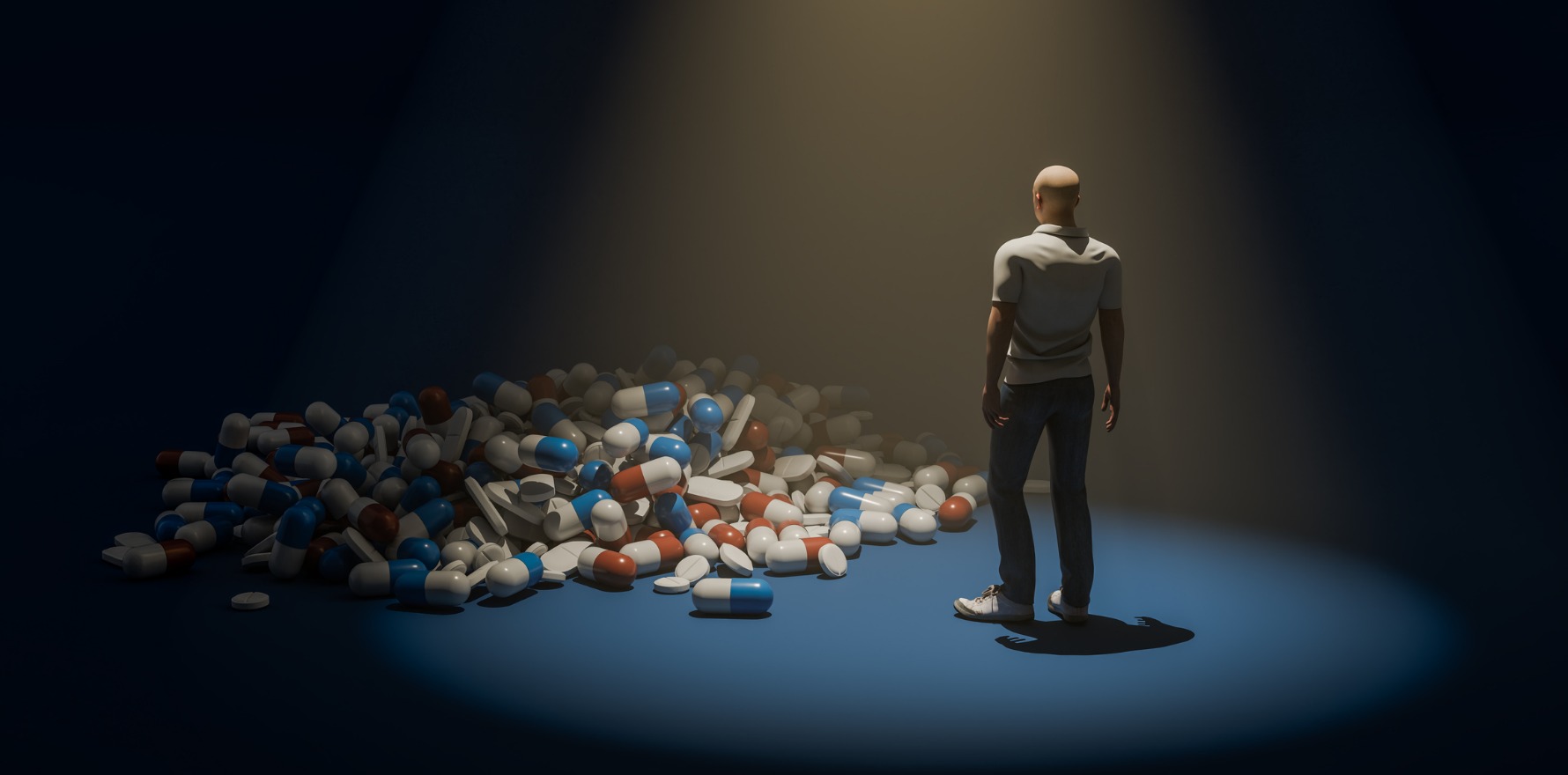
We need to be reminded that during the Renaissance the Swiss physician, alchemist, philosopher and lay theologian Paracelsus told us that the only difference between a medicine and a poison is the dose. He is credited as being the “father of toxicology” – dosing matters.
There is a real need to appreciate that there is a sweet spot after which there is initially diminishing return and, ultimately, harm. At the moment, the sweet spot for genuine medical use is said to be 10-15 mg of THC daily. In terms of flower products this means 15-20% THC.
PSEUDO-SHERIFF DO-GOODERS
I have colleagues who prescribe medicinal cannabis to those who they know are recreational users on the basis that they don’t want their patients reverting to the black market.
I wonder if it’s reasonable that doctors act in this self-appointed deputy sheriff role. I would encourage them to put their head above the parapet and actively advocate for a better public health policy with regards to cannabis. There is an argument to be had that recreational cannabis use is no more, and possibly less, harmful in most adults than alcohol.
There is a story that I like and it may even be true.
Sir Winston Churchill was at one stage required to visit the US during the prohibition years. Being rather fond of alcohol he arranged to circumvent the authorities by being prescribed a medicine version of his favourite alcoholic beverage.
WHERE TO FROM HERE
So, big reforms or small incremental changes?
The Overton Window is the range of policies or ideas acceptable to the mainstream population at a given time, often called the “window of discourse”. Developed by Joseph Overton, it dictates what politicians can advocate without being considered extreme. The window shifts over time, moving radical ideas to mainstream, or vice versa.
I am certain that recreational cannabis will be legalised in Australia. The $10,000 question is do we bed down medicinal cannabis first or proceed directly to legalisation that ends cannabis prohibition? I favour the latter although I can see arguments for both approaches.
The quote “Medicine is a science of uncertainty and an art of probability” by William Osler highlights the dual nature of medicine as both a science and an art.
As a practising addiction medicine physician, there is an all-important question. We have treated heroin addiction with opioid agonist therapy for over 50 years. We have also treated iatrogenic prescription opioid dependence with methadone and buprenorphine.
Will there be a place in the future to consider treating iatrogenic CUD with medicinal cannabis, as a graduated deprescribing six to 12-month detox, as part of a wider holistic management plan?
Cannabis is an orchestra of molecules and it behoves all doctors and other healthcare professionals to educate themselves about its safe and unsafe use. It should be in the curriculum of all medical schools.
We know about some molecules but the role of others in cancer and inflammatory conditions needs further study. We also need to know more about interactions between the orchestra members and current mainstream medications.
CONCLUSION
Legalise recreational cannabis and all the Boomers with painful knees can distract themselves from their age-related pain by getting stoned and listening to their old Led Zeppelin collection. Their grandfathers and grandmothers did the same with a fine scotch or a pleasant sherry.
Let’s all accept that cannabis is a two-edged sword. It has been subjected to legislative double standards mainly as the result of historical political antagonism, the result of rigid dogmas.
CONFLICT OF INTEREST
I’m a Boomer. I’ve never had a summative view on anything; all my views are formative. As a medical student in the 1970s I not only smoked cannabis but I inhaled. I rarely attended a rock concert without using Woodstock weed as a psychological graphic equaliser. I’m an anti-prohibitionist and Paracelsus is one of my historical heroes. It’s about 40 years since I last smoked weed, and I have no desire to, unless I develop a bona fide medical indication.
Associate Professor Kees Nydam was at various times an emergency physician and ED director in Wollongong, Campbeltown and Bundaberg. He continues to work as a senior specialist in addiction medicine and to teach medical students attending the University of Queensland, Rural Clinical School. He is also a poet and songwriter.
