

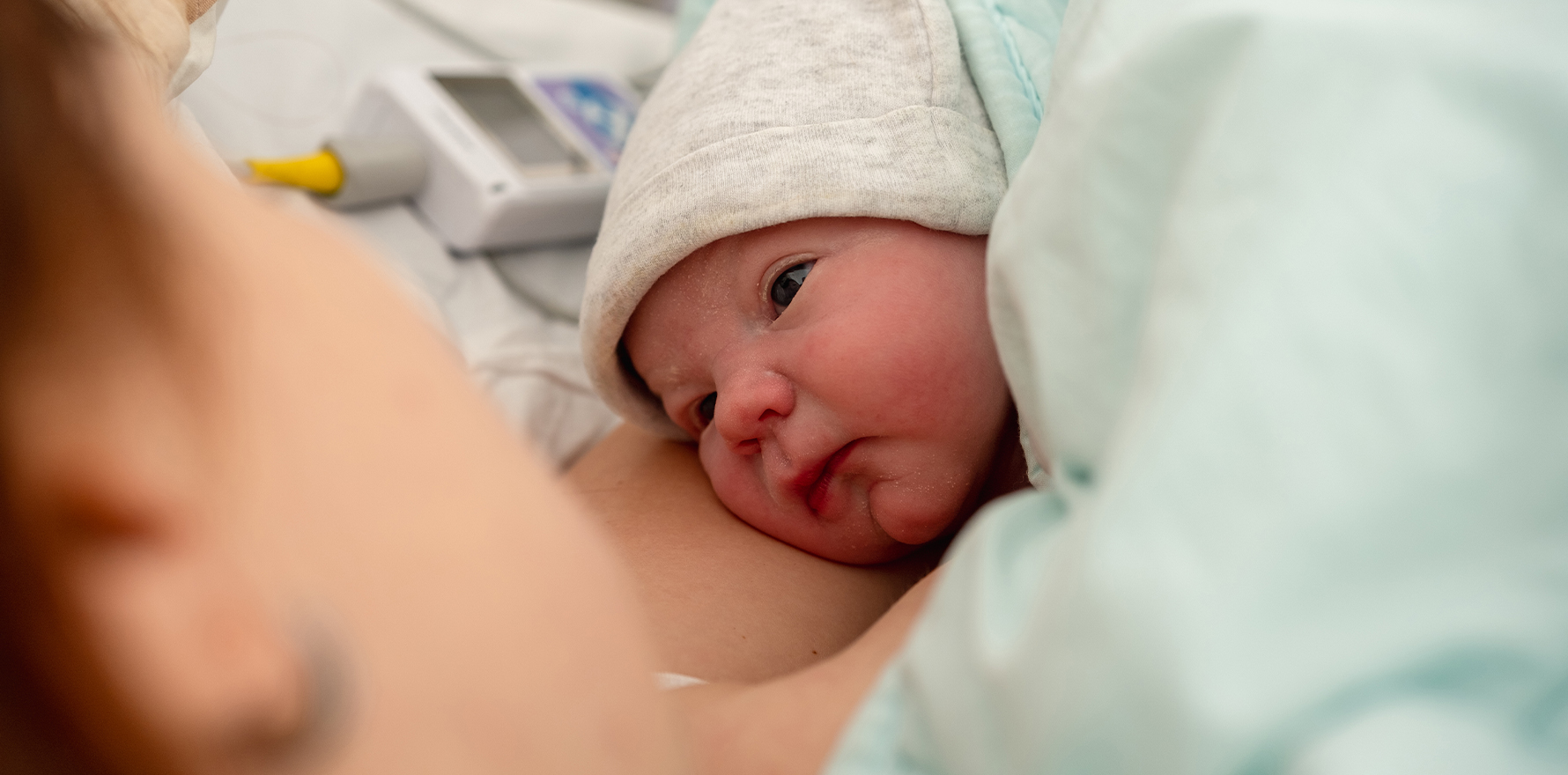
Babies exposed to SSRIs had signs of delayed adaptation after birth, but researchers found no clear increase in severe complications, NICU admission, or major congenital anomalies.
Continuing selective serotonin reuptake inhibitors during pregnancy may slightly affect a newborn’s adaptation immediately after birth without increasing the risk of serious neonatal complications, according to new research that sought to overcome a major source of bias in previous safety studies.
The US cohort study found that babies born to women who continued SSRIs during pregnancy had modestly lower Apgar scores at one and five minutes and were more likely to have meconium-stained amniotic fluid than babies whose mothers stopped treatment.
But SSRI continuation was not significantly associated with NICU admission, preterm birth, or any of the other serious neonatal outcomes examined.
Nor did researchers detect a significant increase in major congenital anomalies, although they cautioned that the study was not large enough to rule out an effect on rare malformations.
“These findings highlight the importance of appropriate comparator selection to minimise confounding and illustrate how target trial emulation can improve causal inference in studies of medication safety during pregnancy,” they wrote.
Published in JAMA Network Open, the study used a “target trial emulation” approach designed to tackle one of the persistent problems in research into antidepressant safety during pregnancy: women who take antidepressants differ substantially from women who do not.
Randomised trials of SSRI continuation during pregnancy are unlikely for ethical and practical reasons, leaving clinicians dependent largely on observational studies.
But comparing pregnant women taking SSRIs with women who had never taken antidepressants could make the drugs appear responsible for outcomes that may instead reflect underlying mental illness, comorbidity, or other differences between the groups, the researchers noted.
They therefore attempted to emulate the conditions of a hypothetical randomised trial by comparing women who had used SSRIs before pregnancy and continued treatment with women who had previously used the drugs but discontinued them for pregnancy.
The investigators used linked maternal and neonatal electronic health records from Vanderbilt University Medical Center in the US, covering singleton pregnancies between 2006 and 2022.
Two cohorts were constructed. An “early pregnancy” trial of 1014 pregnancies assessed outcomes associated with exposure during the first or second trimester, while a periconception trial involving 807 pregnancies examined congenital anomalies following first-trimester exposure.
After adjustment for baseline differences, SSRI continuation was associated with a 0.39-point lower one-minute Apgar score and a 0.28-point lower five-minute score.
The odds of meconium staining were 73% higher among babies whose mothers continued SSRIs (OR 1.73, 95% CI 1.22-2.45).
However, there was no significant difference in NICU admission (OR 1.23, 95% CI 0.82-1.83), and the researchers found no statistically significant associations across the remaining neonatal outcomes assessed.
The authors said the Apgar findings strengthened previous evidence that in-utero SSRI exposure could be associated with delayed neonatal adaptation.
That phenomenon could include poor muscle tone, jitteriness, weak crying, and respiratory distress, but symptoms were generally transient, they said. Importantly, the lower Apgar scores in the new study were not accompanied by evidence of more severe neonatal morbidity.
The signal for meconium staining was also less robust. It weakened and was no longer statistically significant in a sensitivity analysis designed to account for possible selection bias arising from women switching medications, leading the researchers to recommend caution in interpreting that result.
The congenital anomaly analysis was similarly reassuring, albeit less definitive. SSRI continuation was not significantly associated with congenital anomalies overall (OR 1.09, 95% CI 0.63-1.90), congenital heart defects (OR 2.05, 95% CI 0.86-4.87), or multiple congenital anomalies (OR 0.87, 95% CI 0.30-2.50).
The researchers stressed that the confidence intervals were wide and the study lacked sufficient power to draw firm conclusions about rare malformations, particularly congenital heart defects.
Related


Larger population studies have also suggested that weak associations between individual SSRIs and particular malformations cannot yet be excluded.
Perhaps the most striking finding emerged when the researchers changed their comparator.
When women continuing SSRIs were compared with more than 21,000 women who had never been exposed to the drugs, SSRI exposure initially appeared to be associated with 11 of 13 neonatal outcomes.
Those associations were “markedly reduced or fully disappeared” after statistical adjustment, according to the authors.
The study also found that an apparent association between SSRIs and earlier gestational age was present when women continuing treatment were compared with women who had never used SSRIs but disappeared when the comparator was restricted to women with a history of SSRI treatment.
The findings demonstrated how comparator choice can potentially distort observational studies of medication safety during pregnancy, the researchers said.
That issue matters clinically because apparent safety signals can influence decisions to discontinue antidepressants during pregnancy.
The authors pointed to previous concerns about SSRIs and persistent pulmonary hypertension of the newborn, which prompted some women to stop medication before larger studies suggested the association was weaker than initially feared.
While the current study was not intended to dictate clinical practice, the researchers said their findings suggested SSRIs were not associated with an increase in severe complications.
A slightly lower Apgar score in the absence of other complications such as NICU admission was unlikely on its own to indicate significant short- or long-term harm, they added.
Any potential improvement in immediate neonatal adaptation from stopping treatment therefore needed to be balanced against the possible consequences of discontinuation for longer-term parental and child mental health.
There were important caveats, the researchers said. Prescription records could not confirm whether women actually took their medication or continued treatment throughout the third trimester, potentially misclassifying exposure at the time when neonatal adaptation effects may be particularly relevant.
The study included only live births, meaning miscarriage and other pregnancy losses were not captured.
Depression severity also remained a potential source of residual confounding because PHQ-9 scores were available for only about 10% of participants.
Multiple neonatal outcomes were tested without formal adjustment for multiple comparisons, increasing the possibility of chance findings. Stringent inclusion criteria also reduced the sample size and prevented the researchers from examining whether outcomes differed according to individual SSRI or dose.
Despite this, they said the findings were reassuring.
“In this cohort study of SSRI continuation vs discontinuation during pregnancy, continuation was associated with delayed neonatal adaptation after birth, but not with major anomalies or severe complications,” they concluded.
“Considering the potential for delayed adaptation after birth, our study supports recommendations that delivery of an SSRI-exposed infant should take place in a facility equipped for neonatal resuscitation.
“Importantly, the target trial emulation used here is generalisable beyond SSRIs and offers a blueprint for evaluating the safety of other medications during pregnancy.
“As more longitudinal EHR data become available, this approach can advance drug safety research in this uniquely vulnerable population.”
