

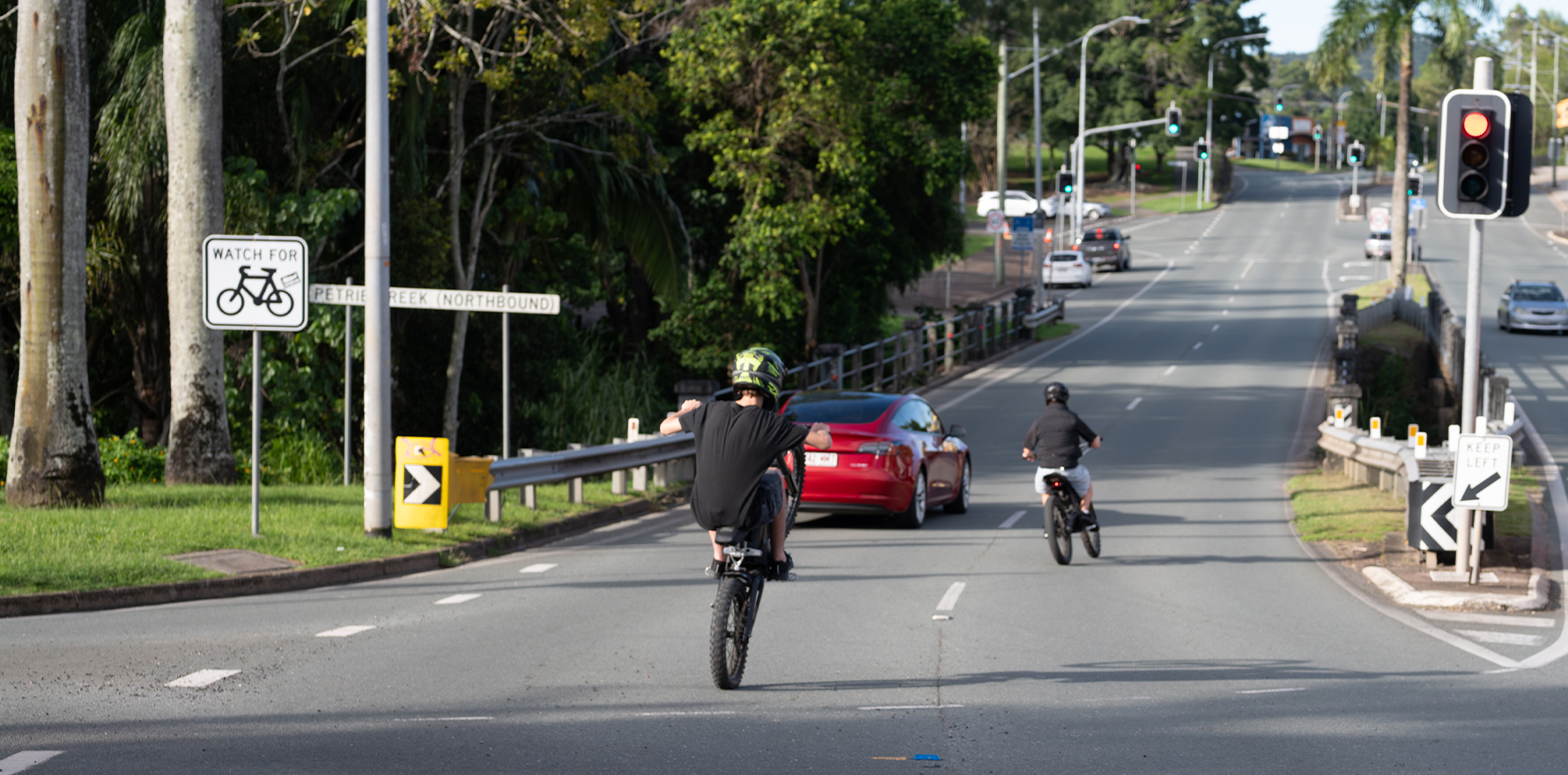
E-scooter hospitalisation rates are highest in Queensland and Western Australia, with injuries growing more serious, new data shows.
E-scooter hospitalisations have tripled in five years, with teenage boys bearing the brunt of increasingly serious injuries, prompting renewed calls from doctors for tougher laws to keep children safe.
New figures from the Australian Institute of Health and Welfare reveal a sharp rise in fractures, intensive care admissions and deaths linked to e-scooter falls, with Queensland and Western Australia recording the country’s highest hospitalisation rates among young people.
AMA Queensland says the state’s recently tightened e-mobility laws still don’t go far enough, warning that allowing children under 16 to ride under parental supervision still leaves them at risk of life-changing injuries.
The report, released yesterday, found in-hospital deaths from e-scooter falls had almost tripled in less than a decade, rising from seven in 2015-16 to 20 in 2024-25.
Rising toll of e-scooter falls
Hospitalisations for superficial injuries declined as more severe injuries took their place. In 2024-25, 58% of all e-scooter injuries were fractures, 2.9% were dislocations, and 2% were injuries to internal organs – four times the rate of 2015-16.
ICU admissions following hospitalisation also more than quadrupled over a decade – from 16 in 2015-16 to 73 in 2024-25.
While males accounted for 69% of e-scooter hospitalisations, teenage boys increasingly bore the brunt. Those aged 12 to 15 had the highest hospitalisation rate in 2024-25, at 54 per 100,000 population – up 15-fold from 2019-20.
They were also four times more likely than girls to be hospitalised after an e-scooter fall.
Across the population, the hospitalisation rate tripled since 2019-20 to 15 per 100,000, and e-scooter falls accounted for 61% of personal transport hospitalisations in 2024-25.
Although approximately 40% of hospitalisations had no recorded location, among those with a recorded location, most injuries occurred during leisure activities and, increasingly, on the road.
Streets and highways accounted for 47% of injuries in 2024-25, more than double their share in 2015-16, while hospitalisations in other locations – such as aged care facilities, construction or farm areas – declined.
Hospitalisations from non-e-scooter falls declined between 2020-21 and 2024-25, a trend researchers attributed to the growing popularity of e-scooters for both work-related and leisure activities.
Collisions with e-scooters put 164 pedestrians in hospital in 2024-25.
The weekends and summer months were the most dangerous, with the highest observed e-scooter hospitalisations.
New South Wales had the lowest rate of hospitalisations, where current regulations restrict private e-scooter use on public land and it remains largely limited to designated trial areas.
As of 31 August 2026, Queensland requires e-mobility vehicle users to be 16 years or above and hold at least a Queensland learner licence to use e-mobility devices unsupervised in public areas.
Queensland health minister Tim Nichols said on Tuesday that seven children were hospitalised for more than 24 hours following serious e-scooter or e-bike accidents between July and September – 18 fewer than in January to March.
While the AMA Queensland president, Associate Professor Erica Gannon, said the association was pleased to see admissions decline in the months following the legislation in an announcement on Wednesday, preventable e-mobility device deaths were “absolutely heartbreaking”.
“AMA Queensland told the parliamentary inquiry into e-mobility devices the best policy was a total ban on under-16s, and we still believe that,” she said.
“Doctors believe the only safe position to take is to restrict kids to kid-powered devices only and leave the electric ones for when they’ve built more awareness around road rules,” she said.
However, children aged 12 to 17 years can still ride under parental supervision – the only state besides the ACT that allows this.
AMA Queensland past president and Queensland-based GP Dr Maria Boulton told TMR the association felt the decision “didn’t go far enough”.
“Adolescents don’t understand the road rules, they don’t have the necessary coordination, and they’re more prone to serious injury,” she said.
AMA Queensland had asked to meet the transport minister next August to discuss the implications of the law change, she said.
E-bike injuries also on the rise
When it came to e-bike incident data, the specifics became much less clear due to coding limitations, with incidents grouped alongside motor-scooters, mopeds and motorised bicycles.
However, a similar trend amongst younger men unfolded, with hospitalisation rates increasing more than fourteen-fold among 12- to 15-year-olds from 2019-20 to 2024-25.
For men aged 16 to 24 years, hospitalisations increased by more than fourfold over the five years.
Most states and territories have no minimum age requirement for using e-bikes. Western Australia is the exception, restricting use to people aged 16 and over.
Related


Fractures increased slightly over a decade, rising from 53% of injuries in 2015-16 to 57% in 2024-25, while severe injuries, including intracranial and organ injuries, remained relatively stable.
However, hospitalisations requiring ICU admission rose by almost 300%, and those requiring continuous ventilatory support by almost 400%. In-hospital death remained rare, with six recorded in 2024-25.
Over the past decade, most hospitalisations resulted from incidents on streets and highways, though activity at the time of injury was not recorded in 80% of incidents in 2024-25. Of those that were, most were either during sport or other leisure.
Fridays in the summer months proved to be the most dangerous.
In a July Channel Nine interview on the Today show, Dr Boulton said head injuries, concussions, and broken necks were not only common among children using e-mobility devices but often led to long-lasting consequences.
“Adolescents aged 16 and under remain overrepresented in injuries,” she told TMR.
“It’s really dreadful when you get a discharge summary about one of your young patients who has been admitted and has suffered serious injuries, particularly when those injuries have long-term impacts.”
Explaining the potential injuries and consequences of e-mobility device collisions and falls and educating young patients about the importance of wearing a helmet, were skills Dr Boulton said GPs were well placed to provide, one-on-one.
“Any presentation to the hospital that can be avoided is putting a strain on the hospital, especially when our hospitals are already operating over capacity, and we know there is ambulance ramping, [and] long waits for beds,” she said.
“Even if [children] aren’t admitted, because of the injuries they suffer, they may be seeing an emergency department but then released and then asked to return to fracture clinics.”
Dr Boulton also called for road planning that separated e-mobility devices from pedestrians and cars – an initiative she said the Australian government had failed to keep pace with other countries.
“I see patients every day, particularly older people, who are really scared of walking out in the parks because they don’t want to be run over by these [e]-scooters,” she said.
In Queensland, she said walking groups had been established at shopping centres before opening hours to avoid e-scooters.
“We know exercise is the fountain of youth, and we need to ensure that everyone has safe access to the outdoors,” she told TMR.
Hospitalisation data were collected from the National Hospital Morbidity Database.
The report said that implementing ICD-10-AM placeholder codes from 1 July 2026 would substantially improve the identification of injuries, the specificity of diagnoses, and overall data quality for e-scooters, e-bikes, and other e-mobility devices.
Read the full report here.
