

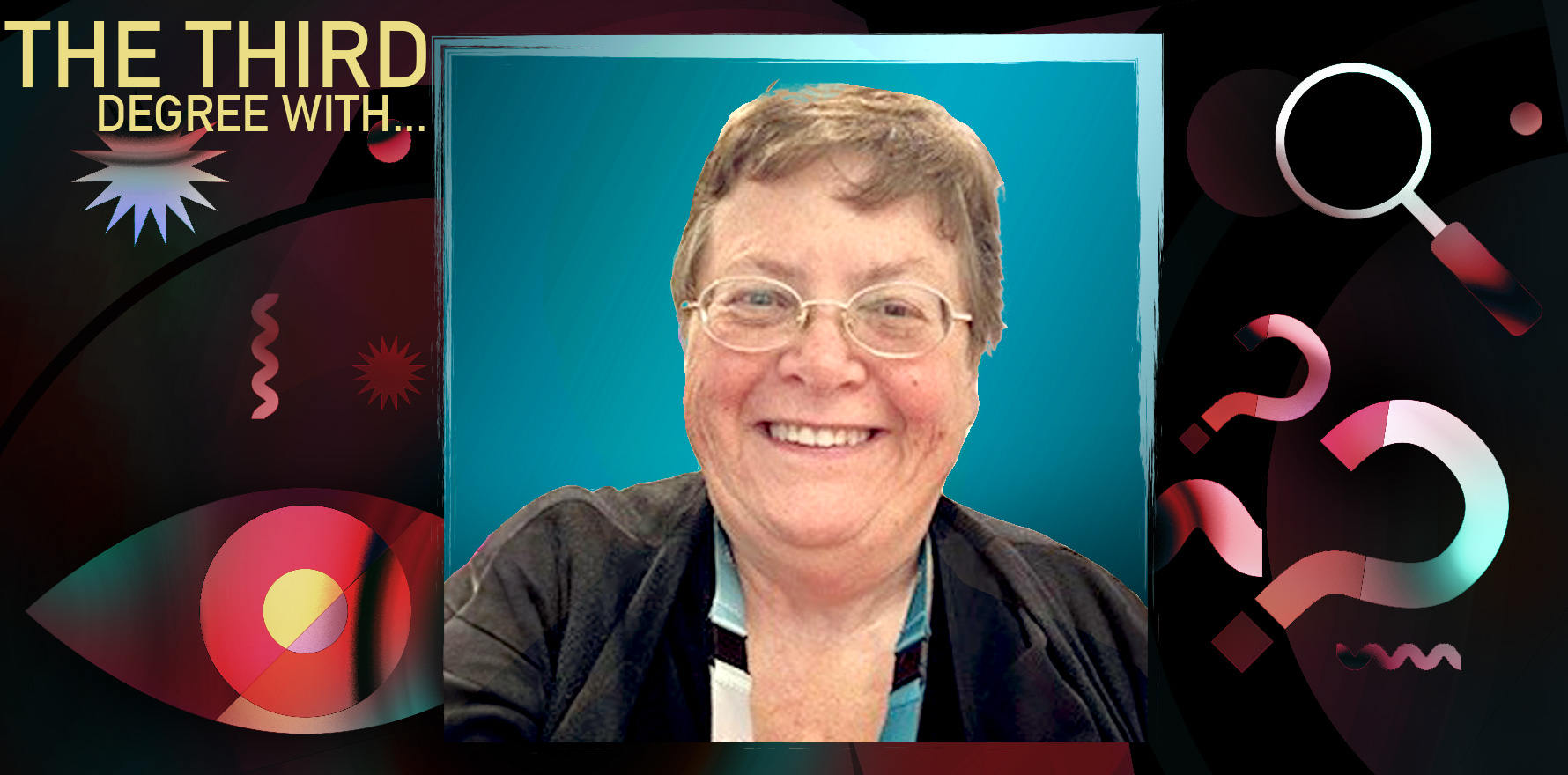
Dr Joanne Gardiner says her job has one of the luxuries almost unheard of in general practice: time.
Medicare mental health clinics are something of an enigma.
For one thing, they’re not actually funded by Medicare – staff working at the clinics are on a salary and do not draw funding from the MBS.
The 49 current clinics were built on the existing network of Head to Health clinics. In Victoria, some clinics are still known as Head to Health centres.
While some have approached the MMHCs with a level of scepticism, Melbourne GP Dr Joanne Gardiner says working at one has suited her down to the ground.
Dr Gardiner sat down with The Medical Republic to make her case.
TMR: How did you get involved with an MMHC – I’m assuming you were working at a Head to Health?
Dr Gardiner: I got recruited – a GP colleague in Geelong that I met up with randomly at a GP registrar training day told me she was about to leave this job that she’d been doing.
It sounded like a very different pace from general practice.
I applied for the job because I was working in community health, [at a non-profit organisation], which I still love, but I wanted to do a little bit more mental health and reduce that burden on doctors doing general practice, which, as we know, can be quite hard.
I wanted to do something different and I had a reasonable skill set.
TMR: Can you tell me more about what that skill set is and how it might differ from traditional general practice?
Dr Gardiner: Like many female GPs in particular, I’m very interested in mental health.
I find that people come to see me, and they usually burst into tears. So I’ve had to pick up some counselling skills along the way.
But I’ve got particular interest in refugee health and complex trauma.
Some of my work previously, like my work at the Victorian Foundation for Survivors of Torture, was essentially counselling people of refugee background and asylum seekers using interpreters, as part of the refugee mental health clinic alongside some psychiatrists.
And then I’ve done the focused psychological strategies skills training. I work for the RACGP’s GP Mental Health Standards Collaboration as a facilitator for people doing the FPS training, I’ve also done a course in hypnosis through the Australian Society of Hypnosis, I’ve done some EMDR training and various dialectical behavioural therapy training, most of it pretty basic.
I’ve also done acupuncture with the Australian Medical Acupuncture College to use with patients with mental health issues and chronic pain.
But I’ve done whatever I can do because I found it really useful in general practice.
I still work as a normal GP, so in many ways I’m not that different, except I’ve tried to expand my skill set to be able to cope more effectively with people presenting with complex trauma and other mental health diagnoses.
TMR: One of the things we’ve heard about the MMHCs is that they’re based on an open-door or no-wrong-entry policy, similar to headspace. What’s the case mix coming through?
Dr Gardiner: I think that services need to be able to have a long-term, long-form approach to mental health – I’ll just explain.
I’ve been [at the MMHC] since November 2022, and it had been in operation for about 18 months before that, and for a long time I was working with the team out of the PHN on essentially a telephone consult basis, with a very small amount of outreach.
And then in early 2023 we moved into a very nice bespoke premises in Norlane, which is one of the lowest socioeconomic status postcodes in Victoria.
The clients we get through the door run the whole gamut, but we get a lot of people presenting with drug and alcohol issues and family violence.
We have a mixture of staff, so we have both clinicians and peers with lived experience, and we also have associate staff that are contracted to us through other agencies.
We have, for example, a First Nations worker, an AOD worker, a family violence worker and a rainbow worker who offer their particular expertise or lens on the situation.
When I work as a GP, everyone I see is necessarily involved in general practice care. Otherwise they wouldn’t be seeing me.
What’s really interesting about working in a Medicare mental health centre is many of the people who come through the door are not engaged with GPs at all.
They’ve either haven’t seen a GP for years, or they will see a GP very sporadically and only in times of dire need.
There are increasingly fewer and fewer bulk-billing GPs, so people can’t get in.
And then when they do get in, they only get a very short time with a doctor and they’re often reluctant to disclose anything more complicated.
Many of the people we see have really complex stories and backgrounds.
One of the things that I can do because I’m salaried is sit down with someone for an hour, even an hour and a half – it’s an unheard-of luxury in general practice – and really try to sort them out.
We can go through the whole thing; physical, mental, whatever. The focus is on mental because that’s usually why they walk through the door, but often there are physical problems that need to be addressed.
Many adults have never seen any kind of mental health specialist or had their problems diagnosed or addressed.
I find that incredibly satisfying.
And of course, I can still order pathology and I can prescribe, within certain limitations. Because my care is inevitably short term and not long term, I have to be careful what I do.
I can also refer, so there’s lots of useful things that I can do.
I can draft a mental health treatment plan that the patient’s regular GP, who they may not see very often, can bill for and get all the glory, and I’m happy to do that.
Or I can draft an eating disorder plan for another GP to use, which is completely fine and a great use of my time and skill.
Whatever I can do to save another GP time and effort, I’m very happy to do.
I’ve written letters for citizenship exemption for people of refugee background who have mental health issues, I’ve assisted with writing reports for disability support, pension, that sort of thing.
We try as much as possible to engage with the person’s treating GP or find a suitable GP for someone who doesn’t have one. Continuity of care, and the primacy of GP care, is crucial.
TMR: How do you manage continuity of care – it sounds like you might have some people who have recurring presentations.
Dr Gardiner: People can access the service easily – they can walk in, self refer, be referred by their GP or their GP gives them a phone number, or they can ring the 1800 central number maintained by the PHN.
In terms of our length of time working with people, we try to keep it to around three months.
Sometimes it’s longer and sometimes, under special circumstances, we’re allowed to work with people much longer, but it’s very much case by case.
And the reason that that works okay in Geelong, I think, is because the Western Victoria PHN has also set up a sister service called Step Thru Care.
Step Thru Care offers individual counselling, but also can offer group therapies like art therapy groups and dialectical behavioural therapy groups, which is a strongly evidence-based treatment for people with complex trauma and borderline personality disorder, that is almost impossible for normal people to access.
This particular sister service of ours is incredibly useful, because they can work with people for up to two years.
TMR: You mentioned refugee health. One of the other unique aspects of the MMHC program is that any patient can get treatment, regardless of Medicare status. How do you find the salaried aspect of the role?
Dr Gardiner: Through listening to other GPs, I know that there’s tremendous concern for beefing up the Medicare rebate, which I agree with and I accept.
But I’m very used to this particular model of salaried work, because I worked in community health for a very long time and I’ve done multidisciplinary work.
Related



Many GPs who work in that area find that incredibly satisfying, and I do find that the salaried aspect is really useful.
I know, for example, at Cohealth, there are people that we look after that would be difficult for a privately billing GP to see.
Now, many do see them and they do see them well, but it’s actually hard to do.
And when we work in our context [at Cohealth], we’ve got the physio across the hall, or the podiatrist, or we can ring up the diabetes nurse educator, and it is easy access.
We can build a therapeutic team around the client well.
And to some extent, that’s what we can also do at the Medicare mental health centre. We can see asylum seekers or international students without Medicare access.
I have clients that I will see with one of the other people who work there, who are attached to the homelessness service that is upstairs, and I can support my MMHC colleagues with their clients as well.
It is quite easy to build a therapeutic team around a client, which I find is incredibly useful for complex care and is obviously an aspect of general practice that isn’t well remunerated and isn’t well structured.
TMR: The mix of professions can be different from MMHC to MMHC – what works at the clinic you’re at?
Dr Gardiner: It’s a little bit dependent on where you are.
The idea of the service is based on both having clinicians – and the clinicians in our service are generally mental health nurses and social workers – and peers with lived experience.
It’s about a 50/50 split in terms of the number of staff employed.
Often the work is collaborative, so I will do a lot of secondary consults.
People will come to me with one of their clients they’ve been assigned, and get me to have another look at a physical problem or a mental health problem that they want my opinion on, and we can both work with the same client.
I’ll also have my own clients that I’ll do some counselling with – so that’s two parts of my role.
The third part of my role is to liaise with other services. That includes going out and telling GPs about our service and getting involved in some other organisations.
I’ve been lucky enough to be able to insert myself into the refugee health space down in Geelong I’ve been able to work with – and when I say work with, I mean very loosely attending meetings and being a person that they can contact if they’ve got any clients they want me to see.
I try to make sure that those clients get rapid access to me for diagnosis and assistance, because that’s something I like to do.
This interview has been edited for length and clarity.
