


How do we make the story of the dwindling number women in general practice appealing? Professor Louise Stone may have the answer.
GP and academic Associate Professor Louise Stone is warning that, without change, Australia risks losing 30% of its female GPs over the next three years.
Funded by the RACGP’s Australian General Practice Research Foundation, Professor Stone is the chief investigator on the Time To Go project, alongside Professor Karen Price, Associate Professor Megan Cahill, Associate Professor Michelle Barrett and Dr Erin Walsh.
Professor Stone presented on the project’s findings so far at the Australasian Association for Academic Primary Care annual research conference at Deakin University last week.
An initial survey targeted at female GPs who had reduced their clinical hours by 50% or more over the last five years received 850 responses, which Professor Stone estimated was representative of about 5% of the total number of female GPs planning to leave the workforce.
More than half who were planning to leave practice had worked as a GP for 15 years or less.
The respondents, Professor Stone said, were women who loved their jobs but were “drowning under the weight of disrespect, fatigue and hopelessness”.
“Frankly, contemporary general practice is harming these women’s health,” she told delegates.
“… In 2024 the right to psychological safety in the workplace was enshrined in federal legislation.
“It was worrying to see every one of the psychosocial hazards in that document emerge in our data.”
These included rising job demands with less job control and role clarity, increasing vicarious trauma with no external resources and poor organisational justice.
The result was “22,000 words of grief and loss” written into the survey’s free text response boxes, Professor Stone said.
A number of respondents cited negative press about general practice from governments, other health professionals and the news media.
One doctor, Professor Stone said, said GPs had been treated as “near useless civilians” during the 2022 Northern Rivers flood and denied flood-related compensation only to be blamed for closing down, not doing home visits or “not trying hard enough to fill a bottomless pit of need and human suffering that there were no government services to fill” and labelled as “greedy” for charging a gap.
Related


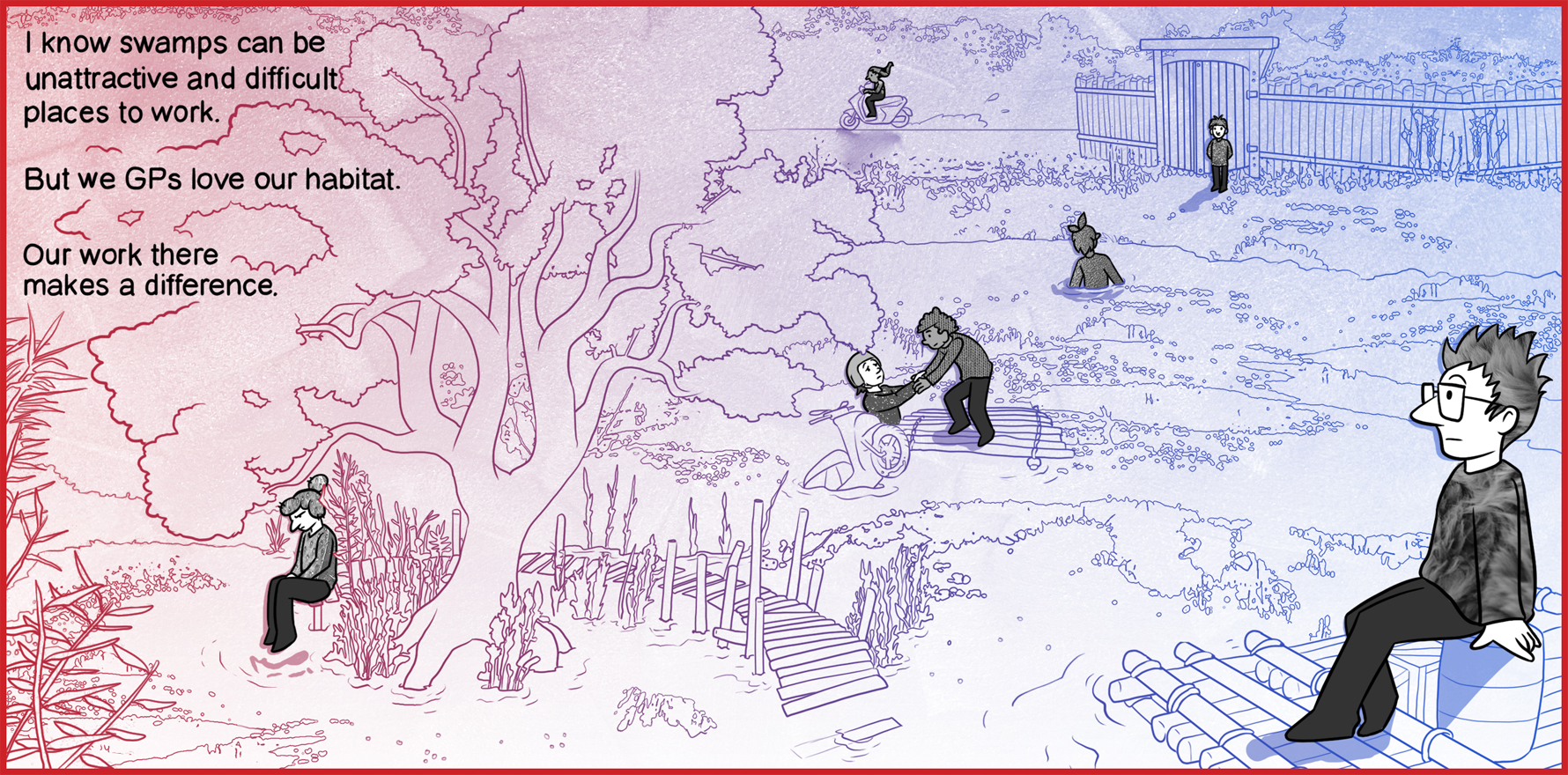
The next challenge for Professor Stone and the research team is how to effectively communicate the issues facing women in general practice.
“Academic dialects can never convey the deep and profound grief and loss that is part of our data,” she said.
“We need to find a narrative and a platform that conveys the depth of the work without being so confronting that the audience becomes defensive.
“The last thing we need is another group calling for an online doctor’s health module, making individuals responsible for systemic failings of a system.
“Weaponising that resilience narrative is simplistic, unhelpful, and it’s profoundly disrespectful.”
In answering her own question on how to tell the story of the “death of women GPs as an industry” engaging and accessible, Professor Stone put up a slide which simply read “Murder on the Medical Express”.
Exactly what this means is yet to be revealed, but Professor Stone is scheduled to present more on the project at the RACGP’s GP25 conference in November.
