

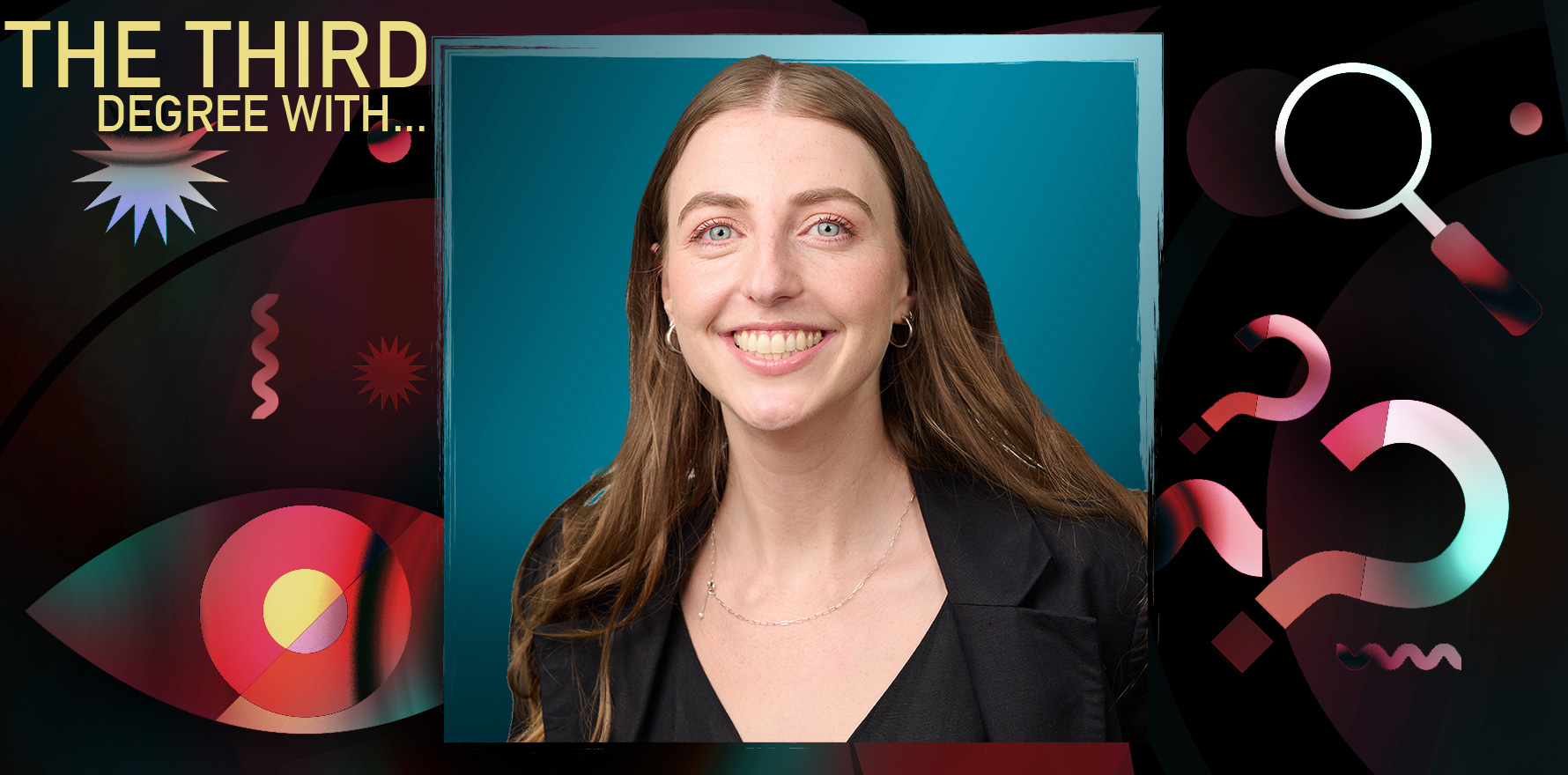
Avant Foundation grant winner and previous registrar of the year Dr Karen Freilich says it’s 'really wonderful being a GP'.
Sexual health GP Dr Karen Freilich has spent the better part of the last decade taking what she calls the “DIY approach” to upskilling – all to get exactly where she is now.
Recently, her efforts were rewarded with an Avant Foundation grant to undertake additional training with the European Society for Sexual Medicine in Budapest.
Dr Freilich sat down with The Medical Republic for a chat.
TMR: Tell me about your work and the process of winning the grant.
Dr Freilich: I feel incredibly grateful and lucky to get the Avant grant.
There were two really amazing things about it. Firstly, it’s just a really lovely thing to receive, and it allowed me to actually embark on the training that I wanted to do, which I’ll get to in a minute.
It is really validating to get a grant for something like sexual medicine, which is usually overlooked and undervalued in the medical space.
It felt really motivating and really validating that what I was doing was important and acknowledged. It was just so appreciated.
Basically, it was a course with the European Society of Sexual Medicine – ESSM – and it’s a training course for doctors around the world to upskill in sexual medicine, which is essentially sex therapy for doctors.
It was a group of gynaecologists, urologists, psychiatrists and general practitioners who all wanted to upskill in the area.
TMR: Why this course specifically?
Dr Freilich: I currently work at Monash Health in the sexual medicine and therapy clinic, and the clinic is run by doctors who have all trained through this course in Budapest.
We provide sexual medicine to all genders, all ages, across Victoria and sometimes across Australia.
We treat and manage all types of sexual difficulties: pelvic pain, vaginismus, vulvodynia, erectile dysfunction, premature ejaculation and many, many other presentations that are uncategorised.
It’s a really unique clinic. I think it’s one of the only clinics of its type in Australia, and it’s particularly unique because it’s a public clinic, so it’s funded by the public system.
We have a very, very busy clinic. There’s often up to a four-year wait list, and we can’t upskill to train in Australia. We have to go overseas – usually to Budapest – for training. It just doesn’t exist in Australia.
TMR: Do you know why that is?
Dr Freilich: I think there’s a few reasons.
We’re a small country, in the sense that there’s a lot of training programs that don’t exist here and you have to upskill. But sexual health is also, generally speaking, under-recognised and undervalued and therefore underfunded.
If you don’t have enough people working in the area, then you don’t have enough clinics to then train the future medical workforce.
So it’s a bit of a chicken and egg scenario, right? You need more people to work in the area, but they need to be trained. In order for them to be trained, you need more people work in the area to train them.
What is good about me doing the course is I can work at Monash and train up future doctors to then work in this area in the future, which means there will then be more people working in the area, therefore more clinics and therefore more patients.
TMR: How did you get started in the sexual health space?
Dr Freilich: I have been interested in sexual health and sexual medicine since I was a medical student – so a very, very long time.
In 2013 or 14 I did my Honours thesis in contraception, so I’ve been interested in the space for a long time. Then during my junior doctor years, I went to London and did a masters of sexual and reproductive health research.
Currently, I work at Melbourne University and I lecture and tutor in sexual health there, and I do research at Melbourne Uni on abortion stigma.
So I guess most of my research focus is in the abortion world, but I think abortion stigma and contraception and all aspects of sexual health lend themselves really well to sexual medicine and sexual difficulties, because when you’re talking about abortion and stigma around abortion, It’s all linked in with shame and stigma and secrecy around sex and everything that can happen if it doesn’t go to plan.
There are two main areas that I work in: abortion work and abortion advocacy and stigma, as well as sexual medicine and therapy.
One gave passion to the other, because so often when you see shame and stigma around sex, you end up being more comfortable having difficult conversations about sex in and of itself.
From a more practical point of view, when I was a medical student I was really lucky to do a placement in my spare time at the sexual medicine and therapy clinic.
I wasn’t actually meant to, but I went out of my way to go there in my spare time because I’d heard of it and it sounded really interesting.
That was back in 2016, and I essentially said to them at the time, ‘what training do I need to do to work here one day? Like, I will just spend the next, essentially, decade of my life training up to do what I need to do so I can one day work here’.
And I did, and I did lots of extra training and was incredibly, incredibly lucky to get a job at the clinic.
But every bit of training that I’ve done and every extra upskill has been very much in my own time, usually with my own funds. It’s a very DIY approach to upskilling because there’s no formal pathway.
TMR: Did you go into general practice as a result of that experience in medical school?
Dr Freilich: I realise I’m sounding almost like an advert for general practice, buy I genuinely, genuinely love being a GP.
When I was in medical school and in my junior doctor years, I really, really wanted to be an abortion provider, and I wanted to speak to people about sexual difficulties.
I tried out a lot of different things to see what felt right, whether it was gynaecology or psychiatry, but it just continually made sense to do general practice, because you are able to tailor your practice in the way that you want to do it.
Related



In my day-to-day as a GP, I do a lot of IUD insertions. I’m a very proud medical abortion provider, so I prescribe and provide medical abortion and non-directive pregnancy counselling.
I do implanons. I do gender affirming care, so transgender care and gender affirming hormone therapy and a lot of sexual counselling as well, all as part of general practice.
And then in 2022 I got the Australian GP Registrar of the Year Award, which was amazing and really, really lovely.
A lot of my research is not just about abortion, but it’s often about abortion and contraception and sexual health, but through a primary care lens, because I do believe that the overwhelming majority of sexual healthcare happens in primary care.
Upskilling general practitioners and providing the capacity to do it in general practices is, I think, the place that it belongs. It’s really wonderful being a GP in this area.
TMR: It’s nice to hear that. We often hear about a lot of dissatisfaction among GPs, so it’s nice to hear someone – especially a younger doctor – be positive about it.
Dr Freilich: There is so much negativity, and there’s so many burnt out GPs, and I’m definitely not denying that there’s things to complain about; I think they’re defunding some Medicare item numbers even in the next few weeks. There’s definitely gripes.
I genuinely love my job. It might be that I haven’t done it for long enough or that I’m not cynical yet, but I really, really, really love it.
I think I was also really lucky to have good mentors in my GP training who taught me to have good boundaries and good work life balance.
I mean, it’s Tuesday afternoon and I’m petting my cat in my garden, so I think that also helps sustain me, but it definitely doesn’t negate the gripes of general practice and the constant drama with Medicare item numbers.
TMR: You work in some areas that can, unfortunately, attract criticism – especially abortion care and gender affirming care. Over the last few years, we’ve seen politicians in multiple countries try to effectively restrict the way that doctors provide care in those areas. Have you felt the ripples of that in your own practice?
Dr Freilich: I think there’s two things that can be true at once.
One is, I’m incredibly fortunate to work in Australia.
But two is that I’m incredibly aware that I can’t take this reality for granted, and the future might not look as safe as it does now.
We’re very, very lucky in Australia to have relatively good abortion access and relatively good, relatively safe gender affirming care.
There are still miles and miles to go and huge health inequalities and huge issues with access and cost and location and postcode lottery.
But in saying that, I feel very lucky to work here.
Looking through a worldwide lens, I’m very conscious that the reality that we have now is something we absolutely can’t take for granted.
I’m very, very grateful for the advocacy, especially of abortion advocacy groups and of trans advocacy groups, the people who work in this area, who constantly continue to advocate for these services to be available.
I feel very lucky at the moment, as a provider, to have no stigma and no shame, and I have almost no issues whatsoever. I feel very, very lucky – but again, I don’t take that for granted, and that might not be the case in the future.
TMR: What would your advice be for younger doctors who want to go into this area?
Dr Freilich: The best advice I would give is to take your time to really understand what it is that you love doing.
Medicine is incredibly vast and incredibly varied, and there are so many different specialties and sub-specialties and sub-sub-sub-specialties, and it’s only through really spending time looking at every nook and cranny that you realise what you really like.
A lot of it comes down to seeking out good mentors and listening to advice of people that have done this before and spending time – often in your own time – learning and upskilling in the areas that you like.
Be patient and take your time, because it’s hard to know what you really like until you’ve tried it.
TMR: We like to end on a light-hearted question. What do you think your cat, Mimi, would do if she was a human?
Dr Freilich: If she was a human, she would literally do nothing different. She would absolutely just lie on velvet in the sun all day and demand food constantly, and she would not change a single thing about her life.
She would live the exact same life, because she knows how good she’s got it.
This interview has been edited for length and clarity.
