

Welcome to psychophysics 101.
Every day, scientists are answering important questions. Sometimes, they are questions that you didn’t even know existed.
Things like: ‘can microbes survive in space?’ and ‘are people who think Ricky Gervais isn’t funny suffering from depression?’.
Now, the boffins at Liebig University Giessen have come up with an answer to another age-old question: what makes yucky liquids yucky.
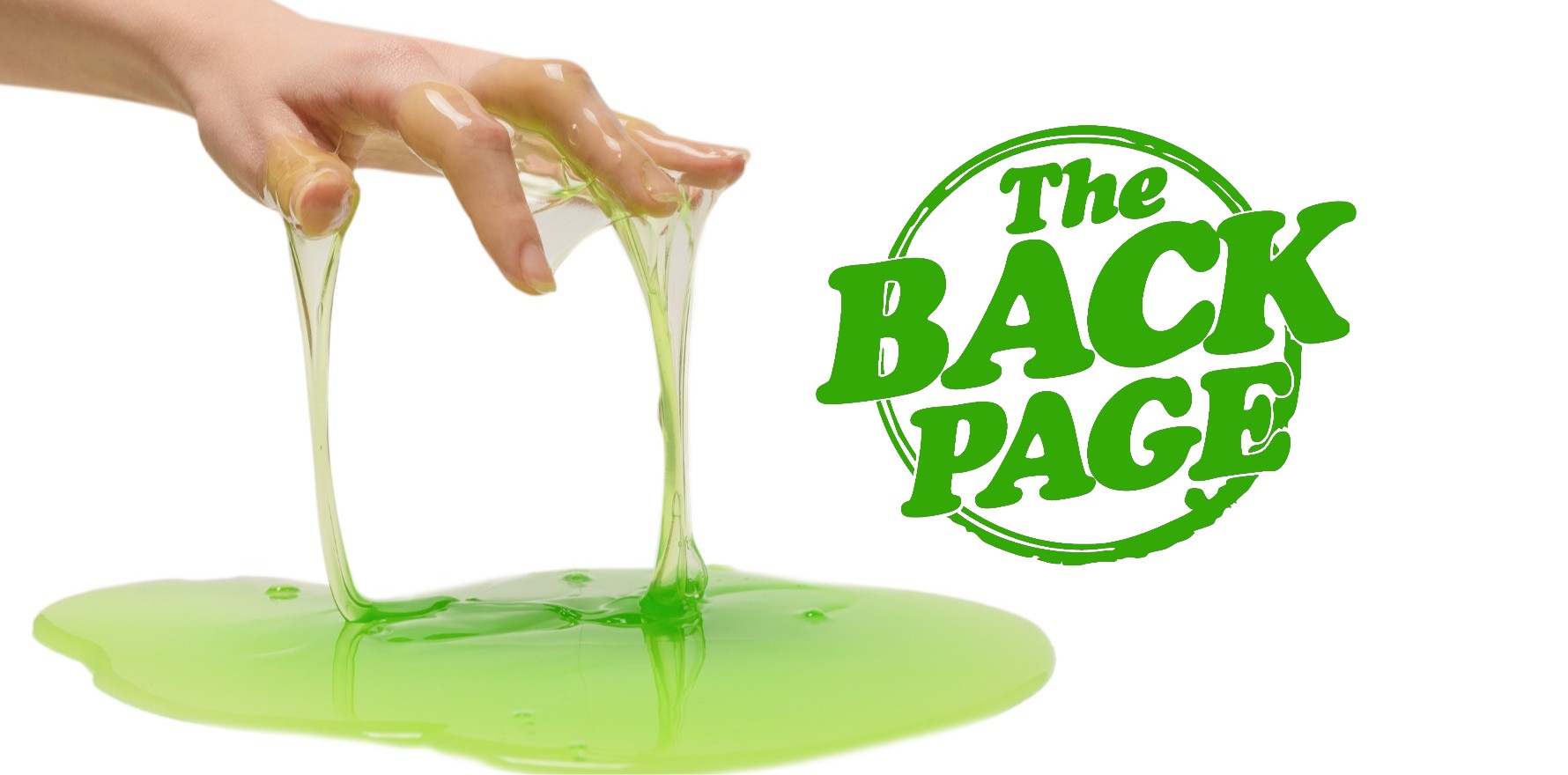
The key, it turns out, is in how much a liquid clings to the skin.
The German research team prepared 15 custom liquids by mixing honey and hand cream with different amounts of water, glycerine or starch.
Each concoction was then assessed on its level of viscosity before being smeared onto a testing tray which rested on a force sensor.
They then recruited 11 volunteers to gently rub each liquid in a circular motion.
To ensure proper scientific rigour, each volunteer was required to use their index finger on their right hand and to wash their hands before touching each substance. They also had to wait for 10 minutes after each hand wash to “allow fingertip moisture to be restored naturally”.
Two objective measures were taken: the coefficient of friction (slipperiness, in layman’s terms) and the pull-off force (stickiness).
The study participants were also asked to rate the perceived viscosity and unpleasantness of each liquid.
Materials with higher perceived viscosity and higher pull-off force were strongly and repeatedly rated as more unpleasant.
Slipperiness, however, was not associated with unpleasantness.
This came as a surprise to researchers, who initially believed that slipperiness would be associated with slime and thus bestow the yuck-factor.
“This is interesting considering instinct theory, which would predict a repulsion impulse occurring upon skin contact with slippery and slimy substances,” they wrote in Proceedings of the Royal Society B.
“One possible explanation is that our study exclusively provided haptic information while restricting other sensory information.
“When these other senses are limited or absent, the typical aversive response to slippery substances may be attenuated.
“Taken together, these findings highlight that [pull-off force] and perceived (also physical) viscosity play important roles in determining how unpleasant a liquid feels.”
Send your sticky, gloopy or downright unpleasant story tips to Holly@medicalrepublic.com.au.
