

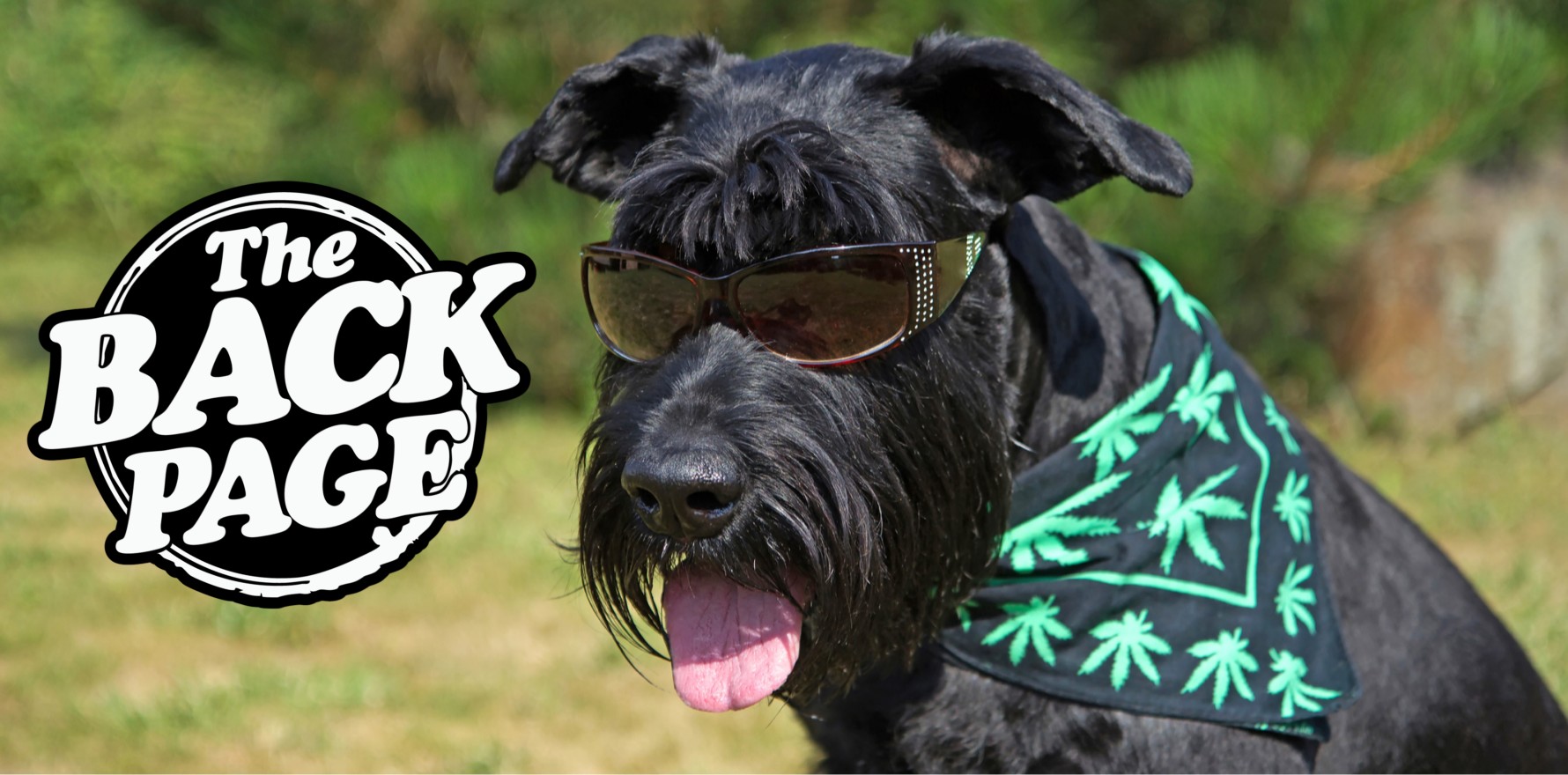
Can giving cannabis to canines make them less aggressive?
What’s the best way to calm down a grumpy old dog?
Give the dog a bone, perhaps? How about give the dog a bong, instead.
If your first reaction is: “But my dog is dopey enough as it is already” then your BP scribbler, the one-time owner of an exceptionally ditsy dalmatian, can only concur.
But far be it for us to fly in the face of science, so we are here to bring you the findings of a project which analysed data from a survey of more than 47,000 dog owners in the US.
Publishing in the journal Frontiers in Veterinary Science, a research team from Arizona State University crunched the numbers from the Dog Aging Project, a community science project that aims to understand how genes, diet, lifestyle, and the environment influence aging and health outcomes in companion dogs.
Delving into the administration of cannabidiols by dog owners, the boffins found that from the years 2019 to 2023, 7.3% of dogs in the survey had been given CBD and hemp products at some stage, and 2759 of those dogs (5.8%) were given a daily supplement by their owners.
Moreover, older dogs, and particularly those with health issues such as dementia, cancer and joint problems, were more likely to have been doped up than their younger, fitter buddies.
Interestingly, the survey found that dogs given CBD initially actually had higher-than-average aggression levels compared with those with no CBD use. The researchers said this could indicate that the owners may have decided to give those animals CBD because of their heightened aggression in the first place.
But over time, these dogs were reported to have below-average aggression, an outcome the team said could be attributed to the long-term use of cannabidiols.
However, no similar effect was observed for other behaviours, such as agitation or anxiety.
“Most canine aggression is related to underlying stress or anxiety – a fight or flight response that kicks in. It is unclear why only aggression, but not other types of anxious or agitated behaviours, seemed to be improved with CBD treatment,” study co-author Dr Julia Albright said in a media release.
“This long-term behavioural change highlights the potential of CBD as a therapy for canine behavioural issues,” she added.
But before owners of difficult dogs jump on the internet to locate a “not-too-many-questions-asked medicinal cannabis purveyor”, the study authors did highlight some caveats to their findings.
For example, the team did not look into the mechanism of behavioural changes in the potty pooches, and no information on dosage, formulations, administration routes, and product sources was collected.
There was also the tricky question of owner bias potentially skewing the results.
But if you are fully determined to get your canine caned on the wacky baccy, then be mindful of the dosage, because the team also warned that CBD products could have adverse effects, including gastrointestinal issues and diarrhoea. Erk!
Personally, we think you’d have to be barking mad to give ganja to your fur baby, but then we don’t go out in the midday sun either.
Don’t bogart those story tips, my friend, pass them over to Holly@medicalrepublic.com.au.
