

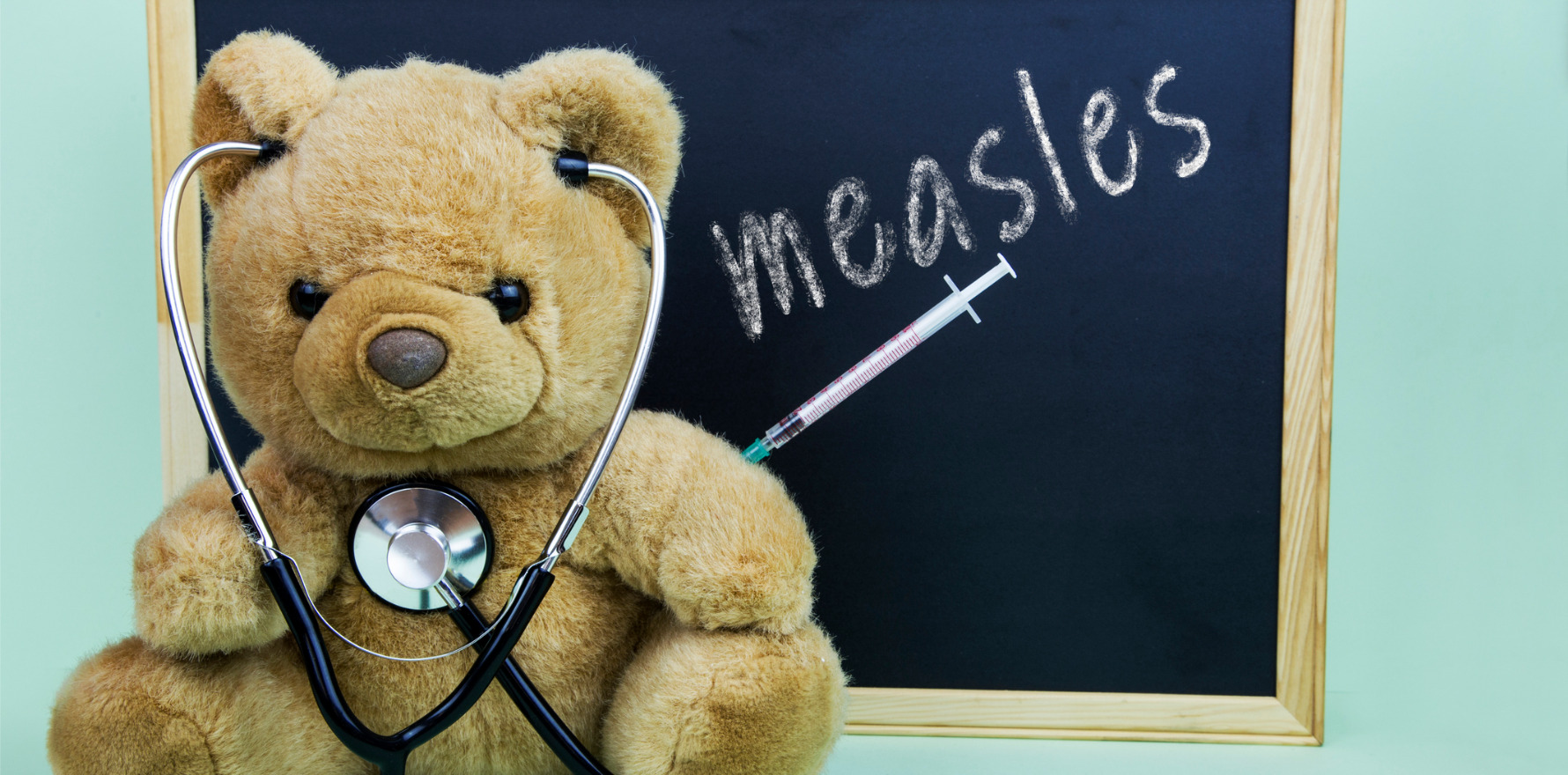
International outbreaks continue to drive a surge in measles cases among returning Australians. See where the latest alerts are.
The Australian Technical Advisory Group on Immunisation has updated its advice to strengthen protection for infants travelling overseas.
The group now recommends that children aged six to 11 months receive an additional dose of a measles-containing vaccine prior to international travel.
This dose is intended to provide temporary protection during a period of increased exposure risk and does not replace doses routinely scheduled under the National Immunisation Program.
Outbreaks of measles continue in many countries, exposing Australians travelling overseas to the risk of infection with measles. This includes travellers to popular tourist destinations, including Indonesia, where periodic outbreaks of measles continue to be reported.
Overseas-acquired measles has contributed to a high number of measles cases reported in Australia last year.
According to the National Notifiable Disease Surveillance System, overseen by the Australian Centre for Disease Control, 180 measles cases were reported in 2025 – more than triple the number recorded in 2024 (57).
So far in Australia this year there have been four cases of measles reported. Three of these have been in Queensland and one in Victoria.
So far this year, there have already been public health alerts in NSW (here and here), Victoria (here), Queensland (here), Western Australia (here) and South Australia (here).
Australia’s chief medical officer Professor Michael Kidd said vaccination remained the best protection against measles.
“Measles vaccination is particularly important for adults and children at higher risk of exposure, including those travelling overseas,” he said in a statement.
“The MMR vaccine is highly effective – two doses provide 99% protection against illness and serious health complications. Most Australians receive these two doses as part of the National Immunisation Program (NIP) Schedule at 12 and 18 months of age.”
The vaccine is provided free of charge for children at these ages, for people under 20 years requiring catch-up vaccination, and for refugees and humanitarian entrants of any age. In some jurisdictions, additional groups may also be eligible for funded vaccination, while others can access the vaccine through private purchase.
Related
GPs are encouraged to opportunistically assess measles immunity, particularly in children aged 12 months and over, adolescents who may have missed doses and adults born in 1966 or later who have not received two documented doses of a measles-containing vaccine.
Infants travelling overseas from as young as six months may also be vaccinated following an individual risk assessment, balancing travel destination, duration and likelihood of exposure.
“Where an infant aged six to 11 months receives an MMR dose before travelling overseas, the dose needs to be repeated. This means that these infants need two further doses of measles-containing vaccine,” said Professor Kidd.
“They should receive the next dose of MMR vaccine at 12 months of age or four weeks after the first dose, whichever is later. They should receive their final dose of measles-containing vaccine as MMRV vaccine at 18 months of age as routinely recommended.
“It is not necessary to repeat an early dose if it was given at greater than 11 months but before 12 months of age.”
