


Social media says we should be, but one Australian expert advises not to buy into the hype.
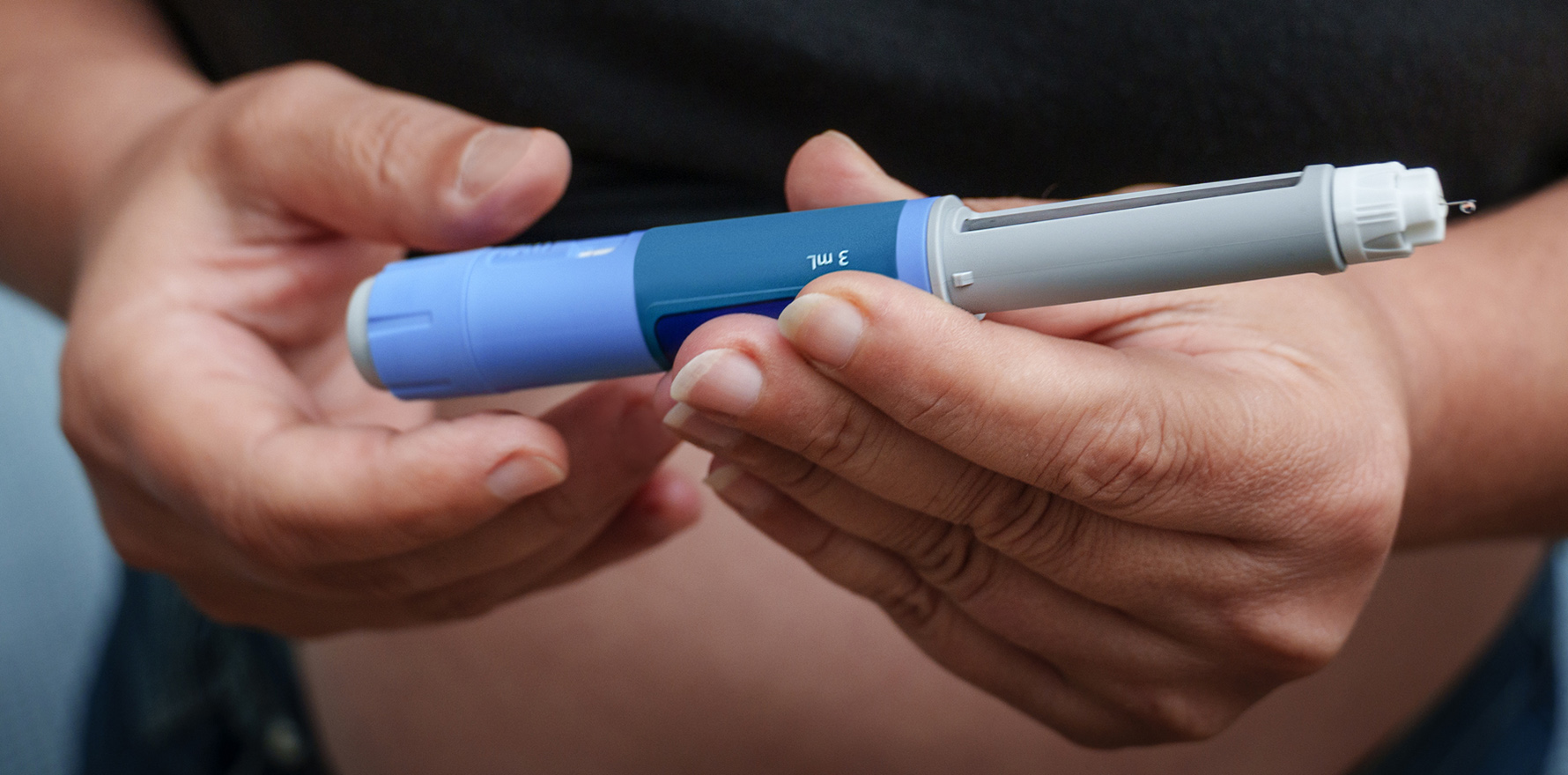
The arrival of highly effective incretin-based medications has sparked much discussion on social media and throughout traditional media – as well as amongst researchers and clinicians – about whether there is a need to be concerned about muscle loss during the use of GLP-1s and other similar types of medication.
But a presentation from Associate Professor Priya Sumithran, an endocrinologist and from Bayside Health and Monash University, at the recent International Diabetes Federation Western Pacific Region Congress, put this speculation under the microscope to determine if the reported muscle loss is something we truly need to be worried about.
Professor Sumithran began her talk by clarifying some of the terminology used in conversations like these.
“When looking at the literature on body composition, we need to be aware that different techniques measure different things. And [although certain] terminology – such as fat-free mass, lean soft tissue, and skeletal muscle – is often used interchangeably, they actually represent quite different entities,” she told delegates.
Furthermore, while clinicians and researchers are interested in the body’s anatomy, such as muscle or adipose tissue, which can be visualised by CT or MRI, most body composition studies use techniques like DEXA scans – which do not consider anatomy. Rather, these techniques simply divide the body into compartments such as fat mass and fat-free mass, regardless of where they are distributed.
“[This means] fat mass is not equivalent to adipose tissue. Fat mass is, by definition, entirely comprised of fat molecules. But they are everywhere in the body, not just in adipose tissue. It includes the fat that’s distributed throughout organs, muscle, and everywhere else,” Professor Sumithran said.
“And conversely, adipose tissue isn’t just fat mass. It’s mostly fat mass, but it’s also comprised of around 15% water and up to 5% of protein.”
“Similarly, fat-free mass is not skeletal muscle. It is [all the] fat-free molecules throughout [the body], and while skeletal muscle comprises some fat-free molecules, it also does contain some fat.”
Weight loss, therefore, is always the loss of both fat mass and fat-free mass. There has been a rule of thumb where about 25% of the total weight lost will be fat-free mass.
“While this is a generalisation, and there are lots of different factors that can affect the specific proportion [of fat-free mass lost], including dietary and activity factors, aging, and metabolic and hormonal states, the data support this as a reasonable approximation,” said Professor Sumithran.
Although incretin medications have been reported to result in fat-free mass accounting for as much as 39% of total weight loss, a review of 40 DXA-based studies found the average proportion of weight lost as fat-free mass was 29%. Similarly high values have been reported following behavioural interventions (as high as 38%) and metabolic bariatric surgery (44%) but other sources have reported lower values for the median (26% for behavioural interventions and 31% for Roux-en-Y gastric bypass).
“Importantly, greater weight loss does lead to greater absolute loss of fat-free mass,” said Professor Sumithran.
This then poses the question of whether incretin medications cause greater fat-free mass loss than other forms of weight loss interventions as a knock on from being more effective than said interventions and causing greater total weight loss.
And while the absolute amount of fat-free mass lost increases with the amount of weight lost, the proportion of fat-free mass lost relative to the total amount of weight loss remains the same for both pharmacological and surgical interventions.
Considering weight loss from an anatomical perspective told a similar story.
Liraglutide has been shown to reduce thigh muscle fat and volume in people with obesity, while tirzepatide has been shown to have the same effects in people with type 2 diabetes. However, smaller bodies have less muscle, which led Professor Sumithran to question whether the reduction in muscle volume was adaptive.
“You need less muscle to carry around a smaller body, and is that [reduction in muscle volume] normal for [the] expected weight loss, or is it maladaptive and greater than expected?” she said.
Related

A landmark 2024 review on this exact question found that the skeletal muscle changes after GLP-1 treatments did appear to be adaptive. That is, the changes in muscle volume were commensurate with what was expected to occur given the age, disease status, and weight loss achieved by participants.
While Professor Sumithran acknowledged the importance of this finding, she went on to pose another question about whether muscle size was the best outcome to measure, or whether the change in the quality and/or functional ability of the muscle was more important.
“Even though we know that that muscle will likely be getting smaller, its glucose uptake and disposal is improving,” she said.
“So, ultimately, what we’re most concerned about really is not the muscle size itself, but the impact of any reduction in size on physical function, because this is the kind of thing that we hear that these medications cause sarcopenia, and if they do, [then] that that would be a real concern.”
The current evidence base for this question is not quite as clear. There are numerous different ways to measure muscle quality and function. Many incretin-based trials have not captured changes in physical function as part of their protocol, and the ones that have considered them as secondary or exploratory outcomes.
“But,” said Professor Sumithran, “despite substantial weight loss there is either an increase in physical function when measured objectively, or at least no decrease.”
Changes in self-reported physical function have been captured more consistently as part of these trials, with almost all of them showing an improvement in physical function after weight reduction.
Importantly, the more weight people lose, the greater the self-reported improvements in physical function. Similarly, the individuals with the worst physical function at baseline are those that report the greatest improvement.
“Perhaps that makes sense, but if you think about it, the ones with the lowest physical function at baseline are probably those with the highest risk of sarcopenia are the ones that we’re most worries about, and they’re the ones that report the greatest improvement,” Professor Sumithran said.
“My conclusion from this is that, on the basis of the current evidence, losses of fat-free mass and skeletal muscle [during obesity treatment] are highly variable but are not greater with incretin-based medications [compared to] other treatment modalities.
“They appear to be commensurate with [the] reduction in body size… [and] are accompanied by overall improvements in body composition, fat infiltration, and self-reported physical function.
“There may be some populations that are at [the] greatest risk, and those would be the populations that we don’t often include in clinical trials. Adequate nutrition and resistance exercise may help optimise body composition during weight loss.
“But I think most importantly is that we really do need more high-quality data dedicated to these specific questions – studies focusing on evaluating objective measures of strength and function, and specifically looking at muscle mass and quality – before we draw conclusions about the effect of obesity treatment on muscle [mass].”
Professor Sumithran ended her talk by highlighting that while the available evidence would not calm the hysteria surrounding this topic on social media, it was imperative that clinicians and researchers not buy into that discourse at this point in time.
The International Diabetes Federation Western Pacific Region Congress was held in Melbourne from 18 to 21 August 2026.
