

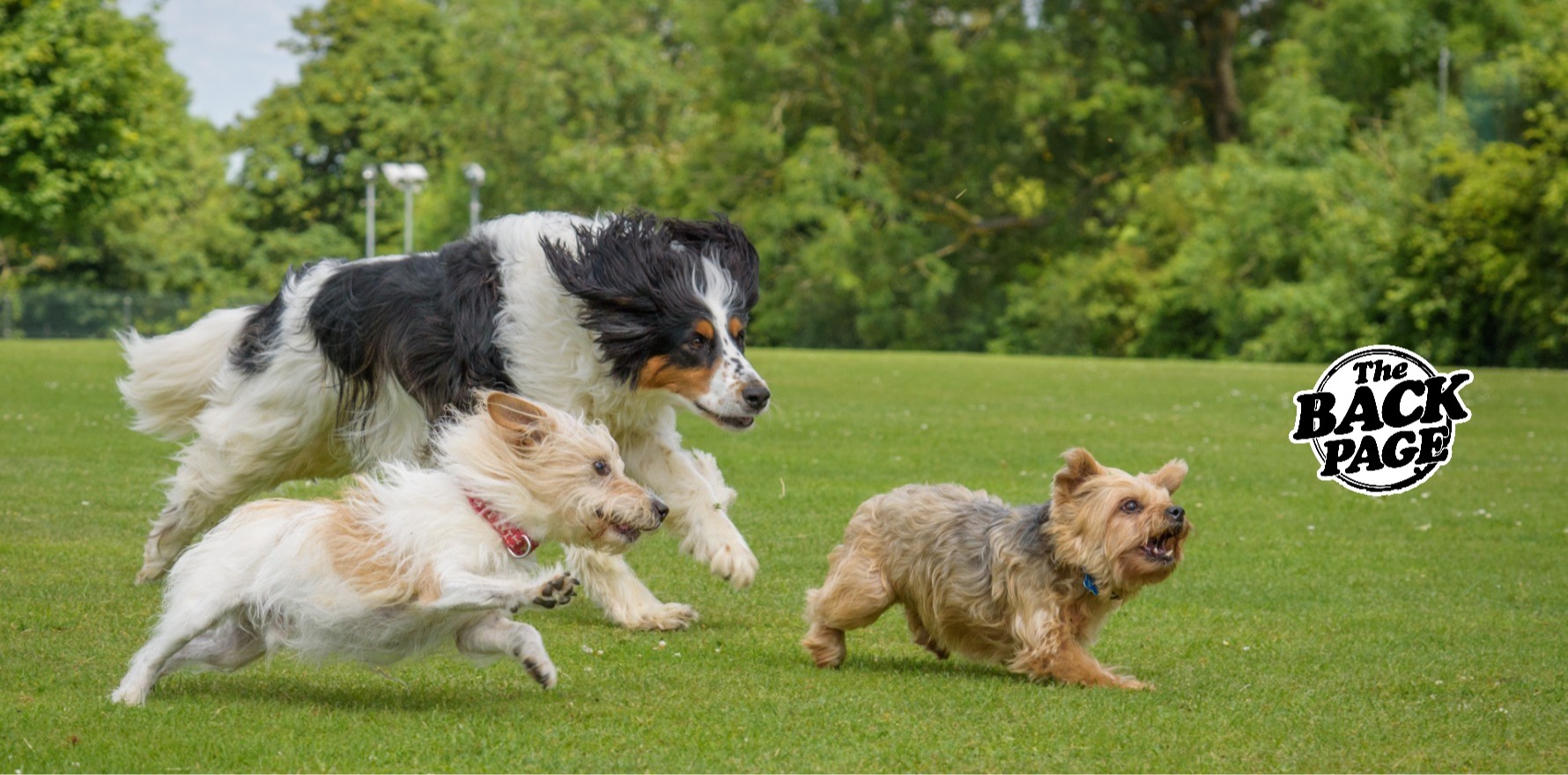
A new study confirms dog owners really do have a pack mentality.
Dog people may have found their one-up on cat owners, with a Japanese study finding that a bond with a hound was more likely to have an impact on a sense of community than friendships.
According to Japanese researchers, dog ownership has been shown to result in stronger sense of community, similar to how neighbourhood-based connections are fostered.
A survey of 400 dog owners and non-owners in Tokyo found that a positive correlation between dog ownership and having anchored personal relationships, as well as having more incidental interactions with people in their neighbourhood.
This element has been linked to the fact that the people you meet while walking a dog are likely to be from the same neighbourhood, whilst regular friendships are often formed for reasons beyond living close to each other.
The effects of walking your cat are not explored in the study, but one assumes that the only sense of community typically found from cat walking in neighbourhoods is questions such as:
“How’d they convince the cat to go on a leash?”
“Why is the cat chasing a tennis ball?”
“Does the owner have to carry a bag of kitty litter?”
This report is one of very few qualitative studies focusing on the connections between dog ownership and human-to-human relationships. One is suspicious that Big Cat has some hand in this dearth of literature.
According to former models of pets as a social binder, pets generate social support by initiating incidental interactions that often lead to the formation of friendships.
Simply owning a pet has been shown to be a catalyst for contact with strangers and acquaintances, with friendships often forming from these interactions via the facilitation of the presence of a pet.
The Wood model argues that pet ownership is a major influence for the quantity of social support received as a result of incidental interactions and friendships.
However, the Japanese study published in PLOS One does also show some truth to the stereotype that dog owners are incapable of not talking about their canines.
The study’s respondents reported that whilst their interactions with other dog owners were at a higher rate than non-owners, the topic was almost always about each other’s furry companion.
“Respondents reported knowing an average of 30.3 names of other individuals’ dogs, but only an average of 11.1 names of the dogs’ owners,” the authors wrote.
It was also found that between dog-owners and non-owners, both groups reported having the same number of friends.
This implies that whilst dog owners are having frequent interactions with each other these relationships these relationships are strictly anchored to talking about their dogs.
Establish an anchored personal relationship by sending a dog photo to Holly@medicalrepublic.com.au.
