

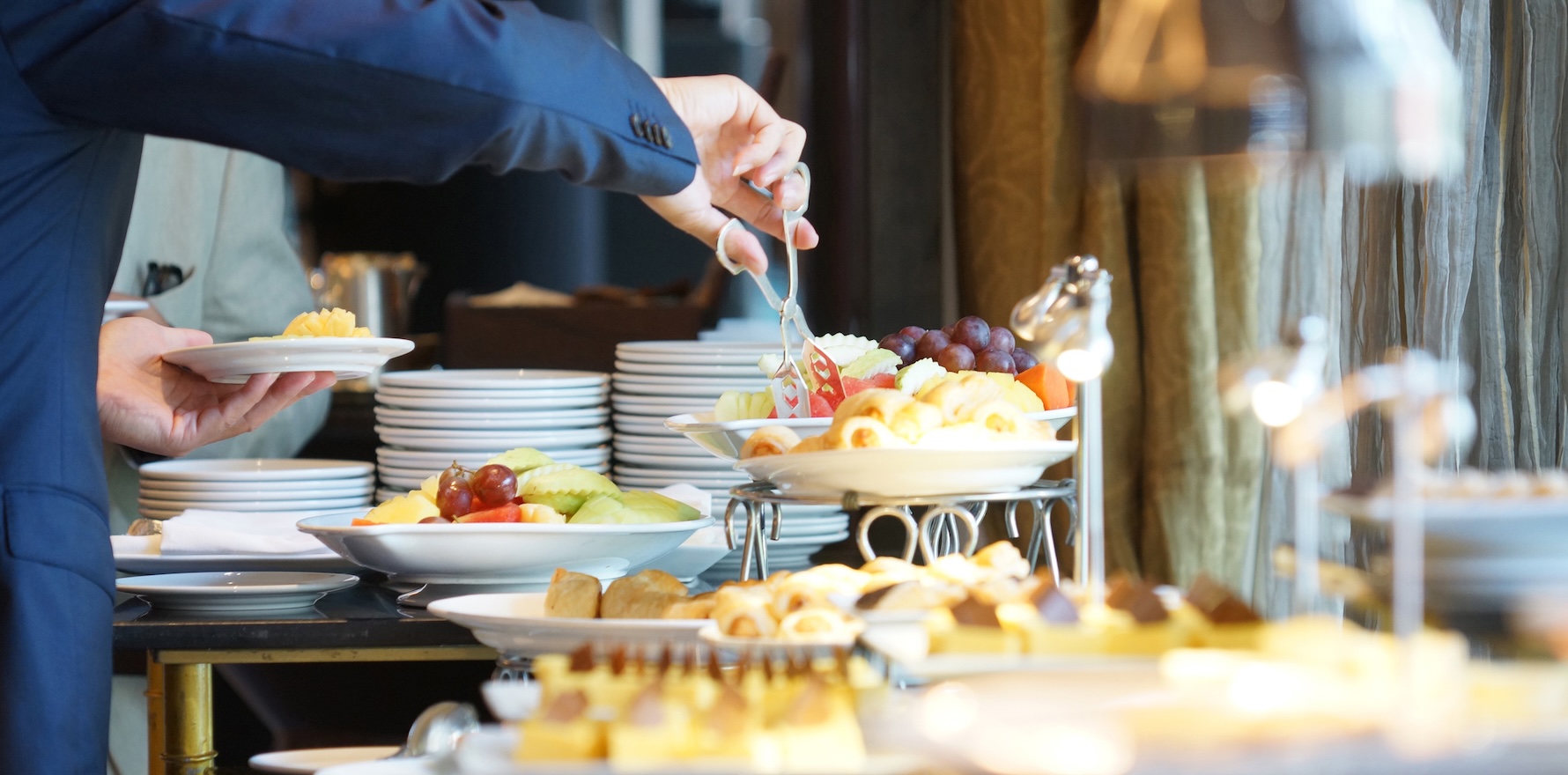
I want good food, diverse speakers, engaging content and a decent cup of coffee. I’m not asking for much.
I attend several conferences each year. By the time this is published, I will have attended four conferences in four weeks, required for my different professional roles and responsibilities.
I’m not a conference enthusiast, despite the title. National conferences are tiring and often take up weekends and it’s a struggle to rearrange clinical days and personal commitments to accommodate them.
International conferences are even more difficult; combining them with personal leave can certainly reframe the narrative (a holiday), but the fly-in-fly-out program of long-haul — flight — airport — hotel — conference — hotel — conference — hotel — conference — airport — long-haul flight is a career opportunity at best and a terrible exhausting chore at worst.
And yet I persist, because the value of conferences far exceeds any inconvenience or tiredness that accompanies them.
My life has been fundamentally changed by people that I have met at conferences, and I remember keynotes so impactful that a decade later I am still dwelling on their messages, and career-defining opportunities that have emerged serendipitously from having just the right audience member at just the right time of a presentation I have given.
Very often, I’m at conferences also attended by interstate and international friends, and long crowded conference days give way to evenings in hotel rooms and local restaurants, filled with affection and fits of laughter and precious bonding with much missed friends.
We meet back six hours later in the hotel breakfast buffet, bearing exhausted faces and plates stacked with undercooked toast, before assembling at a meeting point in the hotel reception for the group trek to the local conference centre, and that one friend will convince the whole contingent to stop for an actual coffee not a hotel coffee and make everyone conspicuously late.
So as a silver (maybe gold) card member of the Medical Conference Circuit, here is what leaves me satisfied and inspired after a conference:
Good food
A conference is not dissimilar to a wedding: people remember the food. I, myself, am working on a rankings list of best conference food and will look to publish this soon with a major editor if someone could please help me find an interested major editor because I, myself, have unfortunately found none and I suspect even my editor at TMR will turn this idea away.
[Editor’s note: no, Pallavi, she won’t.]
I love eating out, especially with friends and family. But I lose the love when I’m travelling for business or a conference and meals are all catered or at hotels and restaurants.
So often, the food is dull, uninteresting and unseasoned– or entirely in tones of constipating carbohydrate white and diarrhoeal deep-fried brown, the vegetables few and far between. It’s convenient catering, but uninspired.
Good conference food can re-energise flagging and tired minds, soothe nervous presenters, and facilitate networking.
Truly, if the food is disappointing, I will suffer for the sake of important social meetings, or I will leave in search of a local café with better offerings because I’d rather eat a good meal then concentrate better.
Two years ago, I went to a conference in Brisbane that offered for lunch: tofu and vegetable stir fry and jasmine rice, with spring rolls on the side. The next day: basmati and channa masala with samosas for entrée. Finally: falafels with hummus, pita, grain and lentil salad, and delicate fresh Turkish delight for dessert. Morning teas were chia pudding with local berries, tropical fruit salads, and savoury pumpkin muffins. Afternoons: cut up vegetables with dips and crackers and fruit trays.
The food was plentiful, nutritious, not dissimilar to what we eat in our normal lives. The food literally brought attendees together. Sometimes I forget the details of those conferences but my camera roll and I always remember the food.
Good speaker diversity
There is a gentle way to say this, but I famously lack both gentleness and diplomacy.
The people on stage must look like the audience. Conference speakers need to be diverse in age, gender, ethnicity, physical capability, and culture because that’s how our healthy modern communities function.
On stage, conference speakers look out into a sea of people of endless colours and backgrounds and stories, but why in the audience do we so often look out to a stage of homogeneity?
Conference speakers should connect and resonate with their audiences. That is what leaves powerful memories and creates concrete messaging. Let me hear from speakers who have lives like mine, families like mine, skin like mine. Let the stage look like the patients I see, the friends I love, the educators that teach me.
Related

I have declined invitations to attend or present at conferences where there is an abysmal lack of diversity in speakers, because it is unbearably disappointing to still face this issue in near-2026 and a fabulously multicultural Australia.
Unlike the barrier to improving problem one (poor conference catering), problem two has an easy solution.
Check every panel and every speaker and every conference for actual diversity, and if it’s not good, fix it. It is not a matter of subject expertise, it’s a matter of attention and respect and inviting the right people.
The conferences I have loved and gained the most insights and wisdom from are ones that have very obviously, intentionally and passionately been curated with consideration and care for the audience – conferences that have welcomed me and created a community of speakers and attendees that reflect each other, relate to each other, respectfully engage on personal and professional levels with each other; conferences that put in the spotlight and on-stage people with wisdom and stories that life doesn’t usually give a platform to share.
I don’t ever forget those conferences because, disappointingly, they are often also few and far between.
Good material
These days I attend conferences in a variety of fields to support my variety of jobs: clinical general practice, academic primary care, digital health, medical education, and medical writing.
As I have previously written in this column, there are transdisciplinary learnings that I carry from one subject matter conference to a very different subject matter role, and so I do not bemoan having to attend so many.
Medical conferences have different agendas and objectives, are driven by different interests and investments. Some are serious and sombre, like many international academic or research conferences. Others are intended to celebrate and inspire, perhaps closer to a festival than a scientific exchange.
I attend conferences for any and all of these reasons, because I, too, am a multifaceted professional with differing needs for personal and professional development, and these needs can’t all be addressed by the same type of conference.
I know a conference has good material when I am torn between which concurrent session to attend, or desperately rely on friends to share their learnings from another conference room.
I like a mix of education, expert opinion, and innovation. I like to leave conferences feeling like my knowledge is enriched and improved, and that my beliefs are either challenged or reinforced.
Most importantly, I like to leave with a sense of hope, that there are people actively working to make the state of the world better. Whether that is through their clinical practice, or research, or policy efforts, or advocacy, or even just ideas that haven’t yet been translated and realised into existence; these speakers and their presentations change me, my thinking and my work.
What I like is a conference packed with material that is innovative, inspiring, and improving – not an echo chamber of cardboard thoughts and inflated egos. The world doesn’t need that.
This week I have already attended the 2025 AI.Care conference in Brisbane, where I didn’t know many other attendees, and stayed alone in a rather average hotel room. My goal for this conference was tolearn where and how people are using AI in healthcare, and report those insights back to the PHN at which I have a board advisory role, and to the executives at the digital health company that I recently joined.
Later this week, I will have a very different experience at the Australian Doctors’ Health Conference, at which I will know plenty of the speakers and attendees, and will be accompanied by my paediatrician best friend.
We are both responsible for overseeing training of vocational doctors, and hope to learn at this conference how to better support the wellbeing of our registrars and juniors, and as an incidental incentive, spend two wonderful days together.
And both conferences, I hope, will be full of good food, good speaker diversity, and good material. I’ll report back in the second of this series: Top 10 Conference Breakfast Bananas (if my editor will pay me for such a thing).
[Editor’s note: I’ll send you a Queensland banana.]Dr Pallavi Prathivadi is a Melbourne GP, member of the Eastern Melbourne PHN Clinical and Practice Council, GP Lead of the RACGP Academic Post Cohort and Support program, and the Chief Medical Officer at Carenza Digital. She holds a PhD in safe opioid prescribing and was a Fulbright Scholar at the Stanford University School of Medicine. She is currently studying a Master of Liberal Arts, extension studies in creative writing, at Harvard University.
