


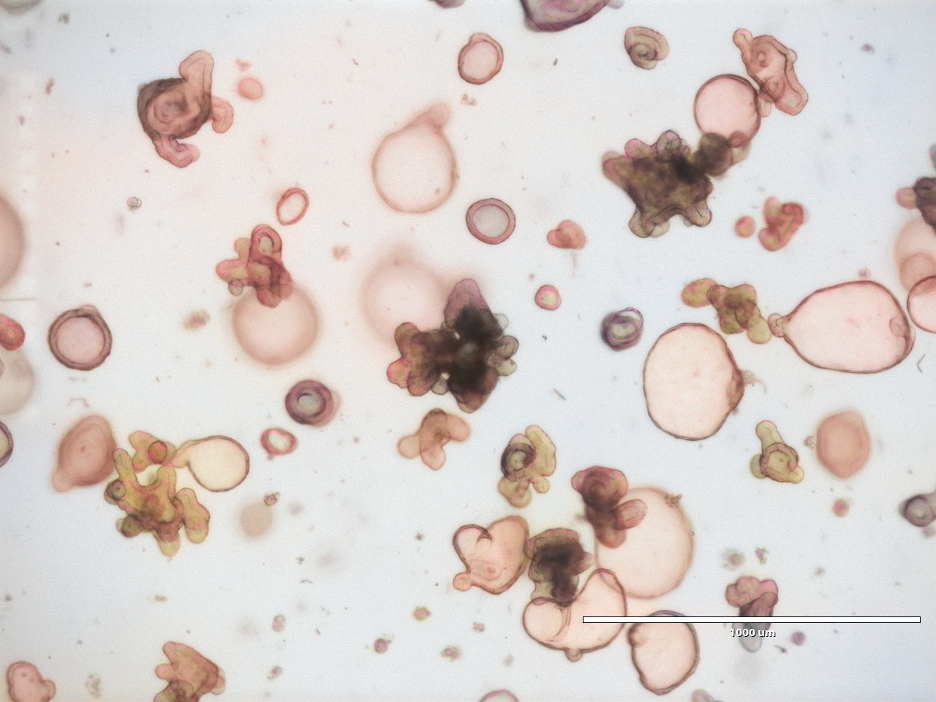
Australian researchers have developed miniature ‘organoid’ models from tissue and bacteria found in the intestines of patients.
A collaboration between Monash University and the Hudson Institute of Medical Research has resulted in researchers growing miniature models of the digestive systems belonging to paediatric patients with inflammatory bowel disease.
This is the first time such a model includes both the intestinal lining and its bacteria, allowing researchers to inject other bacteria into the “mini guts” to study the subsequent inflammatory responses.
The findings were published in Scientific Reports earlier this year.
IBD, which includes both Chron’s disease and ulcerative colitis, affects the lining of the gastrointestinal tract. Paediatric IBD patients are particularly at risk, as they develop more significant disease and experience lifelong complications such as impacted growth and malabsorption of nutrients.
“Disease modelling of IBD requires a system that recapitulates the function and heterogeneity of cells within the human epithelium,” the researchers wrote. “As mouse models and immortalised cell lines do not faithfully represent human intestinal tissue, patient-derived intestinal organoid cultures can be used to study epithelial disease phenotypes and response to commensals and pathogens on apical and basolateral surfaces.”
Twenty-seven paediatric patients undergoing gastroscopy and colonoscopy (11 with CD, four with UC, and 12 controls) were involved in the study. Most patients were female (20 females across the three groups). The average age of patients ranged between 12.0 and 12.6 years.
Two biopsy samples were taken from each patient (one from the duodenum and one from the terminal ileum) to generate and culture the human intestinal organoids (HIOs, or mini guts).
Forty-seven organoid lines were developed from the biopsies, with over 530 bacterial isolates cultured from the terminal ileum samples. Isolated bacteria included 89 Pseudomonadota, 105 Bacillota, 320 Bacteroidota, and a small number of Fusobacteria. The duodenal biopsies did not yield any bacteria that could be cultured.
“The unique biobank of paediatric intestinal organoids with molecular profiling and associated bacteria generated has allowed interrogation of the epithelium and its response to stimuli that are both patient- and site-specific,” the researchers concluded.
“This study has shown that the “inflammatory” signal in epithelium can be derived from commensal organisms and that bacteria from IBD patients can potentially lead to epithelial permeability. This variability in response at both a host and bacterial level demonstrates the importance of such a biobank, with future studies needing a higher-throughput model for experiments from this and other resources.”
Adjunct Associate Professor Edward Giles, a paediatric gastroenterologist at the Monash Children’s Hospital who was involved in the research, said the development could significantly improve the level of care provided to children with IBD.
“Children aged nine to 18 represent a group where early intervention is vital, as they face decades of managing this chronic condition,” he said.
“From a clinical perspective, this methodology is unique because it combines the expert study of a patient’s disease with the specific bacteria living at the site of their inflammation.
“It gives us a way to test whether we can promote healing of the intestinal barrier or even find ‘protective’ bacteria that could become treatments themselves.”
Professor Helen Abud, senior author on the new research, said the mini guts allowed for a more personalised approach to IBD treatments, rather than relying on a one-size-fits-all model.
“By creating living replicas of a patient’s intestinal lining, we can observe how this critical barrier protects the body from harmful gut contents, and how it heals or breaks down when exposed to different bacteria,” she said in a statement.
“These mini guts organise themselves exactly like a real bowel lining, providing a beautiful and accurate tool for understanding the diversity of this disease.”
Dr Eva Chan, a postdoctoral scientist at the Hudson Institute of Medical Research and first author on the new research, said the approach was more than simply recreating a disease state – it was about developing a predictive research tool.
“By building this biobank of matched organoids and bacterial collection from each individual patient, we are laying the groundwork for a future where we can test and tailor interventions in the lab before they ever reach the patient’s bedside,” she told media.
