

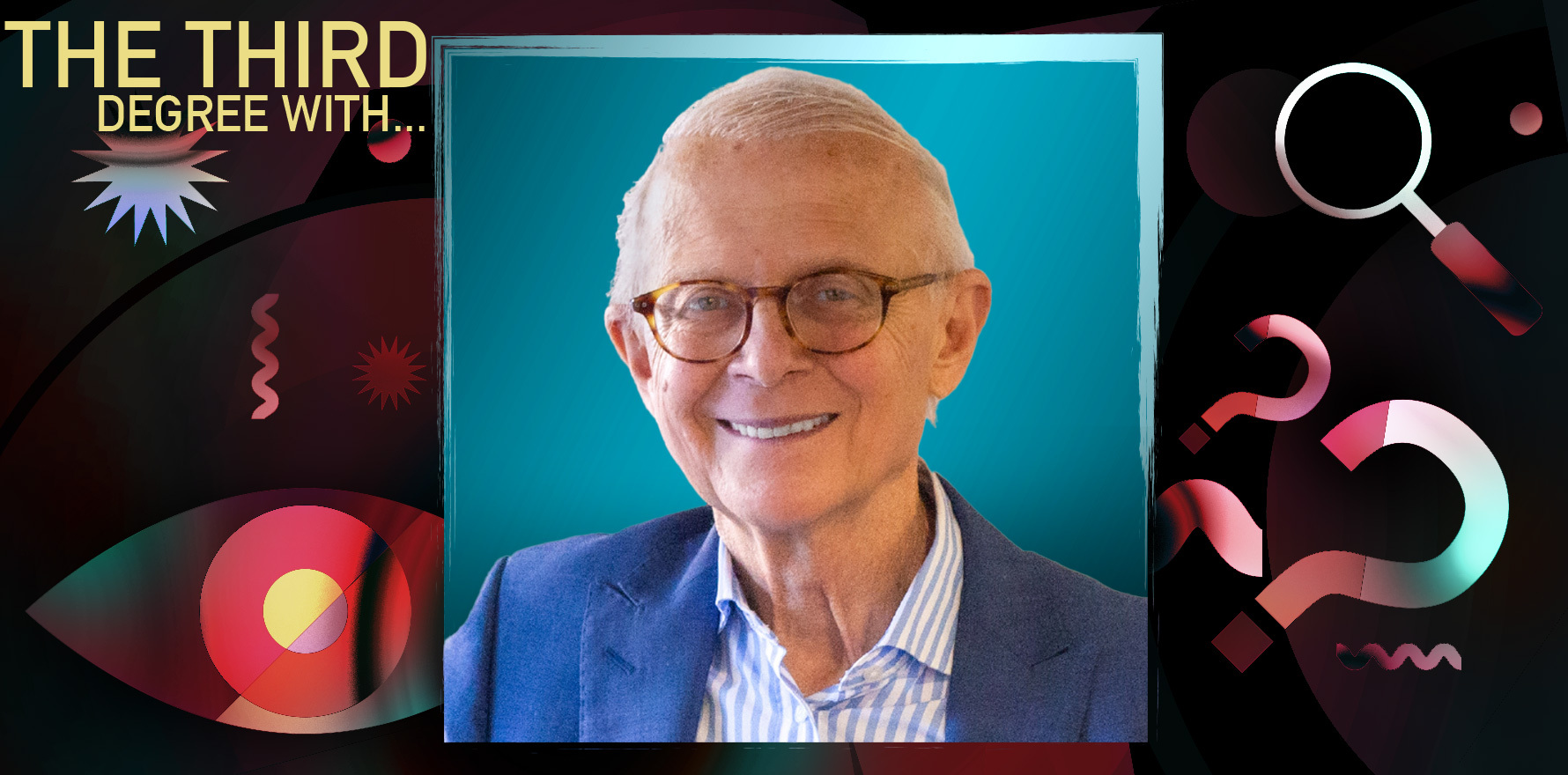
Senior Australian of the Year Professor Henry Brodaty sits down with The Medical Republic for a chat about his life, research and hopes for the future.
Professor Henry Brodaty has won many awards over a lifetime of achievement, but this is the big one and he’s going to work it.
That’s because it gets the most publicity for the clinical, research and dementia advocacy work he’s dedicated decades of his life to, and he’s hoping it will get him the minister’s ear and the ability to influence policy.
The director of the Centre for Healthy Brain Ageing (CHeBA) at UNSW still has more to do, like getting dementia navigators and a national program to delay the onset of dementia, and this award is going to help him do it.
Professor Henry Brodaty: It’s part of the deal. If you get this award, you should use it for the benefit of what you what you’ve been working on.
I’ve been getting hundreds of emails and calls. It has a lot more publicity, a lot more clout, and hopefully gives me more entrée into meeting with ministers or influencing policy.
The Medical Republic: Now, I will admit that when you spoke at the National Press Club address about living well with dementia, it was the very first time I had ever heard of this concept. It’s a very different lens. What was it that enabled you to so radically switch the way that you looked at dementia?
Professor Brodaty: Well, how do you know it was a switch, for a start?
No, I think I’ve become aware of it. I think people with dementia have taught me that, and that we can live a good life. We can compensate for our deficits and build and utilise our assets, and we can still enjoy life. We can still participate, we can still do things. We can still share love with our loved ones and give love and receive love, play tennis, go to music, concerts or whatever is their passion. So, because people have problems with their memory, doesn’t mean they can’t still do a lot of things they did before.
I also teach the medical students, and one of my things is I don’t like to call people “demented” as if it was just one thing. “Dementing” is okay because it’s a continuous process, and there are different problems at different stages, and people able to live well for many years.
Of course in the late stages of dementia, when someone is totally dependent for care and unable to even verbalise or feed themselves, quality of life certainly suffers then, but people can maintain a quality of life.
So I’m not being Pollyanna and saying life is always wonderful for people with dementia. It’s often very tragic and very terrible. And some people, particularly people who, I guess, live by their brains, may feel it more acutely and diminished as a person because of that.
So there’s this whole movement now: reablement, which is like rehab.
When people have a stroke, they go into a rehab program. When people get dementia, they’re told to put their affairs in order, and there’s no attempt to try and help them to do similar things like rehabilitation for them.
There’s evidence based work showing that people can do cognitive training, can do what they call cognitive stimulation therapy, cognitive rehabilitation – not based on cognition but more looking at what tasks they can’t do compared to what they want to do.
TMR: Can you give me some examples?
Professor Brodaty: If somebody said, “I used to love doing my email, but I’m finding it very hard now to organise my emails or work out how to use it.” We might get someone to come in and help them organise them, work out some strategies so they can keep doing it.
Or another woman who loved cooking but got the ingredients mixed up, burnt pots on the stove. There were issues with her organisational skills.
When her husband took over the cooking, she became very agitated and aggressive and difficult, because the kitchen was like her domain. That’s what she felt good about and important doing.
So we worked with the husband to say, look, what you need to be is her frontal lobe. You need to be her organiser, like her sous chef, and get back in the kitchen and you can help her with those.
So you work out what you can’t do. Somebody else who can’t dress themselves – is it because they can’t organise what to put on? So perhaps the wife will put out the clothes for the man and supervise him. Or is it because he’s got what’s called dressing dyspraxia; you can’t do up buttons or things like that. So maybe there are different clothes, like tracksuits or Velcro or zippers or some other.
So it’s being creative and working out what the issue is, and then how you can solve it.
TMR: So that involves training the people around the person with dementia?
Professor Brodaty: Yeah, I tell the families who come to me, “You are the expert on this person that you’re helping caring for. You now need to become the expert on dementia.” So they do need to get some information and tool up about what they can do and what they can’t do and how to get help.
TMR: And who works out what the problem is and how to solve it?
Professor Brodaty: It can be the family member. It can be the doctor, whether it be a geriatrician or a psychogeriatrician or a GP. OTs are much pretty good at this. This is what they’re particularly trained for, so I often refer people to an OT who’ll come and do a home visit and perhaps work out some strategies for them. Sometimes it can be another allied health person, a psychologist or a social worker. So there’s a lot of people out there.
We’ve been pushing hard for something called “dementia navigators” in Australia and at the state level as well.
People say to us after they get a diagnosis they don’t know where to turn, they don’t know what’s happening, they’ve walked into a void. And what they would like is someone to just point them on the path. You know, where can I find the information? What do I do if I can’t get this bit and this bit?
And you can work with people to try and make them more skilled in providing help for their family member. Of course, not all families are prepared to do that, but that’s the ideal sort of thing.
TMR: All of it sounds quite revolutionary and has a grassroots community activism feel. Is that how you see it?
Professor Brodaty: Well, that’s how Dementia Australia started in the early days. It was exactly that. It’s become very big now. There’s a lot of government contracts. It looks more at strategy, at policy. It has another arm, the Dementia Australia Research Foundation, which I helped found and also am a director of.
Related


TMR: You have achieved a great deal in terms of research and translation. In this current climate would it be harder to achieve? It seems like it’s very tough for researchers at the moment.
Professor Brodaty: It’s very tough. The success rate in some of the NHMRC [National Health and Medical Research Council] grant applications schemes is 8%, so you’ve got a one in 12 chance. I just got a rejection last week.
TMR: You did? You got rejected?
Professor Brodaty: Yeah. We just have to accept that we’ve got maybe a 10% chance. You have to put in 10 grants to get one. And putting in the grant takes up at least two or three months of a person’s working time. It’s a big deal and it is a whole issue.
The amount of money available for grants has grown, but not commensurate with the costs of research. and as more people come into the field, the competition is greater. So if you if grants are costing more and the envelope of money is fixed, then there’ll be fewer grants available. And that’s what happened.
And the MRFF [Medical Research Future Fund], that’s been a great impetus for research. And dementia is one of the [priority populations]. But they haven’t spent all the money that they’ve been given or that they said they would spend on research grants. Maybe they could be a bit more forthcoming with that.
TMR: Are you seeing the effect of that on dementia research?
Professor Brodaty: I think it’s all research. You should have a metric to say how much money should go to each area of research. Cancer, heart – they’re all worthy causes.
Do you look at the amount of disease burden associated with that disease? In which case dementia should be getting a lot more. But it doesn’t get as much as things like diabetes, heart disease or stroke or cancer.
We don’t want to compete. We’re not competing over who’s got the most important disease. There needs to be some equity in this.
TMR: Why do you think that is?
Professor Brodaty: It’s not well established. I mean, dementia research really got going perhaps in the 1980s, whereas heart, cancer and diabetes research has been going for a lot longer and is much better organised.
Dementia is now the leading cause of death in Australia. It’s the leading cause of disease burden for women, I think second for men. So on those metrics, we should be putting a lot more in.
The other issue is what sort of research you fund. So there may be research for bench research, basic science, looking at what the proteins are in the brain or the blood which may be targets, versus applied research, trying to get better care in nursing homes, skilling up GPs to make better diagnoses and management, helping family and carers.
We ran a programwhich was very successful, and we showed that it could keep people out of hospital, and it saved a lot of money. So eventually the commonwealth agreed to fund it on a national level. That’s applied research.
So, no one area is the area to do. We need to spread it across the spectrum.
TMR: So what should policy makers be looking at doing?
Professor Brodaty: There are things that we can do which will have economic benefit. It won’t cost more, it just means we do it better.
The two things I’m really trying to use my Senior Australian of the Year platform for is the dementia navigators and to have a national healthy brain promotion program, which we think would pay for itself and delay the onset of dementia. And for every year we can delay the onset, the number of new cases reduces by 10%.
TMR: That’s huge.
Professor Brodaty: It is very huge. And I’m trying to get a meeting with the minister or the department, so we’ll see what happens.
The difficulty with politics is that the benefits of these programs take years. So you may see this coming through in about five years’ time, with the reduction in numbers happening. Political cycles are short, so it’s always difficult in that way.
