

Established mixed billing doctors who had been making a good living are being forced to leave practices that are shifting to 100% bulk billing in order to attract the 12.5% bonus incentive, raising a whole host of questions.
When the Department of Health, Disability and Ageing was doing its “extensive” modelling of the new bulk-billing regime, you’d hope the mandarins gave some thought to the following scenario, given just how many practices they modelled would be converting to full bulk billing to attract the 12.5% incentive.
So, say I’m a corporate and most of my practices have very high bulk-billing rates already, often well above 80%. In NSW, any that were close to 80%, I made sure they got over that bar in order to avoid a lot of payroll tax in that state.
I do the maths on each location and for most of my locations the decision seems pretty easy. Go all the way. Take the 12.5% incentive.
But there is a pretty obvious set of problems that are going to start to unfold when you make that decision.
For example, as a result of the squeeze on the bulk-billing model during the decade of our previous federal government, this particular corporate, that once made its living near exclusively on scaled bulk billing, made a decision to introduce, and even encourage, mixed billing among its doctors four or five years ago.
In that particular policy environment, encouraging the extra money became a no-brainer.
But come November, with the 12.5% incentive, and various levels of incentive already on offer from the states, this corporate now wants to go back to the future: 100% bulk billing.
What then happens to that set of GPs working at this corporate’s centres, who had built themselves a new life as the mixed billers of this practice?
How does the maths work for them? After all many of them have managed to build a great spread of patients who were happy to pay extra.
The maths almost always won’t work for these GPs. Often the ethics won’t either. The centre and the corporate will make more, but the GP will make less and feel pretty uncomfortable.
A whole host of problems are starting to unfold from this new dynamic.
GPs are leaving their current practice and they aren’t very happy. They have to uproot their businesses and find somewhere else to put up their shingle.
In doing so, they are having to incur time and expense, and they inevitably will lose business and income in the short term. Even if they manage to set up nearby in an existing mixed-billing practice, there’s a lot of risk and stress involved.
If said GPs were employees, they’d have a straight-up case in Fair Work for constructive dismissal and depending on how long they had been working at that centre, for that corporate, they’d be owed quite a bit of money – at least six months of income.
But most of these GPs are technically independent businesses simply working out of a serviced office, paying rent for space and services. Emphasis here on “technically”.
Now things start to get a little murky for all parties.
Depending on how that practice has been operating, that mixed-billing GP leaving in a huff is either a genuine tenant, leasing space and services, or a contractor. If they are a contractor, they may well have some legal recourse to compensation.
Most practices have spectacularly misunderstood the importance of the details of the terms of engagement of the doctors working at their centres over the last decade. These practices often still think that it’s okay for their GPs to be identified as contractors.
For payroll tax and ATO assessment purposes it’s not.
It’s almost certainly not for the situation above, of giving a GP no choice in how they actually run their business.
If they aren’t given a choice to continue mixed billing, obviously, they haven’t been a real tenant who can do what they like. They are being given a directive, as a contractor, or as an employee might be given a directive. They are almost certainly contractors, not tenants, and as such they may have employee-like rights for compensation.
So far as we know, in the rapidly growing amount of cases where GPs are leaving practices moving to 100% bulk billing because they want to keep mixed billing, no one has gone down this path. But whether the practices moving to 100% bulk billing understand it or not, this is one future potential liability hanging over their heads.
You could imagine that one day a class action of some sort would not be out of the question.
But that’s going to be the least of a practice’s worries here.
The main thing a practice going this way should be concerned about is tax.
Where a practice has obviously miffed GPs abandoning ship, there’s no case to be made that all the GPs in a particular centre met independently, did the maths themselves and decided they all wanted to go 100% bulk billing.
It’s not a believable scenario. Where it happens, that particular practice will have red-flagged themselves for a payroll tax audit because they are not running a genuine tenant-doctor model where the doctor is simply leasing space and services to run their business at arm’s length.
Okay, so let’s say this practice isn’t worried about payroll tax anymore because it has decided that given the situation in Queensland (no payroll tax), NSW (not much if you bulk bill over 80%) and Victoria and South Australia (twists on the NSW approach, but essentially the more you bulk bill the less payroll tax exposure you have), it’s now incorporated payroll tax payments (what ones they still make) into its model.
Related


So goodbye Dr Mixed Biller. We’ve got a business model to run here and you don’t fit any more.
Maybe.
Next problem.
An interesting next problem for one particular large practice in an inner urban area was the mixed-billing GP who was somewhat of a patient rainmaker for that practice.
This particular GP literally took their shiny ball (a big schedule of long established patients, a lot of them with chronic disease profiles that suit lots of additional billing items, bulk-billing model or not) and went home. Home in this instance being a nearby mixed-billing practice, where most of those patients wouldn’t be inconvenienced by the change of venue.
Apparently, this move put a sizeable hole in the practice modelling on the 100% changeover, at least in the short term.
Where once a practice may have had a non-compete clause in place on such a rainmaker, the new grey of payroll tax has forced nearly all larger practices to revise their contracts with their doctors so they appear to be tenants, at least.
In this particular example, some weird things then started happening, according to sources close to the event.
GPs in the practice that the rainmaker decamped to started getting EDMs with attractive offers for them to move to the 100% billing practice that the rainmaker had just left.
It could have been coincidence, our source suggested. After all they were short a few doctors and the best strategy if you wanted to replace the lost patients that went with the doctors, and the turnover you’ve lost, is to recruit locally and steal some doctors and patients back.
Whatever the case, the effect has been quite a bit of local disruption in GP service provision in that area.
Needless to say, no one in the above event is particularly happy. There is bad blood in this local community between the various practices, and some of the doctors.
It’s not a good dynamic either for patients or GPs.
Next problem. Maybe the biggest problem.
The federal government’s new enthusiasm for more bulk billing is not necessarily a bad thing. We need a solid spread of well-run bulk-billing clinics in any model of GP care moving forward.
But the way the new bulk-billing regime has been modelled and thought through seems to have missed some pretty important subtleties in terms of system equity, access and efficiency.
For starters, reward in the new regime is weighted heavily to the bigger corporates that historically have made a lot out of bulk billing.
That’s not a great look for the government, as about 70% of practices are not corporate, and many are struggling.
Starting about a decade ago the bulk-billing model started going downhill fast as many years of rebate freezes started to bite, and eventually covid introduced the efficiency of telehealth into a system that had relied a lot on bulk-billed walk-ins.
In response, the corporates, who have the advantage of capital, scale and often good business management leadership, started leveraging what position and assets they had to diversify into new revenue streams.
A good example has been Urgent Care Clinic contracts, which suit the profile of a well-run corporate. It’s not an accident that most of the Urgent Care Clinic contracts around the country have been awarded to corporates. They are about efficiency at scale.
A business that goes through very hard market conditions and then restructures to become leaner, more market relevant in service provision, and so more efficient and profitable, will often find themselves super profitable if their market recovers over time.
Where the corporates find themselves is in a market revival – more net rebate and a lot more bulk-billing incentive. The corporates were primed for profit if this was ever going to happen.
Our new bulk-billing regime is literally manna from heaven to many of the corporates. In most cases it was a very easy decision to flick a switch back to the old days of 100% bulk billing and take the 12.5%.
The problem for patients and the government is, corporates go where the profit is on their model at scale, and that isn’t always where the system needs a bulk-billing clinic.
An irony here is that the government will sometimes attempt to fill these demographic holes with an Urgent Care Clinic. More profit for the corporate.
Meanwhile, the many small to medium-sized practices that have adopted mixed billing aren’t getting that much out of the change – they do get some uplift where their doctors bulk bill but nothing at the scale and net contribution of the corporates.
Yet it’s these practices who, by going to the trouble of identifying patients who are able to pay above the rebate, are, in a very big way, starting to help pay for the system to remain upright in a very efficient and socially responsible manner.
It doesn’t seem like the government is getting the balance right in who they are rewarding in their new bulk-billing regime.
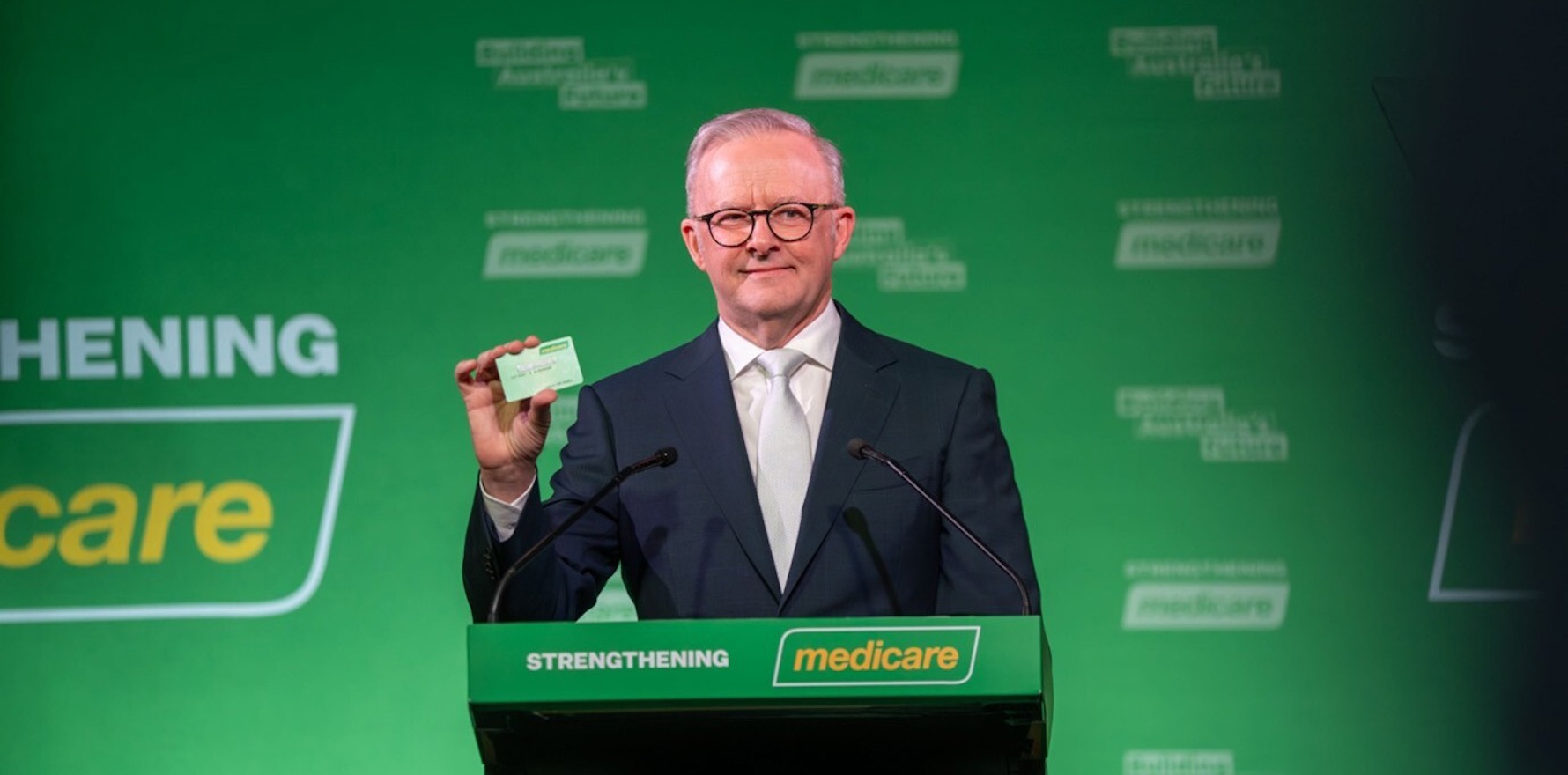
Mixed-billing practices are as important as bulk-billing practices no matter how hard the government wants to present a Medicare card as a “free green healthcare” credit card.
There simply still isn’t enough money to go around and like it or not the mixed-billing practices are doing the government and society a giant favour.
Like the corporates, in this new world, mixed-billing GPs and practices don’t have much of a decision to make. They either go slowly and painfully out of business if they switch to 100% bulk billing, or they stick with a business model which many would consider a very sensible system model of identifying those patients who can pay more for their care.
Mixed-billing practices, unfortunately for the government, isn’t a small cohort that the government can ignore. They aren’t going away. And you suspect they are going to end up being a much bigger chunk of the spectrum than the government has so far modelled.
According to a survey by HealthEd of 1400 GPs a few weeks back, nearly half of GPs (46%) say they are not at all likely to switch to universal bulk billing, and 20% say they’re only slightly likely. Just 15% said they are very likely to change.
GPs from mixed-billing practices made up 69% of survey respondents and only 8% of them think the new policies will significantly improve the financial viability of their practices, while 31% expect a slight improvement.
Senior GP leadership don’t believe the new bulk-billing regime is having a lot of impact on the ground with GPs which talks to these survey findings.
Past RACGP president, and famously the GP leader who first broke ranks and told GPs to start mixed billing where they could in 2021, Adjunct Professor Karen Price, told HealthEd that “very clearly that the government’s claims are likely to fail”.
“The sentiment of the GPs that I hear around the traps is that we are not going back … We are not going back to a government that we don’t trust.”
That all seems like things are getting a lot messier, not more efficient and clearer.
We seem to have focused on a simplistic, politically expedient approach to the problem of funding primary care and not paid enough attention to the detail of access.
It’s no use having bulk-billing corporates thriving if their business model, and not patient need, dictates where they put these clinics.
And why does government not want to lean into a very real GP ability and motivation now (and ethical stance) to ask those that can pay more for the system to pay more, so those that can’t can be supported better?
Last problem. It might be a big one too.
Because government has flip-flopped on funding and prioritising general practice over the past decade or so, so have the corporates.
For a while many were madly revising their structures, internal processes, contracts and protocols, with a view to one day being able to face off with state revenue offices and not pay payroll tax for their doctors.
And then state governments starting doing political deals frenetically in the lead-up to various state elections, designed to make them look like they were supporting GPs.
Many of the corporates decided they could live with these deals, up their levels of bulk billing in some states to get over bulk-billing thresholds the states wanted, and do the payroll tax thing.
But what of all the work on their structures, designed, nominally at least, to give them a defensible position on the doctors working at their practices being tenants not contractors?
As far as payroll tax is concerned those structures are less relevant. Many of the corporates have modelled paying the tax now, as a trade-off for retaining a certain level of management control over the doctors working at their centres.
But that doesn’t get them out of tax jail entirely.
If the ATO deems the doctors working at their practices as contractors, and via that logic, effectively as employees, there’s a much bigger world of hurt coming down the pipeline in the ATO auditing these businesses for GST owed between the doctor and the practice, for their doctors paying tax as a business not an “employees”, for missed superannuation payments, and for a few other nasty things.
Enter the new bulk-billing regime.
For all the work these corporates did to create defensible structures for tax purposes, at the state level at least, now they have forced upon their doctors 100% bulk billing. There isn’t any question that their doctors are contractors that can be deemed as employees, and that they have to pay payroll tax and face off the ATO for the upstream tax implications of them being like employees.
That’s a huge ticking timebomb for the system and ultimately for the government’s grand plans for lots more bulk billing into the future.
The ATO doesn’t care about what DoHDA does and thinks. Certainly, they care a lot less than the various state revenue offices care about payroll tax, which was in fact, a lot.
DoHDA has incentivised over 30% of our GP capability to go back to the future on bulk billing.
And in doing so has red-flagged every one of these practices for significant tax and “employee”-type liabilities into the future.
