

Tobacco giant Philip Morris used two strategies it originally developed for cigarette marketing to shill ultra-processed foods targeted at school-aged children.
As a child, this Back Page scribe cried, begged and bargained with the parental authorities in futile attempts to obtain the most coveted mid-2000s lunchbox item of all: a Munchables DIY Snack Pack.
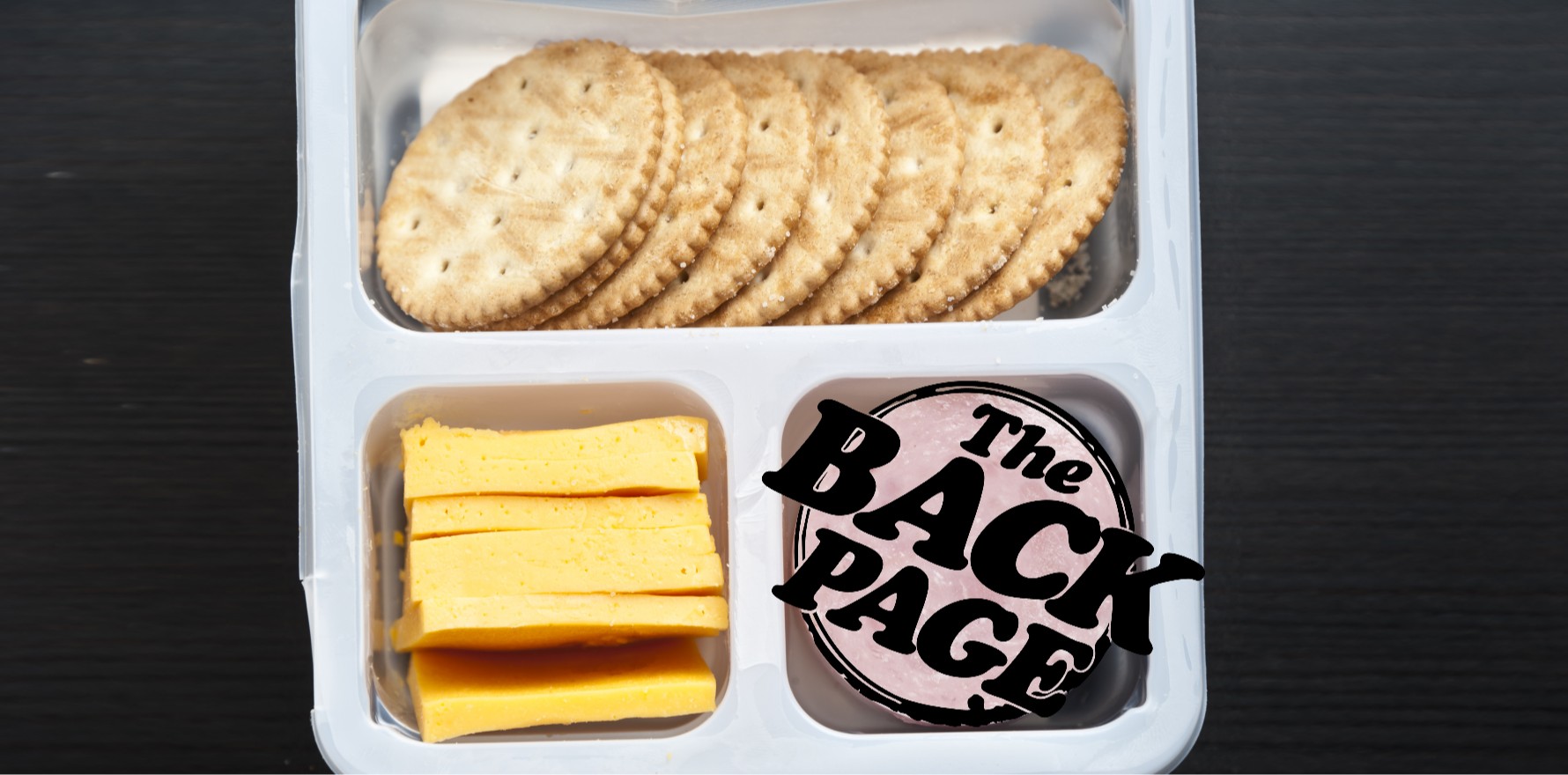
Each Munchables DIY Snack Pack – AKA the poor man’s charcuterie board – featured crackers, slices of cheese, “ham” and (best of all) Mini M&Ms.
Bust out one of these babies at morning tea and you’d suddenly find yourself newly crowned as the most popular kid in school.
What this humble author did not know, however, was that Munchables DIY Snack Packs were but an off-brand Australian iteration of the Kraft-manufactured Lunchables line, which had been producing the meal kits since the mid-80s.
Having spawned roughly 50 different product line variations across the years, Lunchables have been labelled a “nutritional disaster” and a “blood pressure bomb” by various peak medical organisations.
Blowing this lowly writer’s brain even further is the newly-acquired knowledge that from 1985 to 2008 Kraft was owned by none other than tobacco giant Philip Morris Companies (PMC).
A key reason behind PMC’s venture into the food industry, according to an analytic essay published in the American Journal of Public Health this month, was to increase revenue by sharing the proprietary research and development strategies it had created for tobacco across food product lines.
Kraft was not the only major consumer packaged goods firm to be owned by PMC.
“Lunchables was lauded by the [PMC] Synergies Committee as a model of the ‘benefits we can expect from the corporation’s technical synergies,’” essay author and University of Southern California food industry researcher Dr Laura Schmidt wrote.
“When, in 1991, PMC spent $115 million to acquire the SSB company Capri Sun, the new aseptic ‘juice’ pouches were added to make the ‘Lunchables Fun Pack.’
“When PMC bought Del Monte’s pudding division in 1995, the Jell-O brand made ‘Lunchables with Pudding’.
“By then, Lunchables had become a $200 million food category, in part, through ‘simplifying the organization’ via synergies.”
Dr Schmidt zeroed in on two specific strategies employed in the development of Lunchables: consumer-driven product development and “better-for-you” reformulation.
Both of these, she contends, were pioneered by the tobacco industry before being applied to food.
“Because making cigarettes and [ultra-processed foods] were such similar businesses, PMC could profit off their ‘technical synergies’, allowing food and tobacco product lines to coevolve,” Dr Schmidt wrote.
“Processing innovations, such as CO2 supercritical fluid extraction, could just as easily extract fats from processed meats as nicotine from cigarettes.
“Consumer-driven product development allowed engineers to design Lunchables to appeal to the child’s deepest desires for play and autonomy, just as low-nicotine cigarettes appealed to the adult’s desire to ‘get the guilt out of the product’.
“PMC’s ‘better-for-you’ reformulation strategy, used to develop filtered and low-nicotine cigarettes, was equally effective for developing Low-Fat Lunchables, to keep consumers worried about childhood obesity loyal to the brand.
“Neuroperception research and chemical flavorants helped compensate for flavor loss in low-nicotine cigarettes. And they could do the same for low-fat food, resulting in Low-Fat Lunchables—the first of many ’better-for-you’ line extensions….”
Sadly – or perhaps thankfully – one can no longer purchase the Munchables DIY Snack Packs of old here in Australia.
Something was lost when Munchables DIY Snack Packs were taken off shelves… but was it good or bad?
Send your out-of-date childhood snacks to Holly@medicalrepublic.com.au.
