

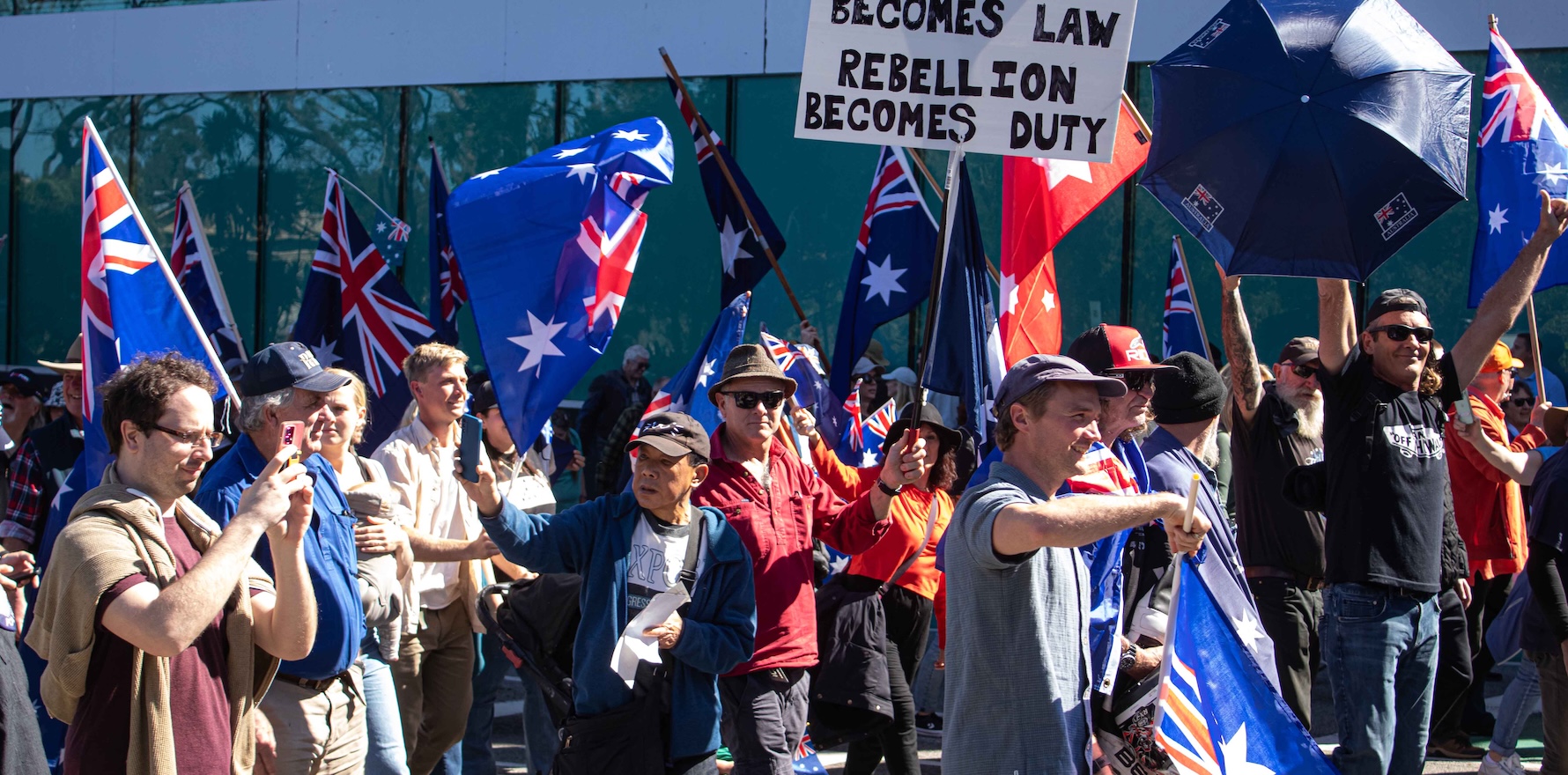
Racism isn’t ‘over there’. It’s here – in our hospitals, our clinics, our universities, and our streets. Picture: TwitchingMovie (own work).
I am grateful for the 31 August “March for Australia” because it gave a face to something many people experience quietly, every single day.
As an international medical graduate, I paid tens of thousands of dollars for my medical degree abroad, then tens of thousands more to get my visa, sit exams and become accredited in Australia.
The point is, I brought my knowledge, skills, and dedication as a doctor into Australia without using a single cent of Australian taxpayers’ money.
And, since day one of working in Australia, I’ve paid hundreds of thousands in tax while serving in regional and rural communities across this country I love and now call home.
Yet, I’ve experienced racism not just from white supremacists, but in everyday settings, from everyday people.
There was a patient who refused my care the moment I began to speak, asking for a “white doctor” instead.
Another kept interrupting the consultation to “correct” my (American) pronunciation. A registrar mocked my accent during morning ward rounds — in front of the entire team — and no one spoke up.
And during my postgraduate studies, a university professor assumed I must wear hijab because I’m from Iran, and expressed surprise that I could drive or had studied medicine at all.
At the same time, I’ve also had countless kind, caring patients, colleagues and friends, who’ve taught me about the beauty of multiculturalism in Australia.
This isn’t about labelling everyone as racist — far from it. But the number of incidents is not small. And the silence, the denial, the minimisation … hurts.
Related



What the March for Australia did was give visibility to what so many people live daily: the demeaning, dismissive, sometimes violent ways racism shows up.
It forces us to confront what’s too often brushed off as “a misunderstanding”, “harmless”, or “not a big deal”.
But when these moments pile up, and when society/institutions let them slide, it becomes a deeper, systemic problem. One that affects everyone!
So yes! I’m grateful for those demonstrations. Because they made the invisible, visible. They reminded us these issues aren’t “over there”. They’re here. In our hospitals, our clinics, our universities, and our streets.
Repression and political correctness are not the solution. Education and courageous conversations are.
We should change the narrative — from “us versus them” to “we”.
We are all Australians who should be grateful to the traditional owners of this land.
We are all part of the same society. We all want to feel safe, respected, and valued.
Let’s move beyond the outdated ideas of who “belongs” and focus on building a future grounded in mutual respect, shared contributions, and collective pride in our diversity.
Dr Tina Zafari is a GP registrar in regional Victoria, an AMC Council member representing international medical graduates and a passionate advocate for health and AI literacy. Her career has spanned clinical practice in public and private, research and community engagement.
This article was first published on Dr Zafari’s LinkedIn profile. Read the original article here.
