

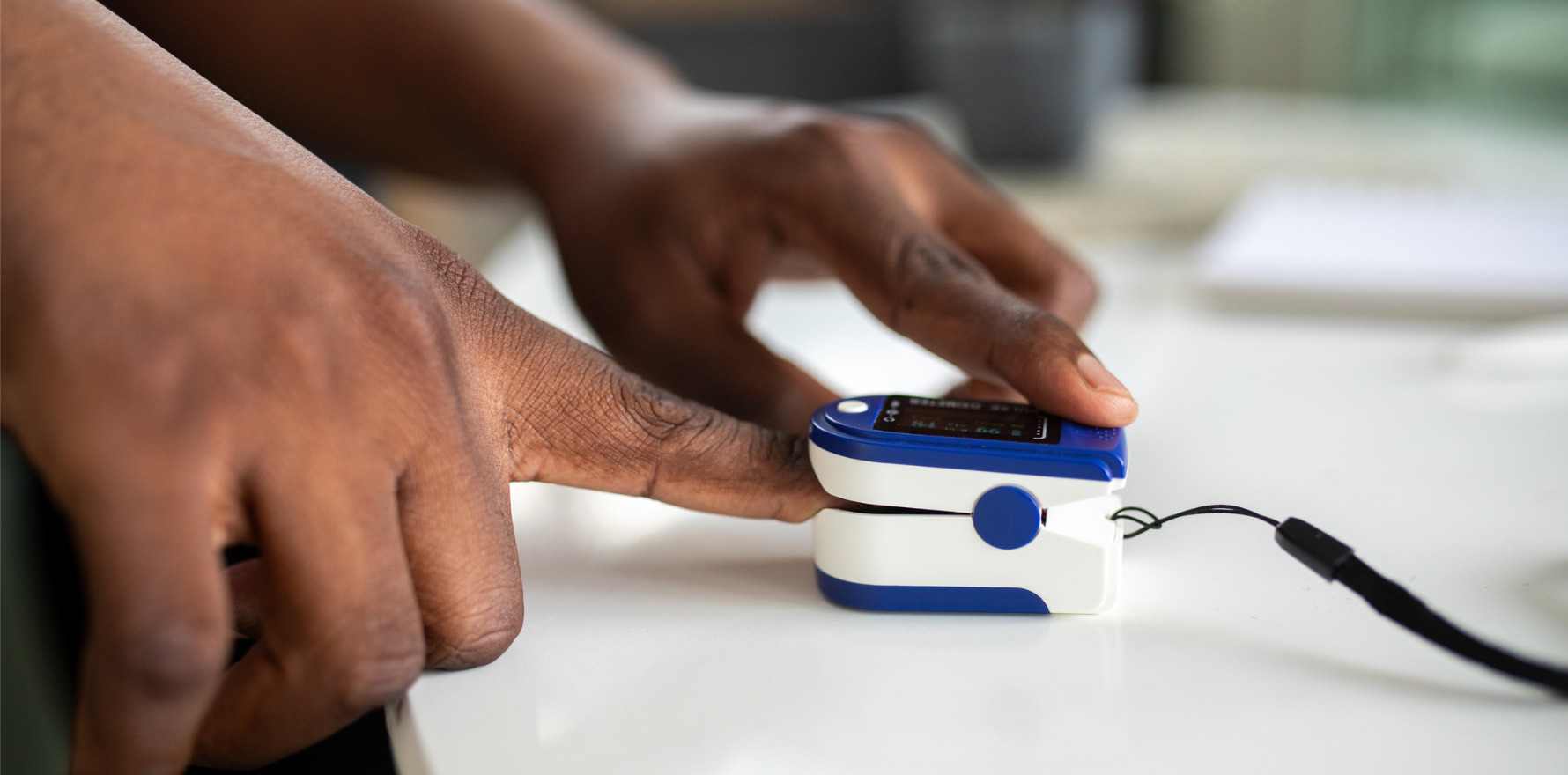
A new BMJ study finds home oxygen monitors overestimate readings in darker skin, risking missed hypoxaemia and widening disparities.
Fingertip pulse oximeters used at home are systematically overestimating blood oxygen levels in people with darker skin tones, according to a new BMJ study.
The researchers say the findings from the largest study to date on the issue raise concerns about delayed care, unnecessary reassurance and inequities in routine monitoring.
In an associated editorial, experts reinforced the point that the issue was no longer a matter of theoretical bias but one with demonstrated clinical consequences.
They said that regulation and device standards must now catch up with the evidence.
“Martin and colleagues showed that pulse oximeters perform differently depending on skin tone, and the potential clinical implications are clear. Regulation must now catch up with science: inclusive validation, transparent data and continuous oversight should become non-negotiable standards for medical devices,” they wrote.
“Clinicians, meanwhile, should interpret oxygen saturation within the clinical context, integrating patient symptoms, clinical trajectory and awareness of device limitations.
“The goal is not to abandon pulse oximetry but to understand its limits and make it equitable, ensuring that the technology designed to measure oxygen does not itself perpetuate inequalities in those who receive it.”
The study examined five pulse oximeters supplied through the NHS England Covid Oximetry @home Program and found that all produced higher oxygen saturation readings for patients with darker compared with lighter skin at the same true oxygen levels.
While the average differences were modest – between 0.6 and 1.5 percentage points – they translated into clinically meaningful increases in missed hypoxaemia, the researchers said.
Their message to clinicians was pragmatic rather than alarmist, the researchers said, and peripheral oxygen saturation (SpO₂) values should be interpreted alongside clinical context, with trends over time given greater importance than single readings, particularly for patients with darker skin tones.
They also called on healthcare systems to develop clearer guidance for practitioners and patients, especially where corroborating clinical measurements were unavailable.
“The findings of our study and the work that preceded it need to be considered when determining the clinical relevance of SpO2 readings and steps taken to mitigate any potential harm that could occur by failing to appreciate the effect of skin tone on pulse oximetry accuracy,” they wrote.
“SpO2 readings should be interpreted in the context of other clinical information and trends in SpO2 values given greater importance than single readings, particularly in patients with darker skin tones.
“False negative readings translate to a failure to detect hypoxaemia, which could have important clinical ramifications, while false positive readings may result in the unnecessary administration of oxygen and other treatments. Healthcare systems should develop guidance to inform and help practitioners, patients, and the public, particularly in settings where additional clinical readings from other medical measurement devices would not be available.
“Because the accuracy of pulse oximetry varies between devices, across skin tones and is dependent on arterial oxygen saturation (SaO2), it is not possible to generate unified clinical guidance from our study findings.”
Related



Pulse oximeters estimate SpO₂ using light absorption through the fingertip. Normal readings are typically 95–100%, with thresholds of 94% or lower prompting medical advice and 92% or lower triggering emergency assessment. It has long been recognised that skin pigmentation can affect light absorption, but evidence on the scale and clinical impact of this bias has been inconsistent.
To address this, researchers analysed data from 903 critically ill adults treated across 24 NHS intensive care units in England between June 2022 and August 2024. Although the devices tested are designed for home use, ICUs were chosen as a controlled environment where arterial blood gases, the gold standard for oxygenation, are routinely measured, allowing direct comparison.
Skin tone was assessed objectively using spectrophotometry rather than self-report. Researchers compared more than 11,000 paired measurements of SpO₂ from fingertip devices with SaO₂.
Across all devices, SpO₂ readings were consistently higher in patients with darker skin at any given SaO₂.
At both clinical thresholds assessed, false negatives (cases where low oxygen levels were present but not detected by the pulse oximeter) increased with darker skin tone.
Conversely, false positives decreased, meaning patients with lighter skin were more likely to be flagged as hypoxaemic when they were not. The authors noted that even small absolute differences in readings could substantially alter diagnostic accuracy around decision-making cut-offs.
The authors acknowledged limitations in the research. The study was observational and conducted in critically ill patients, which may limit generalisability to community settings. However, they emphasised the scale of the dataset and the use of sophisticated statistical modelling across multiple domains of measurement and diagnostic accuracy.
