

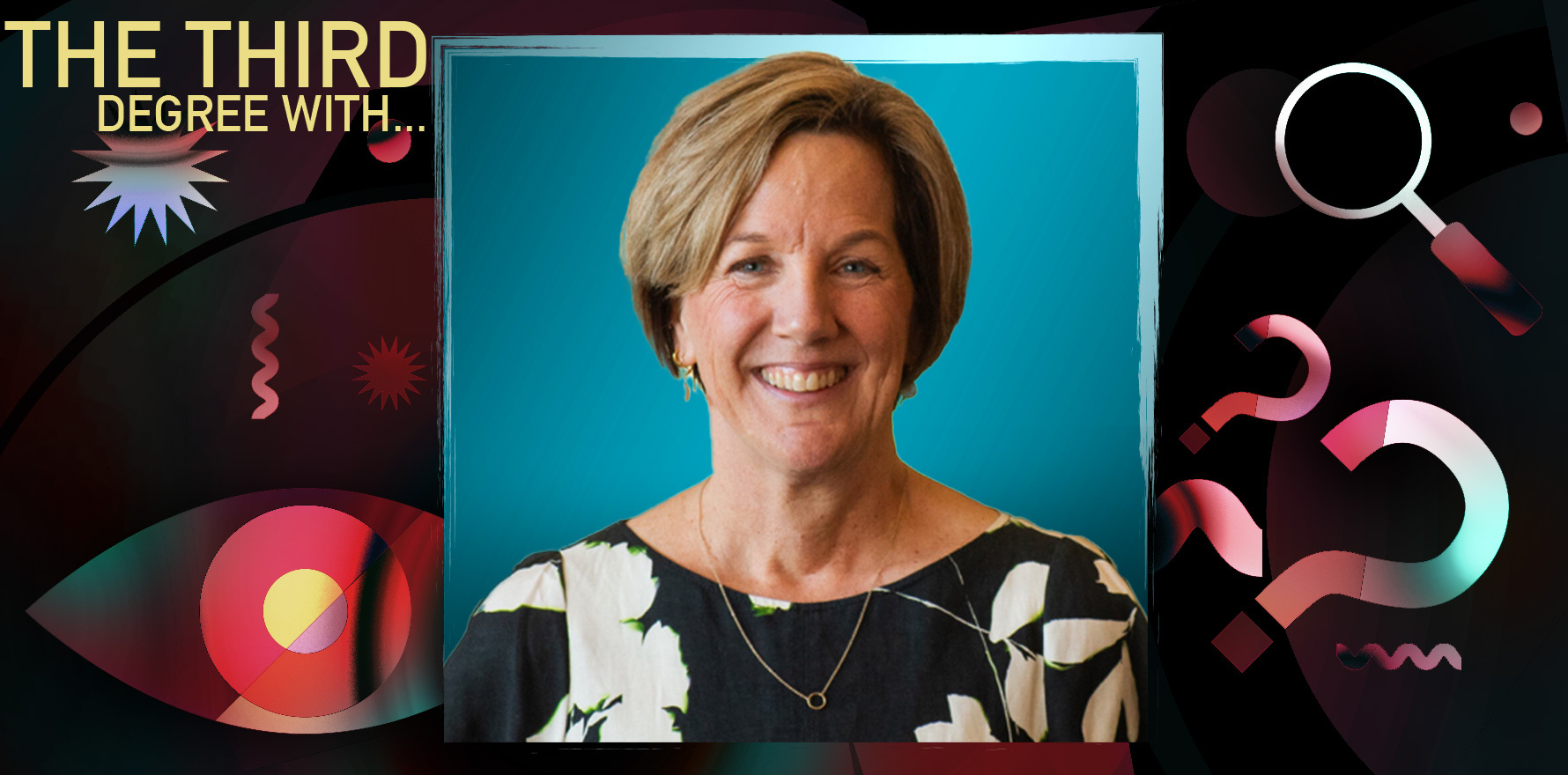
Australia once led the way in community-based prevention. Now, practice nurse association president Denise Lyons fears rising costs and a reactive funding model have pushed prevention backwards.
Registered nurse and endorsed nurse practitioner Denise Lyons took over as President of the Australian Primary Health Care Nurses Association (APNA) last year.
She believes prevention belongs at the heart of primary care and advocates for a system that enables nurses to work at their full scope. But to get there, funding models need to catch up.
Ms Lyons sat down for a chat with The Medical Republic.
TMR: What led you into nursing?
Ms Lyons:I grew up in the United States. I grew up in the house of a first responders – my dad was in the volunteer ambulance services so growing up I’d see him rush out the house, off to save someone. There was a value instilled around caring and helping.
As a young nurse in training, I went straight to the emergency room and also worked at a children’s hospital. I saw so much preventable illness and injury in that acute setting.
I was involved in a program in Georgia called Emergency Nurses Cancel Alcohol Related Emergencies. And we would go into high schools and do some education. I also got involved in Kidsafe, which was an organisation that was dedicated to preventing childhood injuries. I had a real passion for prevention.
About a decade into my career, I did a health promotion and human behaviour degree. I realised primary prevention happens in the community, and then have been working in primary care ever since.
I moved to Australia around 27 years ago because I married an Aussie. I feel incredibly lucky to have immigrated to Australia and raise a family here, because it’s just a really lovely place to live.
When I arrived, I started working at the Health Promotion unit for the local health district. But what I really wanted was that face-to-face. The most rewarding part of primary care nursing is the relationships that you develop with your patients.
In general practice, you get to walk alongside people on their journey. When they have their babies and they’re not sleeping, to immunising them and watching them grow up, then to their babies having babies, walking alongside them as their parents are ageing. It’s such a journey, and I think it’s the same thing that GPs say about general practice. The most rewarding things are those relationships.
Nurses play an important role because sometimes patients communicate slightly differently with us. ‘I don’t want to bother the doctor’ they might say. I think nursing work has a slightly different orientation, still very much a science-based profession, but very holistic view of people.
When I compare the health system here to the health system that I came from, I still feel like we have a very good health system.
But I have seen the gap in access and equity growing. When I first moved here, I was really impressed by how much was done in primary care. I think we work and live in a very reactive health system, and I think health systems need to be more proactive and prevention-based.
TMR: Do you think we were better at prevention 20 or 30 years ago?
Ms Lyons: I do feel like that. I still think Australia does a good job as a health system in terms of legislation around cigarette labels and taxing alcohol and there are some other good policies around health.
But I think our primary health care system tends to be quite reactive, and I think that relates to how our primary health care system is funded. Medicare is fantastic, and we have a much more equitable system in Australia than the system that I came from in the US.
But I think that access has become an issue, more so as the out-of-pocket costs have risen for people. It’s still a postcode lottery. These are wicked problems that are very difficult. The solutions are not easy.
Related
TMR: What are some limitations you feel in primary care nursing?
Ms Lyons:The huge Scope of Practice review talked about some of the limitations. We know those limitations are real because APNA does a workforce survey every year and asks nurses if they feel they’re working to the top of their scope of practice. And around 30% of them say they don’t, they feel like they could be doing more.
It’s not about capability or capacity. It’s very much about the structure of how general practice is funded. General practice is fee-for-service based on seeing the GP.
In many ways, the work that nurses do is quite invisible, and one of the key things that prevents us working to full scope is the funding structure.
I think we can look at organisations like Aboriginal Controlled Community Health Services and Aboriginal Medical Services, which are more block-funded. In those environments, you will find the staffing ratio is quite different and more multidisciplinary.
You can actually see how this works when you go to a hospital. Often the first person who you’ll see will be a nurse. That is a model that is currently very difficult to replicate in general practice or in primary care.
Primary care nurses – we’re talking about school nurses, aged care nurses, community nurses. There’s many people now living in the community with chronic health conditions, and nurses drive around and visit people in their homes, and they work quite autonomously. They have different funding models that enable that kind of care.
But when we talk about general practice, it is very much still based on that model of fee-for-service, based on the time you spend with the GP.
The government has incentives for general practice, a workforce incentive payment that is roughly $130,000 a year (there’s some loading based on rurality and what level of nurse you employ, and so on).
That funding amount doesn’t really enable much more than maybe one to one and a half maximum, two nurses.
It’s interesting how, as soon as we step outside of the public health system into the general practice system, the funding structures make realising the full scope of practice of a multidisciplinary team much more challenging.
TMR: Do you have any hope for things that might be improved?
Ms Lyons: APNA has been engaged with the department and they have done many reviews. Now there’s a task force looking at all of those together and trying to make recommendations on how that could look going forward.
A big part of that is looking if there are any changes to funding structures that could enable that team. We’re moving towards more demand for primary health care services with the ageing population and the ageing workforce. We need to think about how to do primary care a little differently and engage nurses.
I actually work as a nurse practitioner now in general practice.
After 20 years of working as a registered nurse in an after-hours service, one of the medical leads said they had a workforce shortage issue and had a hard time filling the roster with GPs who wanted to work after hours. He said they could utilise the skills of nurse practitioners who can make a diagnosis, write prescriptions, order investigations, and do the whole complete consultation. It’s interesting when medical colleagues say this could be a good way forward.
There aren’t that many nurse practitioners working in general practice, but I can see a real role.
One good thing about the system that I came from (the US) was that there was some work in primary care by nurse practitioners that improved access and equity without compromising safety. There’s lots of research that it doesn’t compromise patient satisfaction or the outcomes.
The designated nurse prescribing legislation was passed last year, so this means that nurses who do additional postgraduate training (a six-month course at university, and then they need to have some supervisor mentorship for six months). They will be able to prescribe some medications now in aged care facilities (where access to a GP can be really challenging) palliative care settings, rural and remote locations.
This is an initiative that can really facilitate access and equity, which is what we all want.
TMR: At what point in your career did decide to join APNA?
Ms Lyons: Lots of nurses who work in primary health care work autonomously and independently. Often they might be alone or with one other nurse, and that’s very different from the hospital.
Having a community of practice drew me to it and the education and the opportunity to have discussions with like-minded nurses working in similar contexts.
I got a passion for advocacy because I feel like the role is under recognised and undervalued. I feel strongly that we can contribute to improving the health of the community if some of those structural barriers were lowered.
TMR: Tell me about the Declaration of Astana that you have on your LinkedIn
Ms Lyons: The Declaration of Astana is about the whole person. People often will say: ’You’re a nurse practitioner. Why didn’t you just become a doctor?’ It’s about having a nursing perspective on health.
That declaration was a global commitment because nurses play a really big role in primary health care.
A rising tide lifts all boats, is my perspective. That’s what it is: it’s trying to advocate for the highest possible standard of health for the whole community. And that means you have to advocate for that politically because those decisions are made at the funding level.
Let’s face it, the funding and the incentives drive behaviour.
When I did my master’s in health promotion, we learned a lot about public health, and this is where I first learned about the global primary health care picture.
This was my entrée. How important it is to be politically active if you want to build sustainable health systems that capitalise on the strength of a strong primary health care workforce.
TMR: If there was one thing that you wish could change in the short term, what would it be?
Ms Lyons: It would be implementing the recommendations from the scope of practice review, which says that we need to look at different funding models that enable a multidisciplinary team to work to their full scope of practice in primary care.
This article has been edited for length and clarity.
