

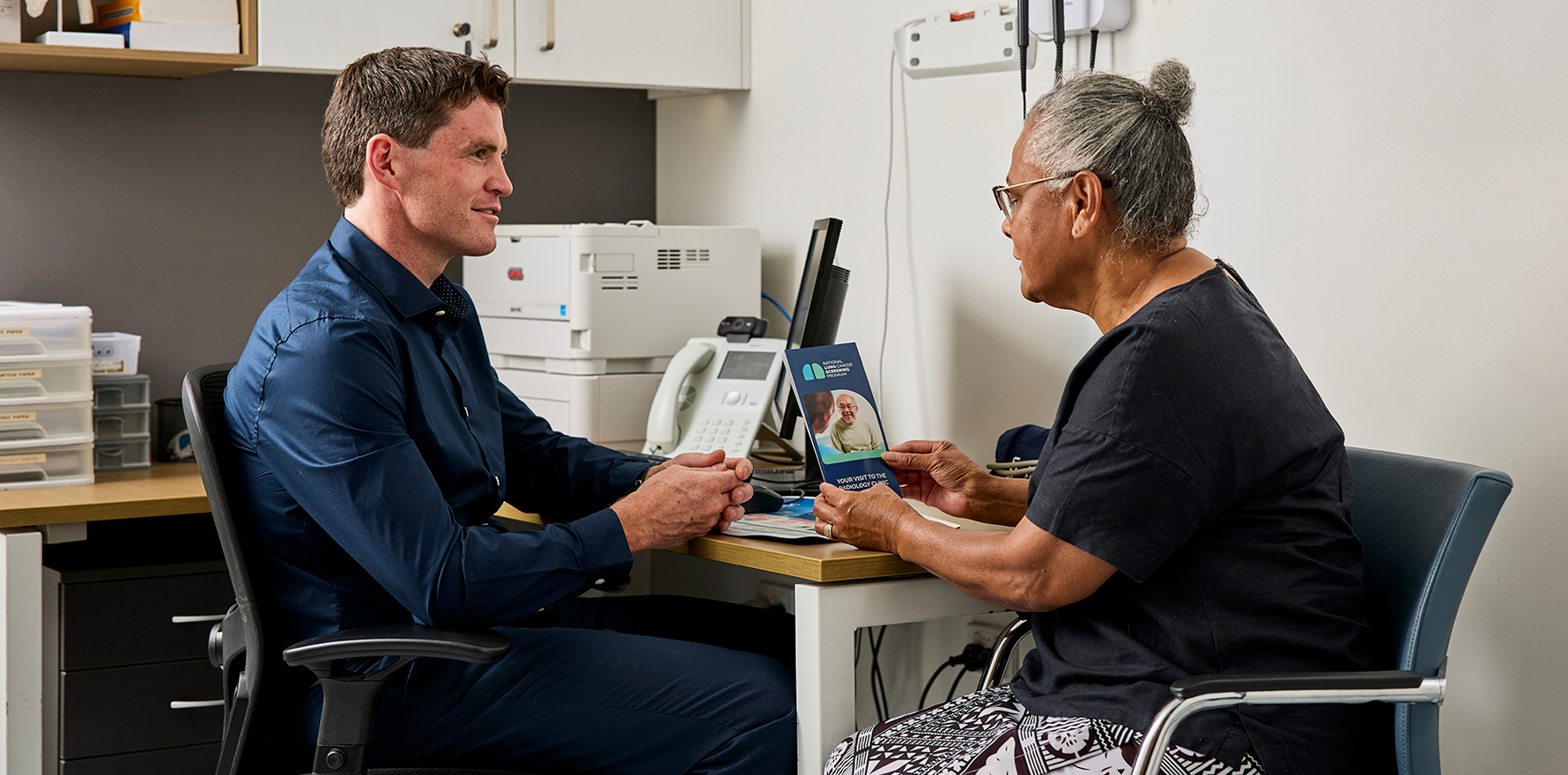
Know who's eligible, how to enrol, and your role in the screening and assessment pathway.
Australia’s National Lung Cancer Screening Program (NLCSP) has been live since 1 July 2025, and GPs are at the heart of its success. The first 10 months of the Program has seen over 90,000 patients complete low-dose CT scans.
As the program matures, shared learnings from early implementation offer a valuable opportunity to strengthen delivery and maximise benefit for patients.
Know who’s eligible
GPs are uniquely positioned to identify eligible patients and open the door to earlier lung cancer detection for patients most at risk.
For your patients to be eligible for a free low-dose CT scan, they must be aged 50–70 years, asymptomatic for lung cancer, have a tobacco cigarette smoking history of at least 30 pack-years, and either currently smoking or having quit within the past 10 years.
The complete eligibility criteria is available on the Department of Health, Disability and Ageing website.
Using the right forms
The NLCSP eligibility and enrolment form confirms eligibility and registers patients in the National Cancer Screening Register NCSR. This enables the NCSR to act as a vital safety net to support both you and your patient for follow-up by sending invitations, reminders, and follow-up prompts, reducing the risk of missed screening or delayed care. The NLCSP Low-dose CT request form is the program-specific imaging request. Using this form ensures scans are bulk billed correctly, radiologists apply NLCSP structured reporting based on the patient’s history, and the NCSR can provide follow-up.
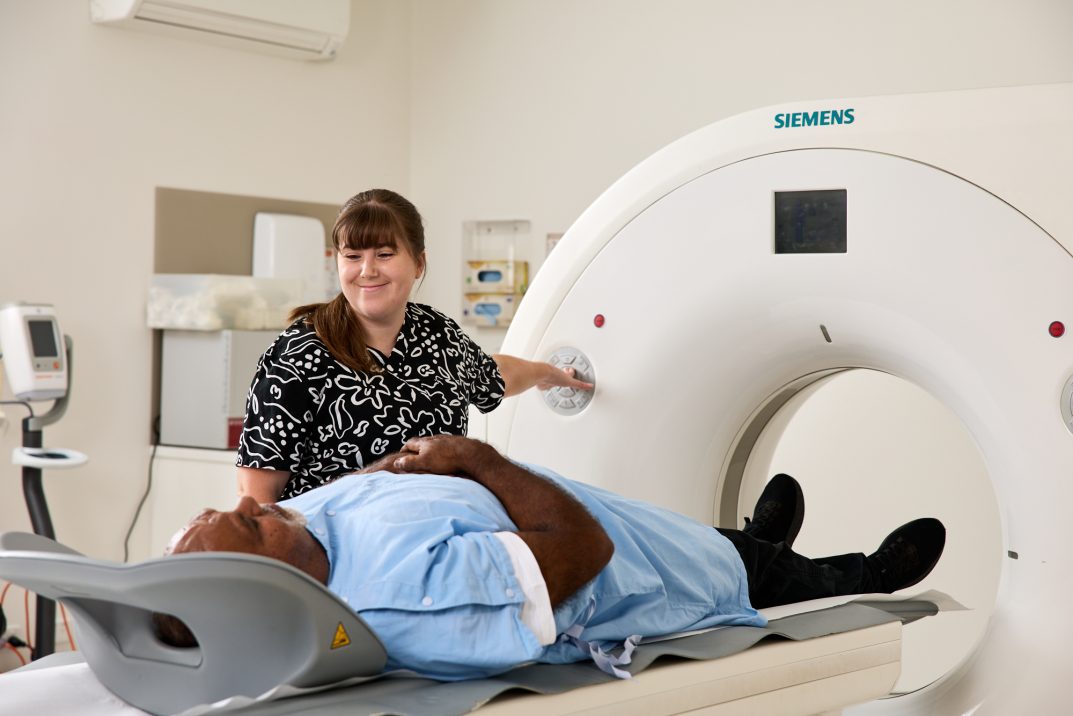
Using the program specific low-dose CT request form supports clear communication between GPs, radiologists, and the NCSR to best support you and your patient across the screening and assessment pathway. [Image supplied by the Department of Health Disability and Ageing]
If a generic radiology request form is used, however, it needs to clearly identify that it is for the Lung Cancer Screening Program and include family history of lung cancer in any first-degree relative (i.e. parent, sibling or child), details of any previous chest CT (if known) and history of any cancer to support correct processing.
All NLCSP clinical forms are available via your Clinical Information Software (CIS) that are integrated with the NCSR, such as Best Practice, Medical Director, MMex, and Communicare. They are also available through the NCSR Healthcare Provider Portal.
Depending on your CIS, the NLCSP low-dose CT request form may not be in the same place as standard imaging request forms typically are. If you are having trouble finding the NLCSP low-dose CT request form or other NLCSP clinical forms in your CIS, the NCSR Healthcare provider portal has short instructional video tutorials for quick support, with different videos to provide tailored guidance for each specific CIS.
For further NCSR or CIS integration support, contact the NCSR support line at 1800 627 701.
GP’s ongoing role in the screening and assessment pathway
After a patient’s baseline scan, subsequent screening invitations are coordinated by the NCSR. In addition to NCSR reminders GPs should ensure reminders are enabled in the participant record in practice software. For follow-up screens, GPs still need to issue new LDCT requests. The GP’s continued role focuses on:
- Communicating results and next steps as per the advice on the radiology report to patients after each screening round.
- Completing the Specialist Referral Form for your patients with Category 5 or 6 findings, to enable the NCSR to fulfil its safety net function for patients requiring urgent specialist follow-up.
- Completing the Participant Management Form with details of your patients follow up visit after receiving results, to enable the NCSR to support a participant’s screening journey.
The NLCSP Program Guidelines outline these activities in full and are a useful reference for everyday program queries.
Actionable Additional Findings
Where a patient has actionable additional findings on their lung cancer screen that are unrelated to lung cancer, follow the management recommendations included on the radiology report. In most cases, participants can continue with scheduled lung cancer screening while those findings are being investigated and managed in parallel. Keeping patients active in the program supports continuity of care and ensures they continue to benefit from early detection.
For more information, review the NLCSP Additional Findings Guidelines.
Access education and support
The Healthcare Provider Toolkit consolidates key resources GPs need, including CPD-accredited eLearning.
For further enquiries, contact the Department at cancerscreeningcommunications@health.gov.au.
