

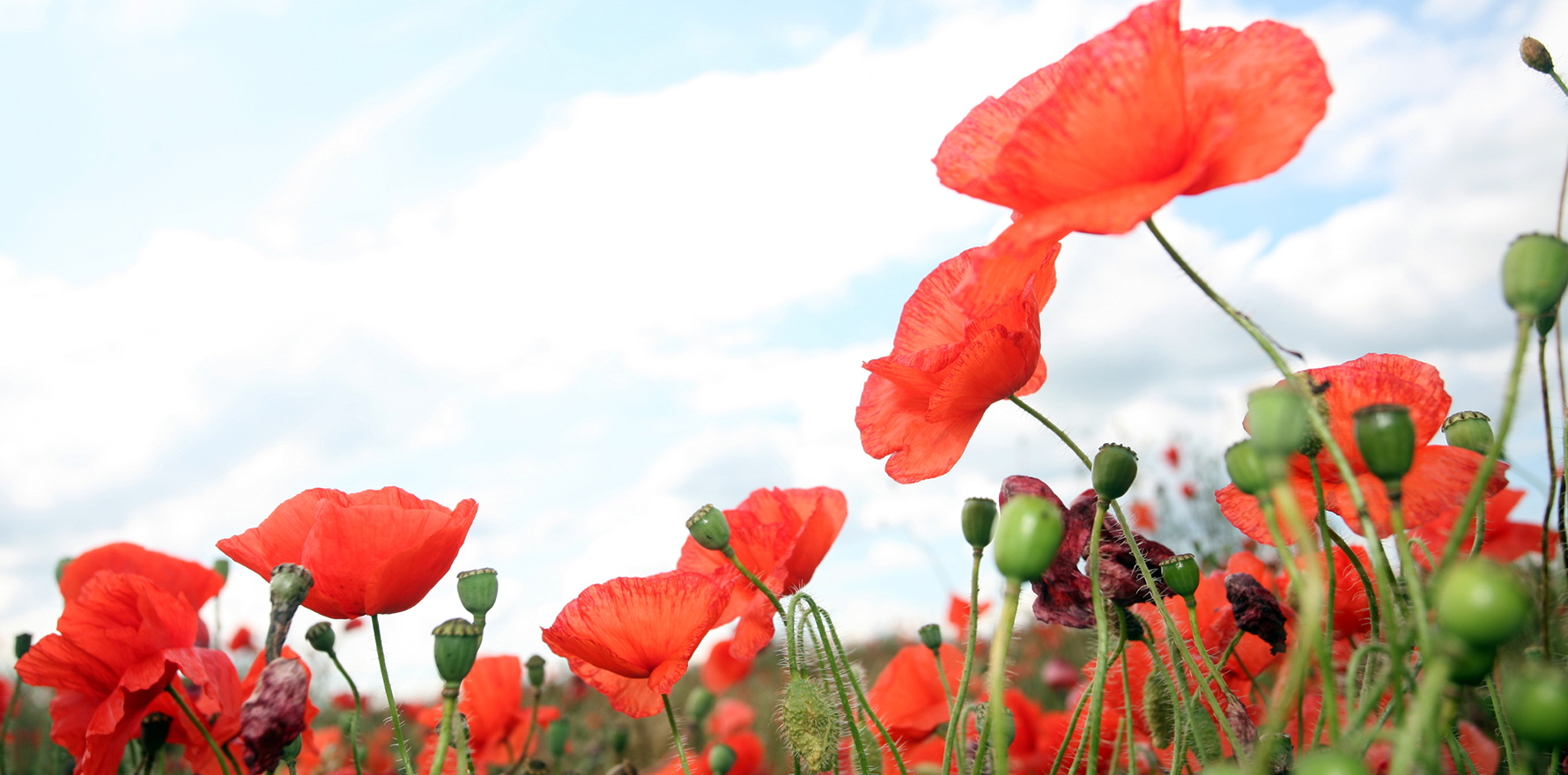
Don’t tell me you are egalitarian and fair if it’s always the poppies who ‘just happen’ to be a permanent target.
Having grown up in a working-class community in Australia, I know a tall poppy when I see one.
I grew up surrounded by a culture with a deep distaste for being seen as “full of yourself” – unless it was related to sport. Be self-deprecating, don’t be arrogant, don’t make anyone feel bad by showing you have better skills (except in sport) and, for goodness sake, have the decency to underperform if there’s a risk of standing out (except, of course, in sport).
Tall poppy syndrome requires complex social contortion, especially as a child, where you are praised for achieving things, but not for being proud of them.
No wonder there is a festering tendency to develop imposter syndrome in people who are targeted for being ambitious or academically inclined.
Apparently, tall poppy syndrome is a world-wide phenomenon, with the Japanese coining the phrase “the nail that sticks up gets hammered down”, a perplexing situation for a country that has deep cultural expectations around social hierarchy.
In the Netherlands, the phrase is “don’t put your head above ground level”.
At the moment, GPs are the target of the same anti-poppy behaviour, but most doctors have been on the other side of this behaviour before, particularly early in their career when they are more vulnerable and less confident.
Junior doctors often have to perform a complex dance of appearing confident without being seen as arrogant.
In my interviews with women GPs, participants tell me it was particularly difficult with the older nursing staff. They had a fair haul of chips on their collective shoulders due to decades of mistreatment by arrogant senior men, but they seemed to take out their well-deserved angst on junior women.
In my very first lecture in my Master of Public Health course, I remember being in a large lecture room as the only doctor surrounded by nurses and allied health professionals.
In the aptly named compulsory course “the sociology of health”, the lecturer opened her first lecture with the statement that “doctors have driven women out of the caring professions”.
The comment triggered a raucous round of applause and a bit of cheering. I felt somewhat intimidated. I could easily have been driven out of the caring professions at that point, but I grew a backbone, made a lot of morning tea to placate those that needed placating, and soldiered on.
Tall poppy policies
The Labor Party has a history of championing unions, rights for the “working class” and a bit of a nod towards Marx, so it’s not surprising that the tall poppy syndrome flourishes in its ranks.
Nevertheless, it is not good policy to let this attitude fester throughout their public decision-making.
I know as a doctor, I carry substantial privilege, but as a woman GP, I’m rather sick of being targeted for the perceived “sins” of the (male) neurosurgeons/anaesthetists/orthopods who “overcharge” and are “arrogant”.
Perhaps I’m the tall-but-not-too-tall poppy that can be cut down without the effort of scaling the heights for my substantially taller colleagues.
The problem of tall poppy harvesting is rife, especially in primary care, and is often disguised as giving others a “fair go”.
Let’s look at tall poppy policies:
- Funding everyone but medical students to do their practicals rurally, despite the fact the medical students spend longer in the country, and stay there more often;
- Cracking down on antibiotic prescribing in general practice while at the same time opening up prescribing in pharmacy;
- Shaming GPs that don’t bulk bill while being absolutely comfortable with pharmacies charging an out-of-pocket consulting fee;
- “Unleashing the power of the health workforce” by letting everyone but general practice define their scope;
- Giving public recognition to outlandish “billions of dollars of GP fraud” claims by doing a government inquiry that proved (of course) that the claim was highly questionable;
- And a multitude of restrictions on general practice while other professions are supported to expand.
These policies are seen as acceptable, because the public are happy to see tall poppies cut down.
Related


I may not be the world’s best gardener, but I recognise a tall poppy when I see one. It is no accident that the poppies targeted are the most vulnerable and least supported of the medical poppies available.
Women GPs are being systematically driven out of the workforce, because they are good at their job, and highly efficient but they just happen to have the wrong qualifications to be accepted as worthy of support and respect, and therefore become targets.
That sounds like systemic bias, frankly.
I’ve lost count of the meetings where I’ve been mansplained to by my own profession and accused of being a representative of the patriarchy by others. I am still somewhat perplexed by my experience at my last PHN “multidisciplinary” meeting, where GPs didn’t speak, but were spoken to by everyone else.
I still remember being told “you don’t need to be afraid of collaboration” by a local allied health practitioner who offered to show me how collaboration works. The irony of saying that to a GP working in a practice of psychologists and psychiatrists was not lost on me.
This judgy attitude is ubiquitous.
Remember the nurse practitioner representative who said working with GPs is like being in a domestic violence relationship where the husband has all the power and if the wife doesn’t like it she can go and starve?
Or the irony of the push against “medical misogyny” from a system that has disadvantaged the women GPs who have been working against that problem for over a century.
I’m sure it’s no accident that the powerful unions and guilds in the health professions are part of the harvesting squad, ready to sow their own crops anywhere the poppies have been mown down. After all, it’s a small step (apparently) from being efficient and effective to being arrogant and entitled, so removing the poppies early is a proactive move, right?
I’ve had a lifetime of trying to look smaller and less of a target than I am, simply as a self-protective tactic. I know there are taller poppies all around me, but they always seem to escape the harvest.
Frankly, it’s all a little sickening, and I expect better from the policymakers in our community.
GPs are not the enemy of equitable healthcare. Many of us have a lifetime of experience championing the needs of the vulnerable.
So, let’s be honest about what this is really about, and tackle prejudice and systemic disadvantage from the top down. Don’t tell me you are egalitarian and fair if it’s always the poppies who “just happen” to be a permanent target.
Professor Louise Stone is a GP in Canberra and an academic at Adelaide University. A collection of her research, policy and teaching materials can be found at drlouisestone.com.
