

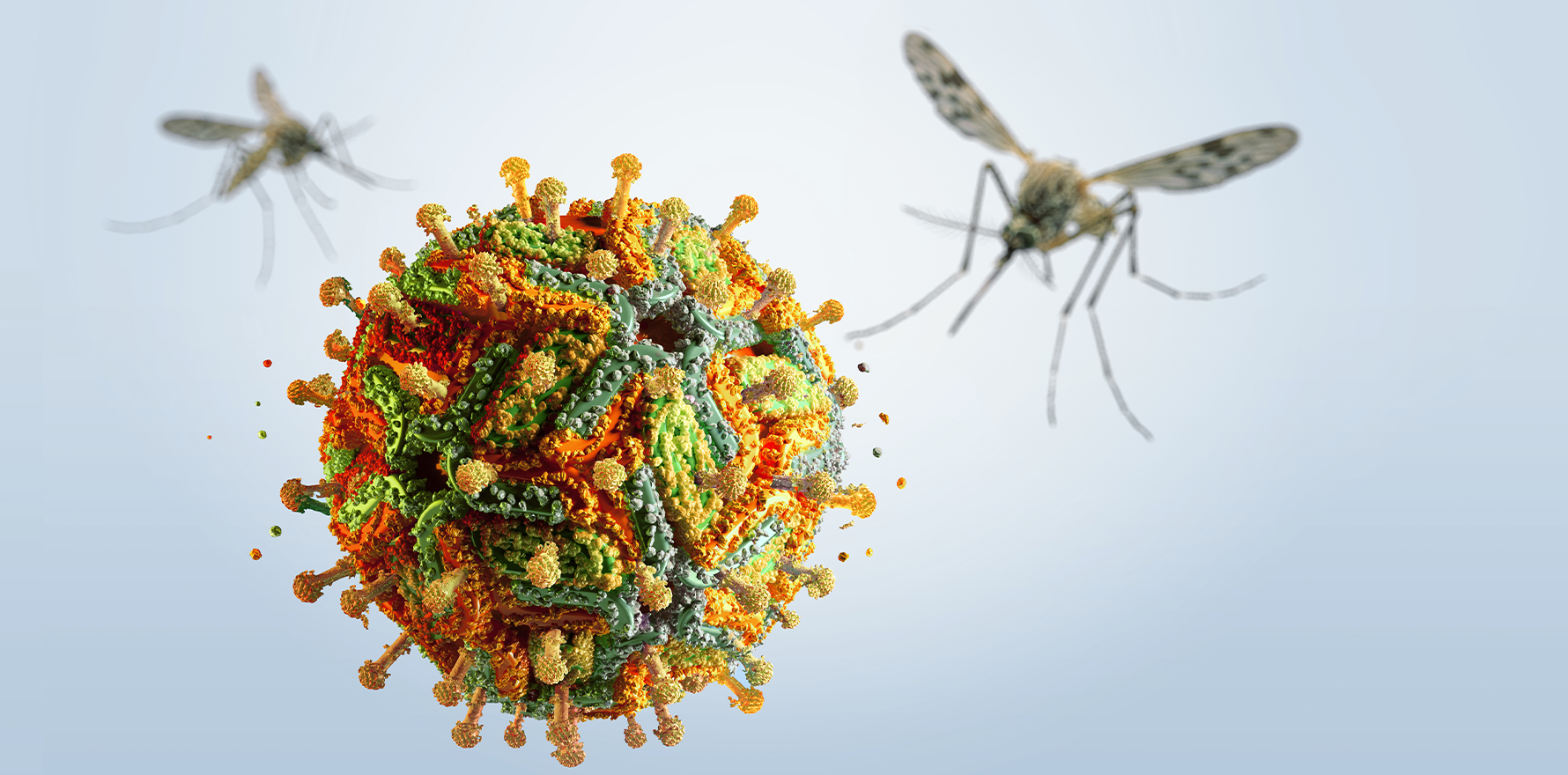
Australia’s first dengue vaccine is now available, giving GPs a new prevention option for travellers as infections surge internationally.
Australian travellers heading to dengue hotspots have a new line of defence, with the first dengue vaccine available locally and new ATAGI advice setting out who should be offered it.
The live-attenuated tetravalent vaccine known as QDENGA (Takeda), is registered for people aged four years and older and is available on private prescription. It is not funded under the National Immunisation Program.
The arrival of the vaccine comes as dengue continues to expand internationally and Australians return in large numbers to destinations where transmission is common.
Five of Australians’ 10 most visited overseas destinations – Indonesia, Thailand, India, Vietnam, and Fiji – have frequent or continuous dengue transmission, according to the Australian Technical Advisory Group on Immunisation.
Together, those destinations account for almost one-third of short-term overseas travel by Australian residents.
The agency said it was in the process of developing a new dengue chapter for the Australian Immunisation Handbook. It has referred clinicians to a statement in the meantime.
It said almost all notified dengue cases diagnosed in Australia are acquired overseas by travellers returning from endemic countries.
“Although uncommon in Australia, dengue outbreaks have occurred in the past in northern and central Queensland and the Torres Strait where Ae. aegypti or Ae. albopictus mosquito vectors are present,” the statement said.
“These have been initiated from the introduction of the virus by infected travellers returning from overseas leading to a localised outbreak.”
According to the European Centre for Disease Prevention and Control, which published a dengue worldwide overview in August, there have been more than 1.5 million cases of the mosquito-borne virus in 2026 so far (to 31 July).
More than 500 dengue-related deaths had been reported globally according to information from publicly available sources, the overview said.
According to the World Health Organization, dengue remains a major global public health problem in 2026, although the picture is quite uneven.
The extraordinary surge seen in 2024–25 has eased in parts of the Americas, while several countries in Asia continue to experience substantial or increasing transmission. WHO still assesses the global dengue risk as high, citing climate conditions, expansion of Aedes mosquitoes, urbanisation, population movement, and weaknesses in surveillance and health systems.
Brisbane-based travel medicine doctor Dr Deb Mills welcomed the arrival of a dengue vaccine to Australia.
She told The Medical Republic the vaccine was particularly significant for people who travel repeatedly to dengue-endemic regions.
“For the people who travel a lot it is still a very big deal because it’s a miserable disease. And some people get very, very unwell, a bit like covid,” she said.
Dengue is not endemic in Australia and almost all cases diagnosed here are acquired overseas. However, local outbreaks have previously occurred in northern and central Queensland and the Torres Strait after infected travellers introduced the virus into areas where mosquito vectors were present.
Dr Mills said dengue was increasingly difficult for travellers to dismiss as an exotic or remote risk.
“Dengue is surging around the world. It’s like a giant amoeba. I’ve got this beautiful map which shows dengue in South America, and there was like a tiny little red dot. A few years later, the bigger red dot. A few years later, and it’s even bigger,” she said.
“It’s just spreading because climate is warming.”
She said increasing international travel also helped the virus move between countries.
“People are traveling more, and it’s the perfect disease to travel in people,” said Dr Mills.
“Humans are the vectors of this disease because you catch dengue somewhere, and then you come back, and particularly people coming back to Cairns and Townsville, they can bring the disease in, and our local mosquitoes can pick it up, and then you can have a little outbreak.”
ATAGI recommends the vaccine for travellers aged four years and older with a confirmed or likely previous dengue infection who are heading to endemic areas, regardless of the duration of their trip.
It is also recommended for people without a previous history of dengue who plan to live, work, or spend prolonged or repeated periods in endemic areas.
For dengue-naïve people taking shorter trips, vaccination can be considered following an individual risk-benefit assessment taking into account the destination, outbreak activity, duration of travel, mosquito exposure and likely future travel.
Routine serology to establish previous dengue infection was not recommended, said ATAGI.
But Dr Mills stressed that the vaccine was not one every Australian needed.
“No, everybody does not need to get this vaccine,” she said.
Related


“If you were in Townsville or Cairns and there was an outbreak, then maybe you might. But people down south of that, no, definitely not. It’s really a travel vaccine.”
The standard course is two 0.5mL subcutaneous doses at least 12 weeks apart, making early pre-travel consultations important. ATAGI said completing both doses was important to maximise the level and duration of protection.
If departure falls before the second dose can be given, however, ATAGI recommended giving the first dose and making a plan to complete the course later.
Trial data showed 82% efficacy against virologically confirmed dengue during the three months after a single dose, while observational studies found 59% effectiveness against symptomatic dengue and 75% against hospitalisation after one dose, ATAGI said.
For the full two-dose course, the pivotal phase 3 trial reported 80.2% efficacy against virologically confirmed dengue at 12 months. Protection varied by dengue serotype and previous exposure, and evidence for DENV-4 remained uncertain because of limited case numbers.
There were also no efficacy data in adults, although ATAGI said immunogenicity studies showed seroprotection in dengue-naïve adults similar to that seen in children and adolescents.
The vaccine is contraindicated in immunocompromised people, including those due to receive immunosuppressive treatment within four weeks. ATAGI also said pregnant people were not recommended to receive the vaccine, although vaccination may be considered after an individual risk-benefit assessment if travel to an area with dengue transmission was unavoidable.
Most vaccine reactions reported in trials and post-marketing surveillance have been mild to moderate and resolved within several days. ATAGI noted post-marketing reports of hypersensitivity reactions including anaphylaxis, however, and advised at least 15 minutes of observation after vaccination.
Dr Mills said the disease itself could knock otherwise healthy travellers around for weeks.
“For most people it’s a flu-like illness, they just feel really bad, and then often they’ll get a rash,” she told TMR.
“And then they just feel really tired and miserable afterwards. And some people, like covid, go on to get a kind of long dengue. Most people get over it, but there’s no particular treatment. You just have to wait until it gets better.”
She said official case numbers were also likely to underestimate infections because travellers with mild disease may never be tested.
“It’s almost certainly very underdiagnosed,” she said.
Vaccination does not remove the need for bite prevention, however. ATAGI stressed that mosquito avoidance remained important regardless of vaccination status.
Dr Mills, who is the medical director of Dr Deb The Travel Doctor, said interest in the vaccine among her own patients was already strong.
“And for people who like vaccines, which obviously is a big part of the group I see, they’re hanging out for it,” she said.
“We’ve got a waiting list for when it’s available because they have seen the disease. They know people who’ve had it. They really don’t want to catch it.”
