

We live longer and are healthier than at any time in history, the standard of living has never been higher and material life is growing all the time. Yet for some people, this is not enough.
The expression “a hole in the head’ has more application than you could imagine. Who can believe that someone would drill a hole in their skull to obtain a transcendent level of consciousness?
Well, leading some misbegotten individuals driven to obtain this was Lady Amanda Feilding, the Countess of Wemyss and March.
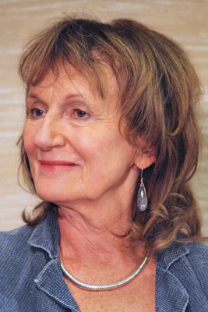
Picture: By JonRHanna – Own work, CC BY-SA 4.0
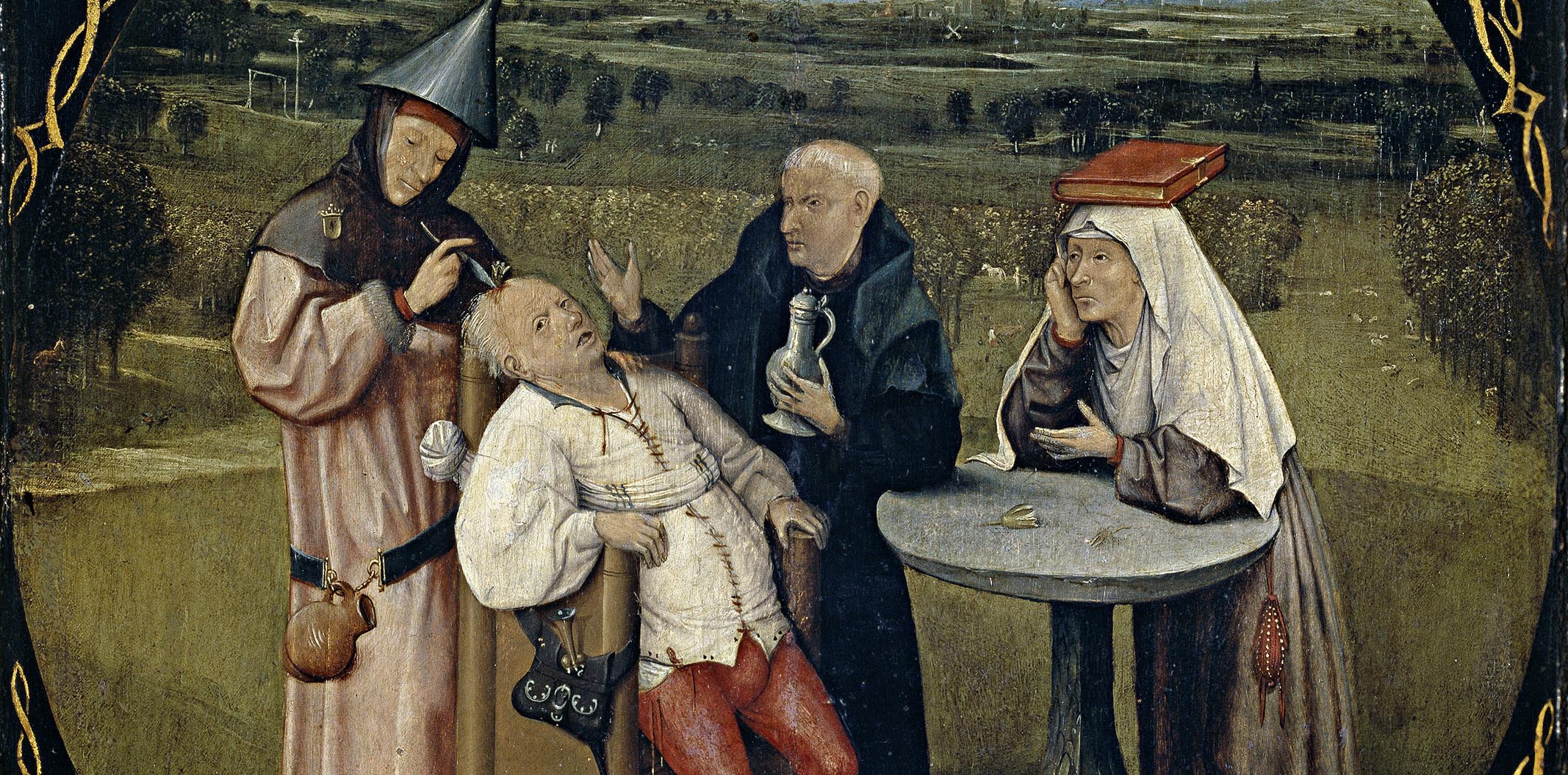
Trepanning, the process of drilling a hole in the skull, holds the distinction of being the oldest surgical operation. Circumcision admittedly may have beaten it but, as discarded foreskins are oddly reluctant to fossilise, it will remain an open question. Archaeological evidence for trepanning goes back at least 5500 years (some say 10,000 years), a time when shamans, witchdoctors and spirit healers saw illness as possession by demons who had to be released from the afflicted person.
Trepanning was done by drilling, scraping or boring through the bony skull to the soft protective membranes lining the brain. Thus were released the invading demons. This evolved into trephining, the modern surgical procedure to relieve pressure on the brain from bleeding caused by a blow to the head.
Recent studies, ranging from the Aztecs to New Guinea, show that the ancient head borers were doing just the same thing. The holes were located in the right place to let out the imprisoned blood – something that requires accurate diagnosis – the plant and herb products used for plugs maintained a sterile field free of infection and there was an excellent recovery rate comparable to modern aseptic surgery. In its museum collection, Sydney University has some fine examples of the instruments used for trepanning by the Toltai people of New Guinea.
Now that surgical trephining is a routine procedure, you would think that trepanning is an artefact left for archaeologists and anthropologists to coo and murmur over.
Think again – and then again. Remember the age we live in: one where the irrational, the mystical, the magical and the millennial is embraced, if not worshipped by millions of vapid, self-indulgent and sub-threshold educated social media junkies; the ineffable in pursuit of the unattainable: wellness.
Showing that humourists are adept at tapping into future trends, the 1982 book Do-it-yourself brain surgery & other home skills gave illustrated instructions to the wannabe neurosurgeon on how to use easily available tools like electric drills and benchtop vices.
This, as even the most superficial perusal will show, was meant to be funny but the one thing the wellness set do not possess is a sense of humour. What part the book played in a new lifestyle choice is unclear but a group of people became enthusiasts for opening up their skull to increase the blood flow to the brain, expanding consciousness and improving mental health.
Related


The theory – and there is always a crackpot idea that attains the status of holy writ – came from the Dutch doctor Bart Huges. In 1962 he had the stunning idea that our level of consciousness depends on the volume of blood in the brain. The full heartbeat had to express itself within the cranial cavity to loosen the grip of the tyranical ego.
From this it was deduced that as the skull cannot expand after early childhood, a hole in the bone would improve blood flow as well as allow the toxins to be removed by cerebrospinal fluid.
Huges duly proceeded to drill a hole in his skull, experienced a revelation and began to proselytise the virtues of cranial trepanation as an alternative to psychedelics. Unimpressed, Dutch authorities tipped him into a house for the insane for a while but, once out, he was soon a hit by dropping the magic word “toxins”, becoming a guru for a London upper-class set including aristocrats and rock stars.
Among them, Joe Mellen was taken by Huges’ ideas. He decided to take the step of opening his skull, nearly killing himself in the first attempt. He was to describe his experiences in the book Bore Hole (1975), a title that is subject to multiple interpretations.
Amanda Feilding came from an upper-class family, somewhat down in the world and prone to eccentricity. Interested in science from an early age, she won a prize at school and then focused on mysticism. This led to her lifetime preoccupation with the consciousness-expanding effects of psychedelics. At 16, she went to Syria, living with Bedouins. She studied religions, mysticism, psychology, physiology and neuroscience.
For those promoting the expansion of consciousness with drugs, the timing was not good. By 1966, psychedelic drugs were banned in most countries and soon Richard Nixon initiated the war on drugs. Scientific research, despite the earlier promising results, came to a halt.
Feilding, a proponent of the positive effects of cannabis since the 1960s, also tried LSD. Mellen became Feilding’s partner and found in her an ideal match for his enthusiasms. She had dreamed as a child of watering the desert; now trepanation, an ancient procedure to let bad spirits out, might revitalise the desert of her brain.
Unable to find a cooperative doctor (strangely enough), in December 1970 she did the job herself with the kind of equipment you can buy at any hardware store, even getting a spare drill – prescient because the first drill malfunctioned.
Using a pedal-operated dentist’s drill she made a half centimetre hole in the middle of her forehead. Her pigeon Birdie, demonstrating the intelligence of the species, made sure to fly out of the window. Blood ran down her face while she described a lightening and a lifting, like breathing into a balloon, leading to a remarkable improvement in awareness. Such was the dramatic effect that she went to a party in a Moroccan robe with a gold turban hiding the wound.
Her enthusiasm led her to run twice for parliament on the platform “Trepanation for the National Health” – surely the most original slogan in democracy – and, as proof of its pulling power, getting 49 and 139 votes. Her platform must have led to some great stump speeches.
Feilding, who died in May aged 82, was a director of the Beckley Foundation, an organisation to investigate consciousness raising, attracting the attention of neuroscientists and approval from Albert Hofmann, who had first synthesised LSD.
They were to collaborate with laboratories and show how such drugs could treat nicotine addiction, depression and help dying people. Feilding lobbied the United Nations and in 1998 hosted seminars in the House of Lords. Over the years she published more than 40 books and co-authored more than 80 scientific papers setting out the benefits of psychoactive substances and collaborated on trials of LSD, psilocybin, ayahuasca and MDMA.
Feilding continued to get trepanned, saying that as the hole grew closed, she needed to get re-bored – the plumbing analogy is striking. Happily, she found someone in Egypt, a country not known for its devotion to medical ethics, to do the job. What the authorities thought of this was unclear.
For the rest of us, trepanning is definitely one of those activities for which a consumer warning is required: do not do this on yourself under any circumstances.
There is a message in this somewhere. We live longer and are healthier than at any time in history. The standard of living has never been higher and material life is growing all the time. Yet for some people, this is not enough.
Minatory anti-intellectualism and internet-fed auto-didacticism combines with rampaging narcissism to create a pullulating caucus of wellness fanatics. Their causes are multiple, anti-vaccination being just one; and it won’t be long before illness terrorism, the demi-monde of the movement, starts to take lives.
Forget about absence of humour; the one thing they cannot tolerate is any view that does not accord with their own. Totalitarianism, as if it needed it, has found a new home.
Ave atque vale, Amanda Feilding. The self-trepanning may have been whacko but your ideas on psychedelics have become mainstream. Eccentrics of your type have made the world a more interesting place.
Robert M Kaplan is a forensic psychiatrist and writer on the current state of medicine and society.
