

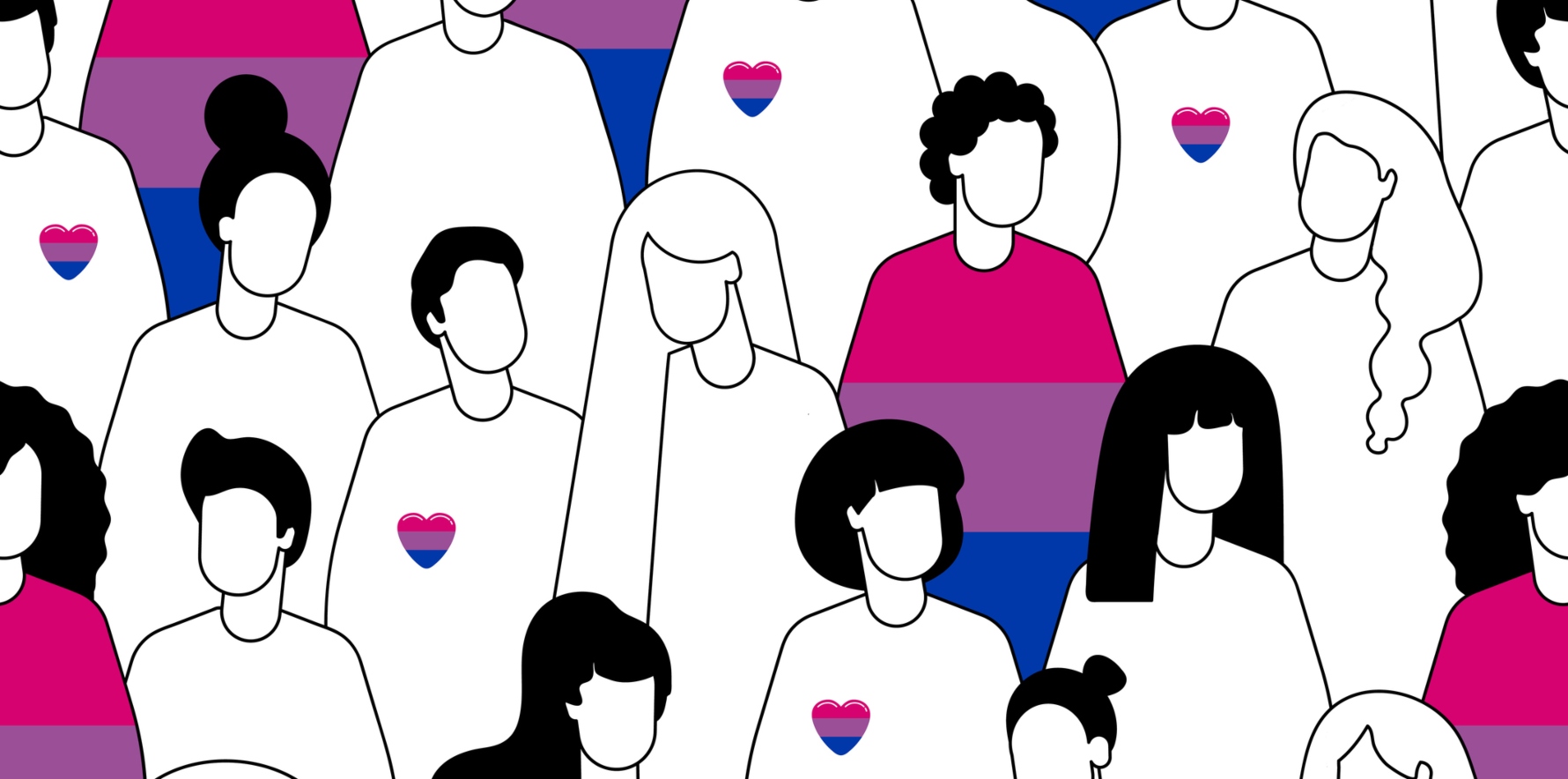
Australian-first study has identified critical gaps in sexual health services and outcomes in the largest subgroup of the LGBTQIA+ community.
Despite being highly engaged with sexual health services, bi+ people experience significantly increased rates of sexually transmitted diseases, sexual violence, and discrimination, according to new data.
The Bi+ Sexual Health and HIV (BiSHH) Study, led by the Kirby Institute at UNSW Sydney in partnership with the Centre for Social Research in Health (UNSW), the Australian Research Centre in Sex, Health and Society at La Trobe University, and the University of Sydney, collected data of more than 2100 Australians between 2024 and 2025.
Conducted anonymously online, the survey explored participants’ sexual and gender identity, relationships, sexual behaviours, mental health, and experiences with healthcare, STIs, sexual violence, discrimination, and social support.
The term ‘bi+’ describes being attracted to more than one gender and is the largest population in the LGBTQIA+ community, encompassing many sexual identities such as bisexual, pansexual, queer, and more. This is Australia’s first ever sexual health survey for this population.
Participants were aged 18 to 85 years (median age 32) and lived across every Australian state and territory. Around 4% of participants were Aboriginal and/or Torres Strait Islander. Around two-thirds were assigned female at birth, 42.3% identified as female, 30.3% as male, and 27.2% as non-binary or gender diverse. Overall, roughly 60% of participants were cisgender (corresponding with their assigned gender at birth).
The sample was mostly cis women (37.2%), followed by 27.2% non-binary or gender diverse people, 23.7% cis men, 6.5% trans men, and 4.9% trans women. The most common gender identities were bisexual (43.9%), queer (23.6%), and pansexual (11.7%).
Engagement with health services
Around nine in ten participants had, at least once in their lifetime, accessed sexual health care through a GP or sexual health clinic, and three quarters reported having at least one provider with whom they felt they could discuss sexual and reproductive health.
However, only half felt comfortable discussing their bi+ identity with providers and 42.7% felt services were knowledgeable and inclusive of bi+ people, and only 15.8% reported receiving information or resources that were specifically relevant to bi+ people.
Nearly a quarter of participants felt that staff made assumptions about their sexuality and sexual behaviours, while 6.5% felt staff were always or mostly dismissive of their sexual identity and 4.9% reported being asked inappropriate or intrusive questions. When accessing sexual health testing, 4.1% reported having a negative experience related to their bi+ identity.
“These findings show that bi+ people are engaging with healthcare, but systems are not meeting them where they are. Healthcare services tend to assume you are either gay or straight by default which can make many bi+ people feel invisible in these services,” said project coordinator Bella Bushby, a bi+ woman and PhD candidate at the Kirby Institute.
Around one in 10 felt that clinic staff were confused about which sexual health tests to provide them, either most of the time or always, and another 9.5% had had to educate the staff about their sexuality. This education was most common for trans women, with 21.9% reporting having to do this most or all of the time.
Just over half (55.4%) of survey participants had been vaccinated for human papillomavirus, with the greatest uptake among cis women (71.7%) and lower levels among trans women and cis men (36.5% and 20.6%, respectively).
Nearly a quarter of participants who were eligible for cervical screening (i.e., people with a cervix aged between 25 and 74 years) had never undergone screening. This was more common among trans men and non-binary/gender diverse people than cis women. Those who had undergone screening were also less likely to be up to date, with trans men being more likely than cis women and non-binary/gender diverse people to have been screened more than five years ago.
Despite reporting higher sexual risk behaviours than other bi+ groups, cis men had the poorest engagement with healthcare; they were the least likely to feel comfortable discussing sexual health, access sexual healthcare, disclose their sexual identity, and feel included in LGBTQIA+ spaces.
Sexually transmitted infections and screening
Around four in five had been tested for an STI at least once in their lifetime, with half undergoing testing in the previous 12 months. More than one-third (36.1%) had been diagnosed with an STI during their lifetime – more than double the estimated prevalence in the Australian general population – while 7.5% had received a diagnosis in the previous 12 months.
For those who had never been tested, 60.3% had not sought testing because they believed they were not at risk and 45% had never been offered testing, while additional barriers included not knowing where to get tested (19.9%) and not feeling comfortable talking about it with their providers (19.1%).
Around one in 67 (1.5%) participants were living with HIV. Nearly 30% did not know their HIV status, while 42.3% had undergone testing in the previous 12 months. Of those who had never been tested for HIV, 53.4% had never been offered testing by a provider.
“Stigma and perceived lack of bi+ inclusive care can create barriers to healthcare access for bi+ people, including access to sexual healthcare,” authors wrote. “Many bi+ people may feel unsafe disclosing their sexual identity and practices to health professionals, which can limit access to appropriate STI prevention, testing and care.”
Related


The majority of participants (86.2%) had heard of HIV pre-exposure prophylaxis (PrEP) and 12.2% had used it in their lifetime, 64.3% of whom were cis bi+ men. Less than 60% were aware that a person living with HIV with an undetectable viral load could not sexually transmit it.
Cis bi+ men reported higher rates of casual partners, group sex, and condomless anal sex than all other bi+ groups, and condomless anal sex was more common with hook-up partners than ongoing committed partners (39.7% vs 29.8%).
Sexual violence and mental health
Of the subset of 1939 participants who agreed to be surveyed on sexual violence, 63.3% had experienced being pressured, coerced, or forced into doing something sexual they did not want to do or could not consent to since the age of 18 – more than four times the prevalence reported in the general population of Australia.
In this cohort, cis bi+ women reported the greatest prevalence of sexual violence and were over three times more likely than women in the general population to have experienced it. Compared to the general population, trans men, trans women, and non-binary/gender diverse bi+ people were more than 4.5 times more likely to have experienced sexual violence, and cis bi+ men were more than five times as likely.
Only 29.2% who had experienced sexual violence told a health or support service, and more than a third (37.7%) had told no one.
Nearly half who had experienced sexual violence reported that the perpetrator knew about their bi+ identity, attraction, or sexual history.
“These findings highlight the urgent need to recognise bi+ people as a priority population within sexual violence services and responses,” said Emily Goodnow Bjaalid, co-investigator on the study and PhD candidate at the Australian Research Centre in Sex, Health and Society.
Additionally, nearly 30% of participants met the threshold for probable serious psychological distress, while the estimated prevalence among the general population is 17%. These rates were highest among trans and non-binary/gender diverse participants.
Discrimination and inclusion
Biphobia was a common experience amongst participants, reportedly perpetrated by both the straight and gay/lesbian communities (known as ‘double discrimination’).
“Biphobic beliefs include assumptions that bi+ people are confused, greedy, promiscuous, or deceitful, and that bi+ identities are illegitimate, untruthful, or “not really” part of the LGBTQ+ community,” authors wrote.
Many participants did not feel they could share their sexual identity with significant people in their lives. Only half were out to their families, 15% were out at work, and around one in 10 in committed relationships reported that their partner either did not know or they were unsure if their partner knew (7.3% and 3.2%, respectively).
Even within LGBTQIA+-specific sexual health services, which are designed to be inclusive and relevant to the community’s needs, only around half of participants reported feeling welcome or that the services were sufficiently bi+ inclusive.
More than 70% of participants said visual signs of bi+ inclusion in clinics would improve their sense of belonging, and 55.8% wanted intake forms that asked about sexual identity.
“We know that connection and belonging increases the likelihood of bi+ people seeking and receiving relevant sexual health information, so it is essential to increase the visibility of safe spaces and networks for this community,” said Ms Bushby.
“As it stands, there is a significant gap in bi+ inclusion within sexual health services including LGBTQ+ focused ones. The results from this survey show a need for greater understanding and inclusion of bi+ communities within these settings.”
What can we do about it?
The BiSHH findings highlighted the need to strengthen bi+ inclusion in healthcare and offered actionable insights for improving policy, practice, and service design, authors concluded.
“The findings from this survey reflect both shared experiences and diversity among bi+ people in Australia and point to an urgent need to recognise bi+ Australians as a distinct population with specific health needs,” Associate Professor Benjamin Bavinton, chief study investigator and deputy head of UNSW’s HIV Epidemiology and Prevention Program, told media.
“The more we understand about people with bi+ identities, the better equipped we are to challenge historical and harmful stereotypes, combat stigma, and design better health services.”
The following recommendations were made:
- Strengthen sexual violence responses by recognising bi+ people as a priority population, developing bi+-specific resources and referral pathways, and improving workforce training to deliver safe, informed, and inclusive care.
- Improve inclusion across healthcare services by embedding person-centred, bi+-affirming care, using inclusive language and behaviour-based questions, displaying visible signs of bi+ inclusion, auditing resources for biphobia and bi-erasure, and ensuring LGBTQIA+ accreditation and service standards adequately reflect bi+ experiences.
- Develop targeted resources and support for bi+ people, including tailored sexual health information, best-practice guidelines, peer support models, and health promotion campaigns that recognise the diversity of bi+ communities and relationship structures.
- Increase support for cis bi+ men by improving inclusion within LGBTQIA+ community spaces and developing strengths-based programs that build confidence in discussing sexual health, relationships, and consent.
- Refine STI, HIV, and PrEP prevention by updating clinical guidelines and risk assessment frameworks to better reflect the needs of bi+ people, particularly those in polyamorous or non-monogamous relationships and others at increased risk of STIs or HIV.
- Strengthen mental health and alcohol and other drug services by improving understanding of the impacts of biphobia, stigma, and discrimination, recognising the higher risk among trans and non-binary bi+ people, and tailoring support to address these challenges.
- Embed bi+ people as a priority population in national and state policies, including those covering sexual health, HIV, sexual violence, mental health, alcohol and other drugs, and women’s and men’s health, with dedicated actions addressing the distinct needs of bi+ women, bi+ men, and trans and non-binary/gender diverse bi+ people.
The full study can be accessed here.
Comments have been turned off for this article.
