

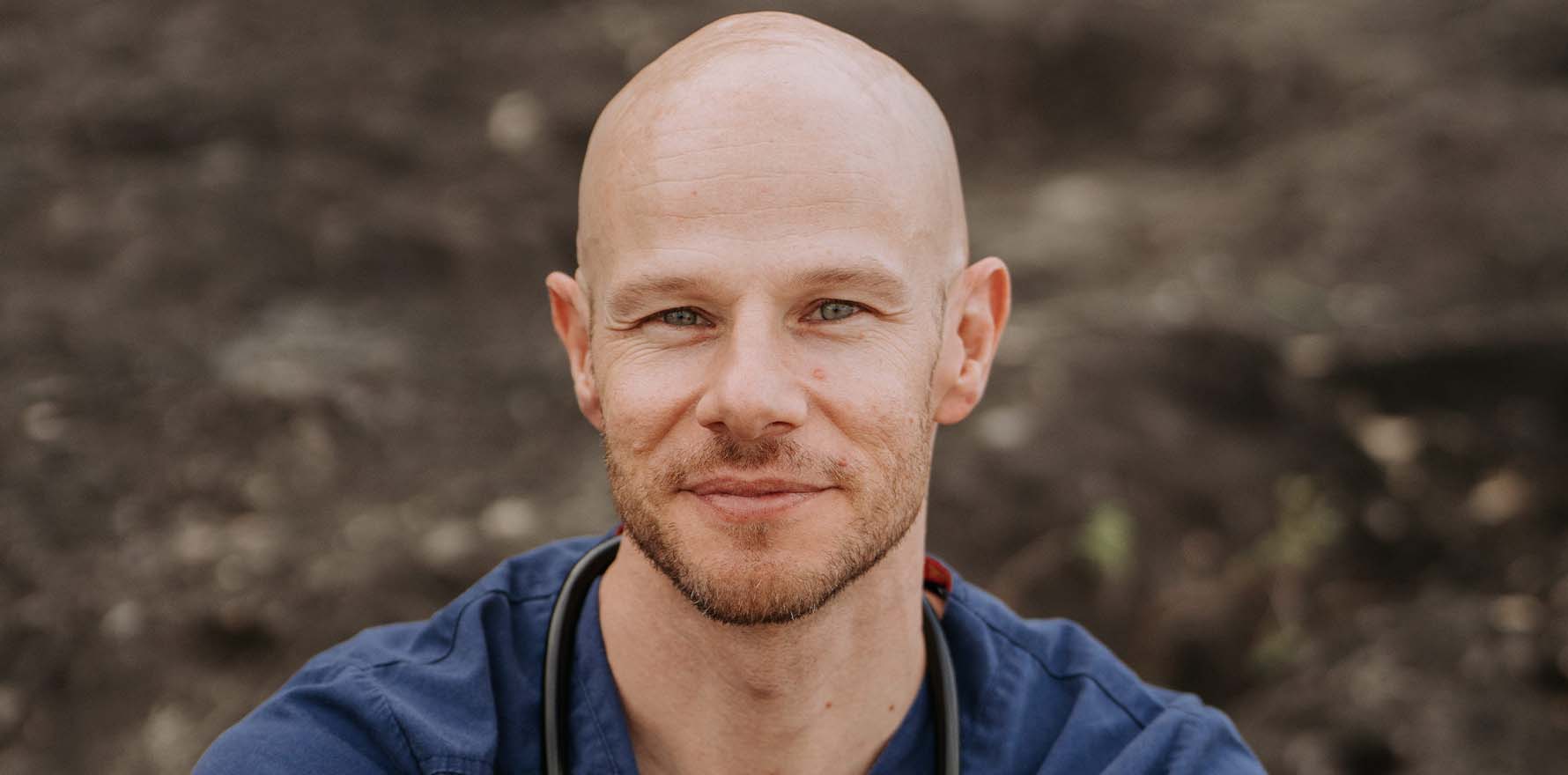
Dr Damien Brown says housing and healthcare failures are driving preventable illness in Indigenous communities – and he knows firsthand.
Specialist rural and remote physician Dr Damien Brown says Australia is still failing some of its most vulnerable communities, warning that deep inequities in housing, healthcare and public health continue to fuel preventable illness and trauma in remote Indigenous communities.
And he comes from a place of deep knowledge, having spent more than a decade working across Central Australia and the country’s remote north.
“There’s just this bigger picture stuff,” Brown said.
“It’s crowded housing, it’s the fact that there’s generational unemployment and a lack of opportunities, and the kids can’t sleep at night because the camps are crowded and noisy and chaotic. So how are they going to get through school?”
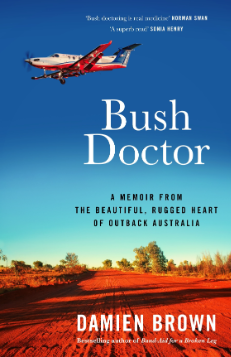
Dr Brown is speaking to The Medical Republic following the release of his new book, Bush Doctor – A Memoir from the Beautiful, Rugged Heart of Outback Australia.
His second autobiography follows on from his first bestseller Band-Aid for a Broken Leg, released in 2012 and detailing his experiences working with Medecins Sans Frontieres in Africa.
After this experience, Dr Brown headed to the Northern Territory before a stint in the UK where he completed a Masters in International Health at London’s School of Hygiene and Tropical Medicine.
He then headed back to the Northern Territory, where he stayed for more than 10 years. It was an experience he describes as both confronting and emotionally exhausting.
After years dodging bullets and violence in Africa he thought he was well-prepared for central Australia. He was wrong.
“One of the aid workers told me remote Australia is harder because you don’t expect it to be and because it shouldn’t be,” he says.
“That was exactly my experience.”
Dr Brown says his latest book was significantly more difficult to write than his first memoir about working overseas because the issues it explores are so close to home.
“When I wrote Band Aid, it felt very far away,” he says.
“But Central Australia was different. I kept thinking, ‘Why isn’t this a front-page issue? Why aren’t we furious about this?’”
He says many Australians still do not fully understand the scale of the health crisis affecting remote Indigenous communities, particularly the burden of chronic disease occurring decades earlier than in the broader population.
“It’s not just that people die early,” he says.
“It’s the fact that people spend 30 or 40 years of their life in ill health. Dialysis in your 30s forever – it’s ridiculous.”
He describes the growing number of dialysis patients in remote communities as evidence that the health system often intervenes far too late.
“The dialysis service is outstanding,” Brown said.
“But that’s after decades of accumulating damage to your kidneys. It’s reactive. It’s the cart before the horse.”
Brown said many of the health problems he encounters stem from social determinants including poor housing, food insecurity and limited access to services.
“You walk into these remote stores and the cheapest thing is often chips and Coke,” he says.
“If you eat a salad sandwich, it’ll cost you 15 bucks and you’ll be hungry again by midday.”
While Brown concedes he was initially judgemental about unhealthy food choices, his later studies in public health helped him better understand the structural issues behind them.
“There’s enough calories in that Coke and chips to get you through the day,” he said.
“It’s not just that people want something sweet. It actually has enough energy to sustain you.”
Brown believes housing is the single biggest issue requiring urgent attention.
“Housing. Housing,” he says when asked what one change would make the greatest difference.
“People need a safe, adequate place to meet and look after themselves.”
Overcrowded homes contribute directly to illness, family violence, disrupted education and poor mental health he says.
“If you’ve got 15 or 20 adults in a house, it’s impossible to get a good sleep or get the kids up on time [for school],” he said.
“It drives rheumatic fever, kidney disease, domestic violence – everything.”
He expresses frustration at what he sees as often shallow national conversations around Indigenous disadvantage, saying political debates can become trapped between ideology and outrage rather than focusing on practical solutions.
“We sometimes prioritise our discomfort with addressing these issues over actually addressing the public health crisis that it is,” he said.
He pointed to recurring debates about incarceration, alcohol abuse and child protection as examples where nuance is often lost.
“We can’t just throw broad woolly statements at this,” Brown said.
“People say, ‘the government needs to do more.’ Well, yes – what specifically?”
Related
Dr Brown says his motivations for writing the second book was to share the complexities and contradictions of frontline healthcare in remote Australia.
“I wanted people to sit with the dilemma and the nuance,” he said.
“You go there wanting to help people, but then you realise these are huge systemic issues.”
He says the emotional toll of the work still affects him deeply, despite years of experience.
“It still grates,” he said. “Frustration and anger are definitely things I feel at times.”
He now lives in Melbourne, flying in and out of remote communities in the NT. It has taken time, but he feels he is finding a better balance that allows him to balance the emotional burden of the job with his own life.
“I can’t do two weeks straight anymore,” he said.
“I need to step out and decompress.”
He also finds himself focusing more on what he calls the “small wins”, such as patients returning for follow-up care, taking medication regularly or bringing family members in for check-ups.
“If someone comes back asking for you specifically and tells you they’ve been taking their blood pressure medication for a week because of a conversation you had, that’s a win,” he said.
Despite the challenges, Brown remains hopeful Australians are willing to engage more honestly with the realities facing remote communities.
“I’d love people who aren’t necessarily interested in public health or Indigenous health to pick up the book at the airport thinking it’s just a story about the outback,” he said.
“And then realise, ‘Holy shit – this is actually unacceptable.’”
Bush Doctor, By Dr Damien Brown is out now. Below is an excerpt from the book.
The Highway/Billy
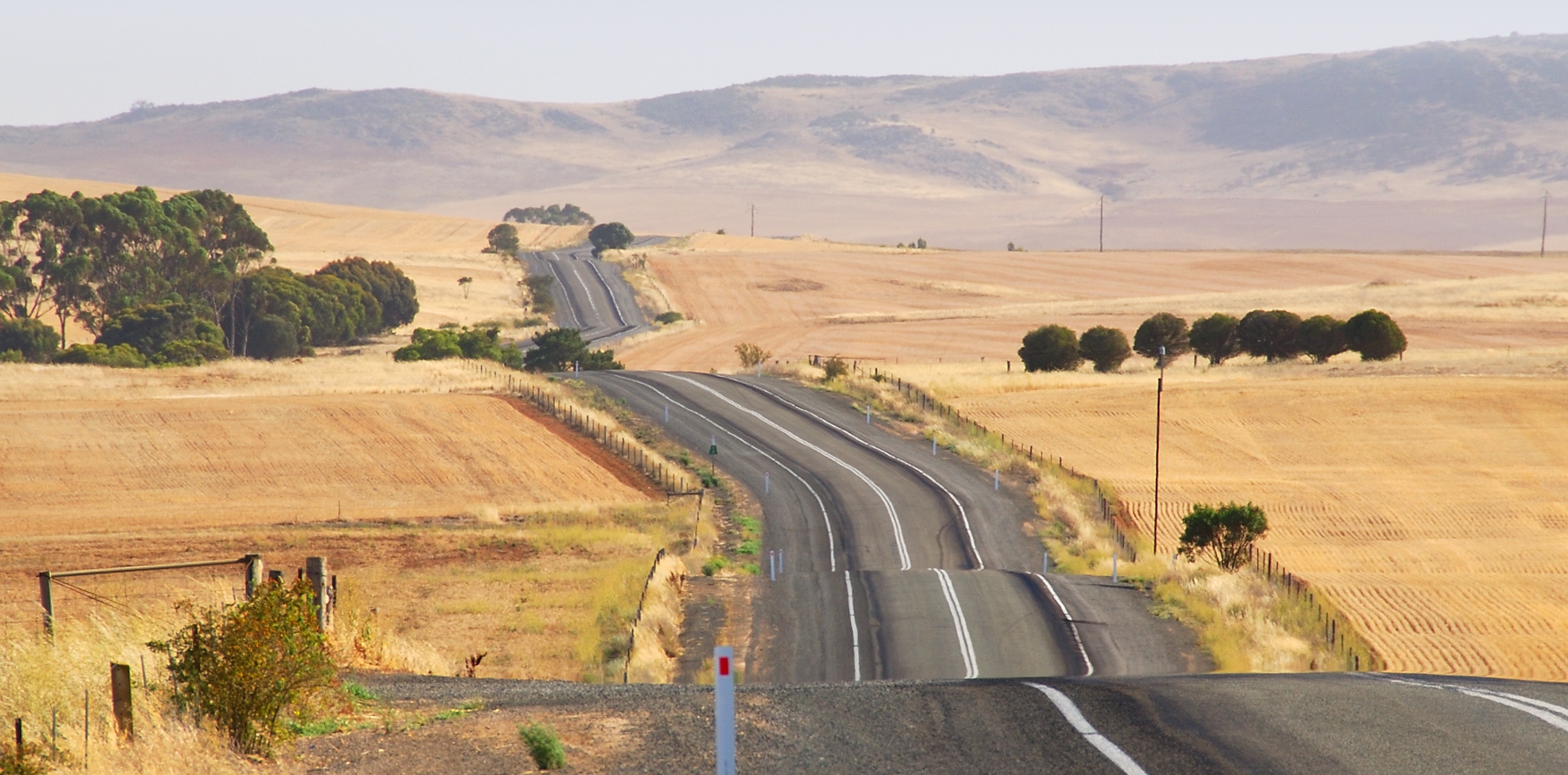
It’s the middle of the dry season, in the middle of thirsty, brown-red country, and my rental car rattles up the highway. Roadside flood markers mock the landscape. There’s been no rain for months. The weather here has two settings—wet or dry—but when the rain does come it’ll saturate all this quickly. I’ve been caught before, watching the water suddenly rise to the doors of the little Toyota Yaris I’d borrowed—not an ideal outback vehicle—although it drained away just as fast. For now, the spinifex grasses and mulga scrub will need to huddle against the dry winds for months yet, under the desert sun, biding their time before a drink.
The roadhouse comes into view. I slow down and turn into the long driveway, stopping beside a fuel pump. It’s been over three hours since I left Alice Springs and headed along this almost dead-straight highway, through the centre of Australia, and I’ve got a couple more hours to go. My eyelids are getting heavy.
An old Ford Falcon pulls off the highway. It slows, sagging and rolling like an old boat, its back not far above the ground. A wake of orange dust ripples behind. The car stops on the other side of the fuel pump and two creaky front doors burst open, country music cutting out. A hand reaches out of the half-open window to grab at the outside handle of the back door, and there’s some swearing; a giggle. Then the door pops. Bodies clamber out—five of them, all Aboriginal—and the car rises a few inches. A sixth person, a young boy, stays inside the car, standing on the back seat and watching me through the half-open window.
‘Heya,’ I say, as one of them fills the car. The others head into the little store.
‘G’day,’ says the man filling the pump, looking out towards the highway. The child’s looking at me.
‘Heya, fella.’ I wave to him. ‘How you going?’
He makes a little wave back. He’s probably two or three years old, and I can’t help noticing the nasogastric tube that’s coming out of one of his nostrils, taped to his cheek and hanging loosely at the other end—an end that’s usually attached to a bag, or a pump. I also can’t help noticing the pyjamas he’s wearing, ‘Alice Springs Hospital’ written on the front. Patients aren’t usually discharged with either of these things, especially not while they’re still attached. The child looks healthy and happy, though, despite the tube.
‘Is he alright?’ I ask the man.
‘Yeah, he right,’ he says.
‘Good one.’
I wait a long moment. ‘I’m just thinking about that tube and all,’ I say. ‘He looks like he gotta be in hospital?’
‘Yeah,’ replies the man. Then a long silence. This is often the case around these parts. People speak at their own pace, and trying to rush a conversation usually has the opposite effect. I give it time, look out at the horizon. Wedge-tailed eagles circle not far off, presumably over some roadkill—a kangaroo, or cattle from one of the surrounding stations, belly up and bloated in the heat. There are tens of thousands of feral camels out here, too, but I’ve fortunately never encountered one on the road. The cattle do enough damage to cars. Nothing jolts me more fully awake on these drives than seeing a bull through the side window as I pass it at 130 kilometres an hour, not having noticed it until then.
The fuel pumps rattle away.
‘Yeah, righto,’ I say to the man. ‘Just wondering, you takin’ the young fella back to Alice Springs later?’
Alice Springs, 300 kilometres south, has the biggest hospital in the region. There aren’t many others in these parts. Central is the closest but it’s far smaller, and Katherine is further away again. Darwin is another thousand kilometres up the road.
‘Nah,’ he says.
More silence.
‘Which hospital you off to then?’ I ask, hoping dearly that he’s not going to say ‘Central’.
‘Central,’ he says.
Ah. Central is the smallest and most remote one, and it’s where I’m headed. We usually transfer the very sick kids in the other direction—to Alice, rather than from Alice.
‘Yeah, right,’ I say, finishing up and replacing the nozzle. ‘Did Alice Springs send you there?’
‘Nah.’
A long pause. He rubs his thick beard.
‘But they say he’s right to come, yeah? I’m just asking because I’m one of the doctors in Central.’
‘Nah,’ he says. ‘But we takin’ him. He right. He much better. More close to home, Central. We got family there.’
The others come out of the store, barefoot, hot chips and a couple of large bottles of Coke in hand. ‘This fella workin’ up Central way,’ the older man says to the others. ‘He a doctor there.’
‘Ah yeah, I know you,’ smiles one of the women. ‘You look after my other boy before, remember?’
‘I think so,’ I say, although I don’t exactly recall. ‘He’s good now?’
‘Yeah, he right. He broke that arm. You mob put ’em needle in him and made him sleep. You pulled ’em right, made ’em straight.’
I’m flattered that she recalls. I’ve been coming here on and off for a few years, so I’ve treated many of these families. But networks are large, and there’s also a persistent divide in town. Most Aboriginal people live in the ‘camps’ on the edges of town, and us health workers stay in our staff accommodation onsite, so there’s little overlap aside from conversations at work or in the supermarket, or on the street.
‘The little fella in the car, though,’ I say to her, ‘he’s not too crook for Central? He’s right to come out of Alice?’ I notice that the man next to her is quite short of breath, too.
‘Yeah,’ she smiles. ‘Tyreese be right in Central. You fixed his brother, you a good doctor.’
I smile and nod again. Her faith is touching, if a little misplaced. I trained as a ‘specialist rural generalist’, somewhat of an oxymoron of a title. It’s the medical equivalent of a jack-of-all-trades-but-master-of-none, and the role doesn’t exist in the cities. Up here I practise emergency medicine, anaesthetics, do the general ward rounds and some GP clinics. It’s a great mix for these remote hospitals, but conversely, I don’t have the depth of training in one area that a city specialist does. We also don’t have the mountains of diagnostic equipment or referral options available in cities. A joke here is that Central has equal access to all of Australia’s best beaches—all of them being at least a thousand kilometres away—but the same could be said regarding all major hospitals.
Mum climbs back into the car. The older man goes in to pay. The man who’s short of breath shuffles past me, towards the car.
‘How you going, Billy?’ I ask. I recognise him from his many presentations to the hospital. He’s a young guy, mid-thirties, wearing a cowboy hat and checked shirt tucked into jeans, a big belt buckle and old boots. Cowboy culture is big in these parts, a lot of people having lived and worked on cattle stations in decades past.
‘Good, Doc,’ he puffs.
‘You looking a bit short-wind, yeah?’
‘Yeah, little bit,’ he says.
There’s nothing ‘little bit’ about his shortness of breath. Billy’s heart, despite his age, is big and floppy, and it barely pumps. He lives on a knife edge in terms of medications. He also likes to go bush as much as he can, to get away from the chaos of town and stay with his partner in the outback proper; but even a night or two of that will cost him if he leaves his medications in town, which he sometimes does. He doesn’t like the obligation, I suspect. Many don’t. What Billy needs right now is a cardiologist, a kidney specialist and a high-dependency unit. What he’ll get is me. In our little hospital. There’s no way that someone can be equipped to deal with everything that comes through the doors in these places. Even a rostered night off doesn’t guarantee respite from the job.
The last time I was here, a group of us went to watch a rodeo on a cattle station north of town and quickly found ourselves working.
‘Just pull it hard!’ implored one of the riders. He was holding his arm, his right shoulder obviously deformed. He lay in the paramedic’s tent, and we’d been paged over the PA on the off chance we’d attended. The rodeos up here are unmissable—blackfellas and whitefellas all come, and all take it all very seriously. It’s one of the few proper melting pots.
‘Look, mate,’ I replied, ‘I’m happy to try, but I gotta be honest, I’ve had a few beers. All three of us have. And I can’t guarantee without an X-ray that your shoulder’s dislocated and not broken. If it’s broken, there’s a chance I could make it a bit worse.’
‘Nah, she’s right. Go nuts,’ he said, laughing then wincing in pain. He was stoned on the green whistle, the inhaled penthrane painkiller the paramedics had given him. ‘Someone just pull it!’ he cried. His girlfriend was now supporting his arm as his mates filmed him, winding him up.
‘Mate, you lasted like two seconds on that thing,’ said one. ‘Not even.’
‘Nah, I filmed it. You rode him for like eight seconds I reckon. Watch this clip, docs.’
We did. It was impressive. They were ‘ringers’ from a station a few hundred kilometres away, immaculately dressed, as station crew almost always are at these events: R.M. Williams boots, Akubra hats, neat shirts, all covered in dust.
‘Ahhh, someone just pull it, please!’ he shouted.
‘Guys, listen,’ I said. ‘I’m happy to do it, but we’ll need some space. And no lawyers if this doesn’t go well, okay?’ I was only half-joking. Having a go was the right thing to do, but not exactly best practice without X-rays. ‘It’ll probably work just fine, but—’
‘Doc, just bloody yank it!’
There was no yanking, but we manipulated it back into place over a gentle but sweary minute. The relief is usually instant, but we had a moment of doubt. ‘Is it feeling better?’ I asked, having felt a soft click. A more satisfying clunk is what I’d wanted. ‘I’m going to lift your arm up slowly,’ I said.
‘Yeah, nah,’ came the reply.
‘That a yeah? Or a nah?’ I moved his shoulder gently through its range of motion.
‘Yeah. Ah, wait. Nah, it hurts up top there.’
‘Yeah, but you can get it all the way up here, so it’s almost certainly in,’ I said.
‘Yeah?’
‘Yeah. We should still X-ray it tomorrow, though.’
‘Nah.’
‘Why nah?’
‘I don’t want to go all the way down to Central, Doc. I’d rather just see how it goes. Any chance you can strap it so I can ride again tonight? I reckon she’ll be sweet as.’ He was still stoned on painkiller and covered in dust, the rodeo in full swing behind us. Loud cheers and sudden oohs hinted at more patients to come.
‘Not a good idea,’ I advised. ‘It really needs to heal.’ But then in came the rodeo clown, fresh from a direct hit as he tried to distract a bull from a fallen rider. Much of his thigh was already a firm, purple-red, swollen bruise. Then in came a guy with a sore neck. Then . . .
Practising medicine up here is fascinating. The distances add to the challenges. Central Hospital serves a region the size of the UK, and the Aboriginal people in these remote areas have the highest rates of disease of any group in Australia. It was only 150 years ago that the first European made it here, and this highway bears his name: Stuart. In the mid-1980s, the last ‘first contact’ was made with a group of Aboriginal people, the so-called Pintupi Nine, who were living as they always had. Colonisation here is recent, and raw. The consequences unfold daily in these communities. It’s why not all the medical work is pulling arms or stabilising medical conditions. A lot of complex social issues reveal themselves, and over the years I’ve come to develop a sort of mental buffer — a psychological crash helmet, maybe, or a learned desensitisation. You have to. Returning here demands it. Work must be left at work, and the lighter moments indulged in. Like this chat at the roadhouse fuel pump.
Billy and the others are squeezing back into their car.
‘See you up there, Doc!’ yells the mother.
The little boy waves.
‘See you soon,’ I say.
Their suspension sags and creaks. Doors slam, the country music fires up and the car sputters. A caravan zips past on the highway—one of the season’s many grey nomads, the retired middle classes who travel Australia, some of who will arrive at our hospital with their own complex health needs, and at times little concept of what being out here implies. A letter from a private cardiologist in hand, requesting a full advanced work-up ASAP, or wanting a particular brand of a medication, and only that specific one.
‘I come if I’m not right,’ Billy says to me out the window.
‘Please come either way,’ I say. ‘We can do a check-up, get your medicine right.’
‘Yeah, I come if I’m not right,’ he says, still short of breath. ‘Maybe I be right.’
‘Maybe. But maybe not. You look proper short-wind.’
‘Only little bit,’ he laughs.
‘Nah, fair bit,’ I laugh.
‘Yeah, maybe fair bit. Alright, I come see you.’
And off they drive. Six members of the Warumungu Nation, bouncing off in a clapped-out Ford through an ancient landscape, descendants of the world’s oldest continuously surviving culture. Carrying a dozen health issues, some Coke, juice and chips, and a nasogastric tube. Lives I can’t imagine.
It’s been months since I was last here. Old anxieties flood back.
