

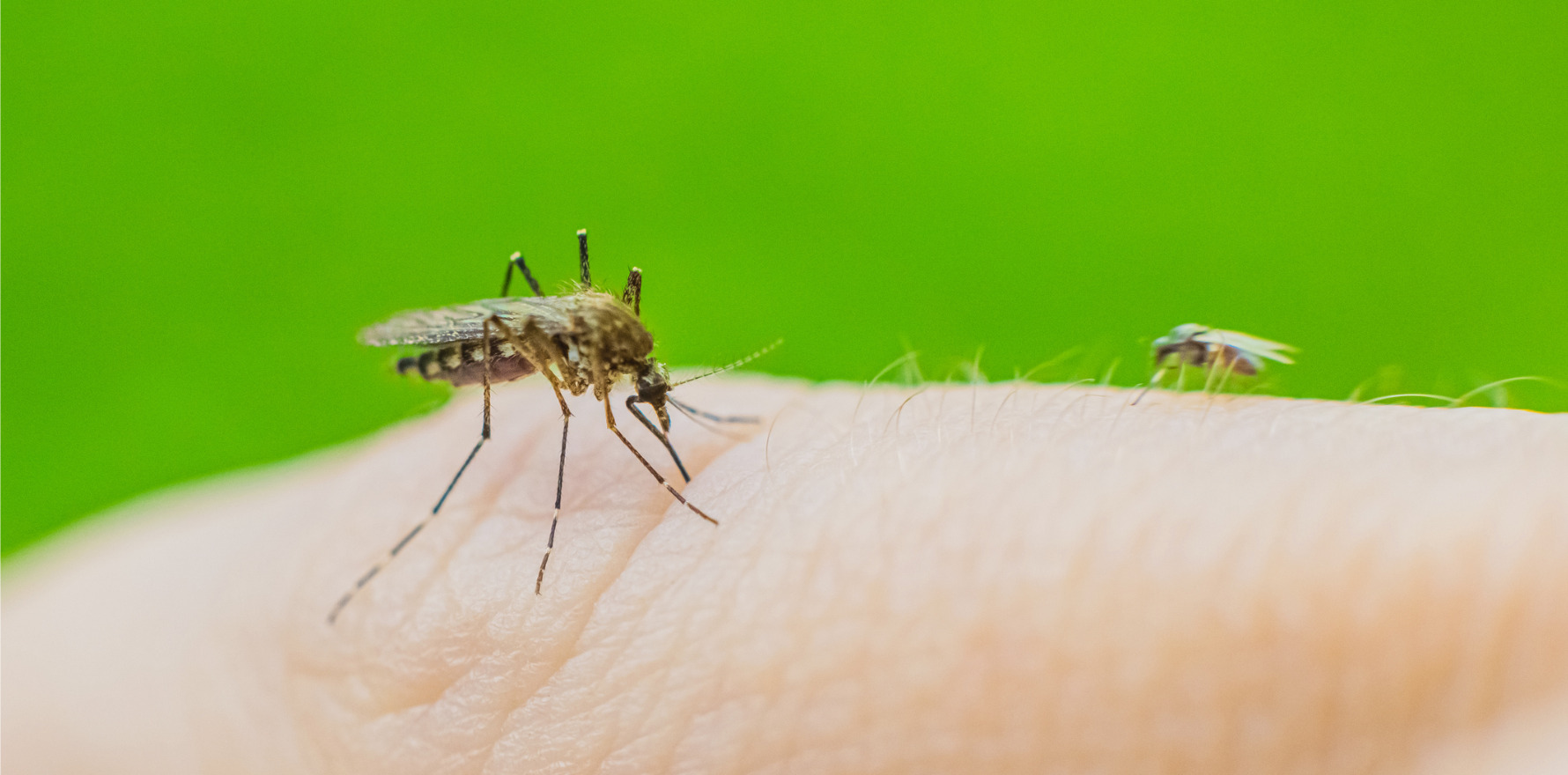
Australia is seeing more chikungunya infections, and a national mozzie expert offers his tips on how to avoid the bites.
The mosquito-borne virus chikungunya may not yet be a household name in Australia, but rising cases in returned international travellers and work on a vaccine by researchers in Queensland could change that.
There were 165 notifications of chikungunya virus infection in Australia in 2025, according to the Australian Centre for Disease Control’s National Notifiable Disease Surveillance System.
Victoria had the lion’s share of cases (80), followed by NSW (29), Western Australia (27), Queensland (13), South Australia (11), the ACT (four) and Tasmania (one). The Northern Territory was the only jurisdiction to record no cases.
This compares with 69 cases across Australia in 2024. New South Wales had the most cases (21), followed by Victoria (17), Queensland (13), Western Australia (11), the Northern Territory (four), the ACT (two) and South Australia (one). Tasmania was the only jurisdiction to record no cases in 2024.
According to the ACDC, there were 42 reports of chikungunya in 2023, 41 in 2022, two in 2021, 33 in 2020, 87 in 2019, 41 in 2018, 99 in 2017 and 114 in 2016.
While chikungunya is not endemic in Australia, it is considered a major global health threat. Outbreaks across Africa, Asia, the Americas, the Western Pacific and Europe have driven a global increase in cases in 2025.
Infection typically occurs following the bite of an infected mosquito, after which the virus enters the bloodstream and initiates a multi-stage disease process.
The virus preferentially targets joint tissue, muscle fibres and connective tissue, leading to intense inflammation and tissue damage. Symptoms commonly include fever, severe joint and muscle pain, headache, rash and joint swelling.
Severe disease is more likely in older adults, people with underlying conditions such as cardiovascular disease or diabetes, and newborns. In rare cases, infection during pregnancy can result in severe illness in infants.
There is currently no specific antiviral treatment, and management remains supportive.
Although chikungunya virus has not been detected in Australian mosquitoes, the primary mosquito vectors are present in northern Queensland and the Torres Strait, raising the risk of local transmission should the virus be introduced.
Mosquito expert Associate Professor Cameron Webb, principal Hospital Scientist and Research Education Academic Director, Medical Entomology, NSW Health Pathology, told The Medical Republic the overwhelming majority of cases were acquired overseas.
“There might be a couple in North Queensland, but there’s certainly not many,” he said.
“Australians are traveling more, particularly to the tropical locations where these viruses are active. We’re also seeing more activity of these viruses around the world.
“The popular holiday destinations for Australians, particularly in Indonesia, Southeast Asia and the Pacific, are all countries where we’re seeing increasing activity of these mosquito-borne viruses.”
Professor Webb said one of the biggest risks for travellers when it came to chikungunya infection was that the mosquitoes which carry the virus behave differently to the typical Australian mozzie.
“In some ways the mosquitoes in these countries are a little bit sneakier,” he said.
“This does apply to chikungunya as well but particularly for dengue, the mosquito that spreads that virus – which is called the yellow fever mosquito – preferentially bites people.
“It bites them during the day, not necessarily in the afternoon and evening, when we’re mostly trying to avoid mosquito bites.
“And the numbers of these mosquitoes are nothing like we see around the wetlands and bushland areas of Australia.
“So if you’re going to Bali for a holiday, you’re probably getting infected as you have lunch or brunch in your local village, not necessarily in the afternoon, when you’re out walking around a wetland, which you might otherwise associate with exposure to mosquito-borne pathogens in Australia, like Ross River Virus, for instance, or something more serious, like Japanese encephalitis virus.”
One of the best defences against bites was a quality mosquito repellent, and ensuring it is applied throughout the day, Professor Webb told TMR.
“Take mosquito repellent from Australia with you. The reason is, not only are you not guaranteed to find a formulation that’s safe and effective in the destination you’re going to, all of the products that are sold in Australia have gone through safety checks that they’re safe to use and also that they’re effective, so you can be confident that the product you’re taking is going to work.
“Also routinely put it on when you’re going outdoors every day, because that’s going to provide the best protection.
“These mosquitoes do seem to preferentially feed around your feet and lower legs, but getting in the habit of just putting it on irrespective of how many mosquitoes you see buzzing about is a really good thing to do.”
Related


Meanwhile, researchers at Queensland’s Griffith University say they are close to developing a vaccine for chikungunya.
The research team, led by Professor Bernd Rehm from Griffith’s Institute for Biomedicine and Glycomics, has engineered Escherichia coli to assemble synthetic biopolymer particles that closely mimic the surface of the chikungunya virus.
In preclinical studies, the particles successfully induced a protective immune response without the need for an adjuvant.
The experimental vaccine, known as adjuvant-free E2-BP-E1 biopolymer particles, was designed to display chikungunya antigens in a structure that mirrors the native virus.
Professor Rehm said this design allows immune cells to recognise and absorb the particles efficiently, prompting a robust antiviral response without causing infection.
“The immune system recognises the particles as a virus, but without inducing infection,” he said.
“This allows immune cells to efficiently engage and mount a protective response.”
A key clinical concern is the high rate of chronic morbidity. Up to 60% of patients experience persistent joint pain that can last months or years, often resembling rheumatoid arthritis.
Professor Rehm said immune-mediated damage may continue even after the virus has been cleared.
“Once infection takes hold, we see direct tissue damage, intense inflammation and immune responses that resemble autoimmune disease,” he said.
Following the success of the current study, the Griffith team plans to progress the vaccine into clinical development. The next phase will involve early-stage clinical trials to assess safety, before moving to efficacy studies.
The findings have been published in the journal Biomaterials.
