


Prevalence of use appears more than double that of the general population, with the medications commonly being misused.
One in 10 people with eating disorders report misusing GLP-1 RAs or using compounded versions, according to emerging US research.
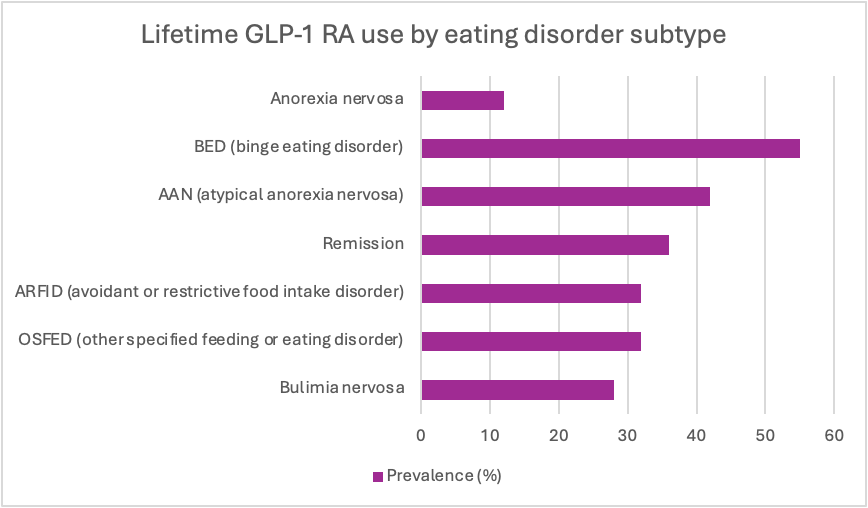
Interim analysis of an ongoing study found that 32.1% of participants with eating disorders reported lifetime use of a glucagon-like peptide-1 receptor agonist (GLP-1 RA), more than double the estimated 15% prevalence observed in the country’s general adult population.
The findings raise concerns about the role of these drugs in maintaining disordered eating behaviours by facilitating rapid weight loss and dietary restriction.
The analysis, conducted between December 2025 and January 2026, was part of an ongoing cross-sectional study examining GLP-1 RA use among people with eating disorders in the US.
Participants were recruited through a network of federally funded studies unrelated to GLP-1 RA use, national organisations, and targeted online outreach.
Of the 436 participants (94% female, mean age 34 years), 10.1% reported lifetime misuse of a GLP-1 RA and 9.9% reported using compounded products, which have become increasingly available in the US due to shortages.
They have emerged in Australia to a lesser degree, as access remains more limited and subject to regulatory restrictions.
Over a quarter of participants were diagnosed with anorexia nervosa (27.2%), 18% with binge eating disorder, 11.7% with atypical anorexia nervosa, and 6.8% with bulimia nervosa.
Other feeding or eating disorders, and avoidant or restrictive food intake disorder, made up a further 18.3% of the cohort, while the other 18% were categorised as in remission.
Overall, 140 participants (32.1%) reported lifetime use of semaglutide, tirzepatide, dulaglutide, liraglutide, or exenatide, used for either diabetes management or weight loss, while 96 (22%) reported current use.
Misuse was defined as behaviours such as taking higher doses than prescribed, escalating doses more rapidly than instructed, extending treatment beyond the prescribed period, tampering with injection devices, or sharing medication with others who did not have a prescription.
The authors noted that this is the first study to estimate the prevalence of GLP-1 RA and compounded product use and misuse among people with eating disorders.
The Butterfly Foundation’s Head of Clinical and Support Services, Natalie Spicer, told The Medical Republic that they welcomed research in this space.
“The study reinforces concerns already being raised by clinicians and people with lived experience of eating disorders – namely that appetite-suppressing and weight-loss medications may intersect with eating disorder symptoms and recovery in complex ways,” she said.
Related



“It’s essential that healthcare professionals are not using weight loss medications as a ‘band aid’ to address eating disorders, which are complex psychological and physical illnesses.
“Health care providers must look at the bigger picture and address the causes and influences of developing these mental health conditions, such as body dissatisfaction, trauma or other health conditions and intersections.”
Psychiatric comorbidities were common among the study population, with around nine in 10 reporting anxiety disorders, 70.8% experiencing mood disorders, 39% diagnosed with ADHD, and over a fifth with sleep disorders.
“We also need to see further regulation around prescribing, manufacturing and use of these products, mainly to ensure that people are first discussing their concerns with a licensed health professional, that the use of the product is actually warranted, and that they are not able to access unregulated and counterfeit products that could harm mental and physical health,” said Ms Spicer.
The study authors expressed similar concerns.
“GLP-1 RA pharmacovigilance is urgently needed as the commercial market expands from injectable to oral products and new formulations (e.g., dual and triple agonists),” they concluded.
“People with eating disorders are also navigating a rapidly evolving risk environment of compounded GLP-1 RAs that are easily obtained without medical or regulatory oversight.”
For support, call the Butterfly National Helpline on 1800 ED HOPE (1800 33 4673) or visit www.butterfly.org.au to chat online or email, 7 days a week, 8am-midnight (AEST)
