

Conspiracy theories thrive on fear, confusion and the internet’s ability to make absolutely anything sound plausible at 2am. But are they serious?
Conspiracy theorists have been warning us for years about everything from secret governments operating out of underground bunkers to alien coverups and that old chestnut – the assassination of JFK in 1963.
But it turns out the real threat to society may be people filling out online surveys while extremely bored.
Australian researchers have discovered that a suspicious number of people will agree with absolutely anything if you put it in a questionnaire and leave them alone with a keyboard for long enough.
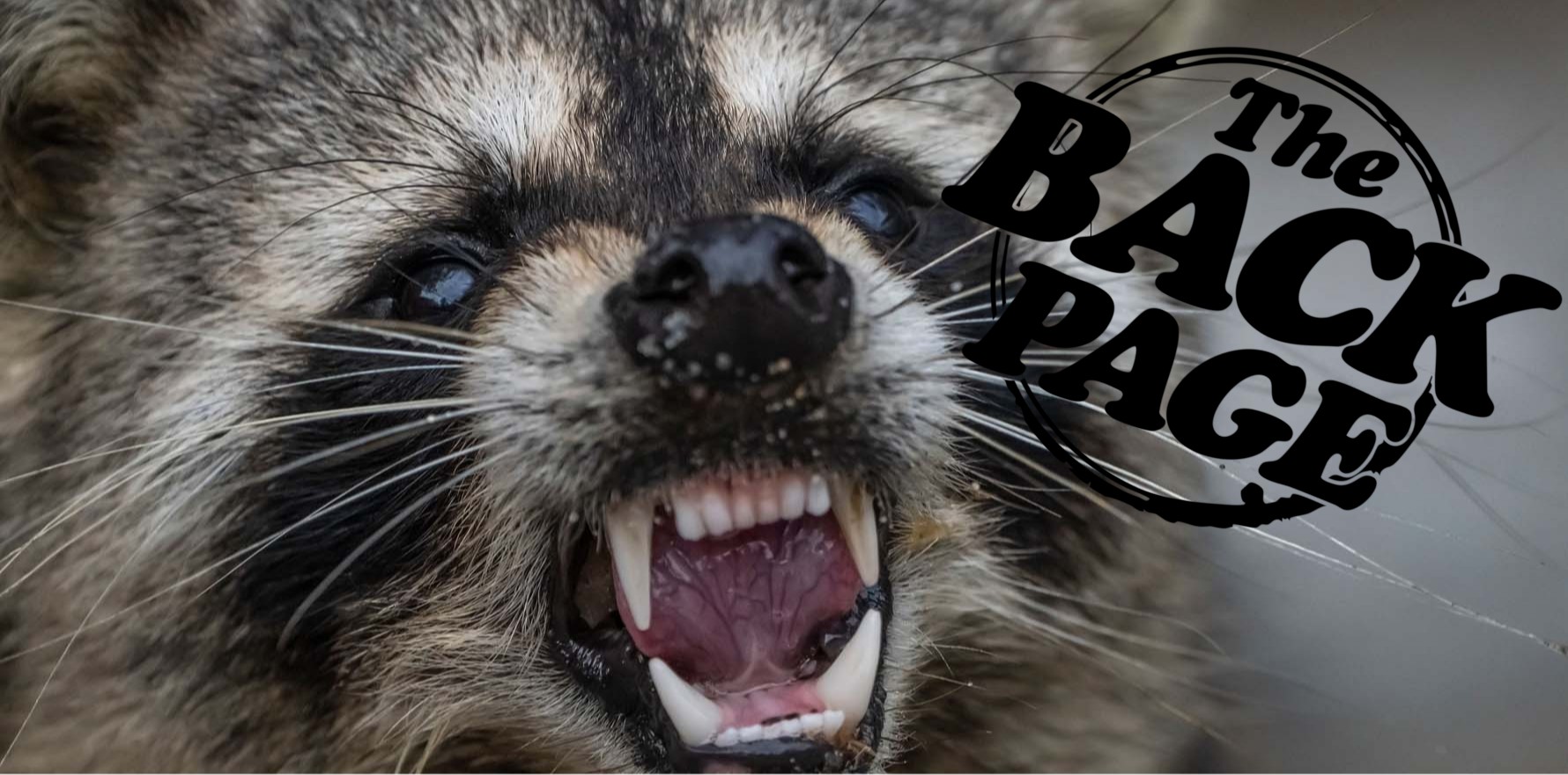
Even the existence of a top-secret Canadian raccoon super-army!
According to a new study from Macquarie University, one in 10 Australians surveyed said that they believed Canada may be secretly breeding giant, genetically engineered raccoons to invade neighbouring countries.
Which is rough news for Canada, a nation that until now had mainly been accused of producing maple syrup and Ryan Gosling.
The fake theory, invented entirely by researchers, was part of an online survey in which the researchers asked 1044 Australians to rate each of seven conspiracy theories true or false.
Six of these conspiracy theories were pre-existing and well aired, but one was invented by the research team and farcically bizarre: “The Canadian Armed Forces have been secretly developing an elite army of genetically engineered, super intelligent, giant raccoons to invade nearby countries”.
Somehow this still sounded plausible enough to hundreds of people online, proving once and for all that if you put the words “secretly developing” into a sentence, somebody on the internet will believe it.
An astonishing 10% of respondents said they rated the raccoon army theory as “probably true” or “definitely true”.
Even more impressively, the raccoon truthers also tended to agree with nearly every other conspiracy theory thrown at them, and people who endorsed the raccoon army theory were much more likely to endorse the pre-existing conspiracy theories.
For example, 69% of those who endorsed the raccoon theory also agreed that “A secret group of Satan-worshipping paedophiles has taken control of parts of the Australian federal government and mainstream Australian media”, compared to just 13% of survey respondents overall.
Survey participants were also asked to consider two clearly contradictory theories about coronavirus – “Governments are covering up the fact that 5G mobile networks spread coronavirus” and “Coronavirus is a myth created by some powerful forces, and the virus does not really exist”.
Somewhat surprisingly, the researchers discovered that the group of “Raccoon army believers” were also far more likely (56% versus 7% overall) to agree with both conflicting coronavirus conspiracy theories.
Lead author Dr Robert Ross, of the School of Psychological Sciences at Macquarie, said their findings challenged widely held assumptions about the prevalence of genuine belief in conspiracy theories.
“Survey research is often interpreted as showing that belief in conspiracy theories is widespread, even when theories would be astonishing if true,” he said.
“For example, the results of a 2013 survey were widely reported in the media as indicating that 12 million Americans endorsed the idea that shape-shifting lizard people actually control human societies and hold political power!”
To be fair, consistency has never really been the cornerstone of conspiracy culture. This is a world where people can believe the moon landing was fake while also believing Stanley Kubrick filmed it on location.
In a twist nobody saw coming (except literally everyone who has ever been online) 13% of participants later admitted they had answered randomly or insincerely.
A similar follow-up study in New Zealand, just published in Royal Society Open Science, has broadly replicated the Australian findings.
The researchers said their findings suggested conspiracy beliefs may not actually be as widespread as headline-grabbing surveys implied.
“As researchers, we need to get out of the habit of assuming that when participants say they agree with claims in a survey then they sincerely believe them,” said Dr Ross.
“We need to seriously consider that they might not be sincere – they may be joking, trolling or otherwise not saying what they really think, especially when the claims are bizarre.”
The study’s overall conclusion is both comforting and deeply concerning. It is possible that fewer people genuinely believe bizarre conspiracy theories than we first thought, but many are apparently willing to pretend they do for entertainment purposes.
Which is probably exactly the kind of chaos a genetically engineered raccoon army would want.
Direct your raccoon army to Holly@medicalrepublic.com.au.
