


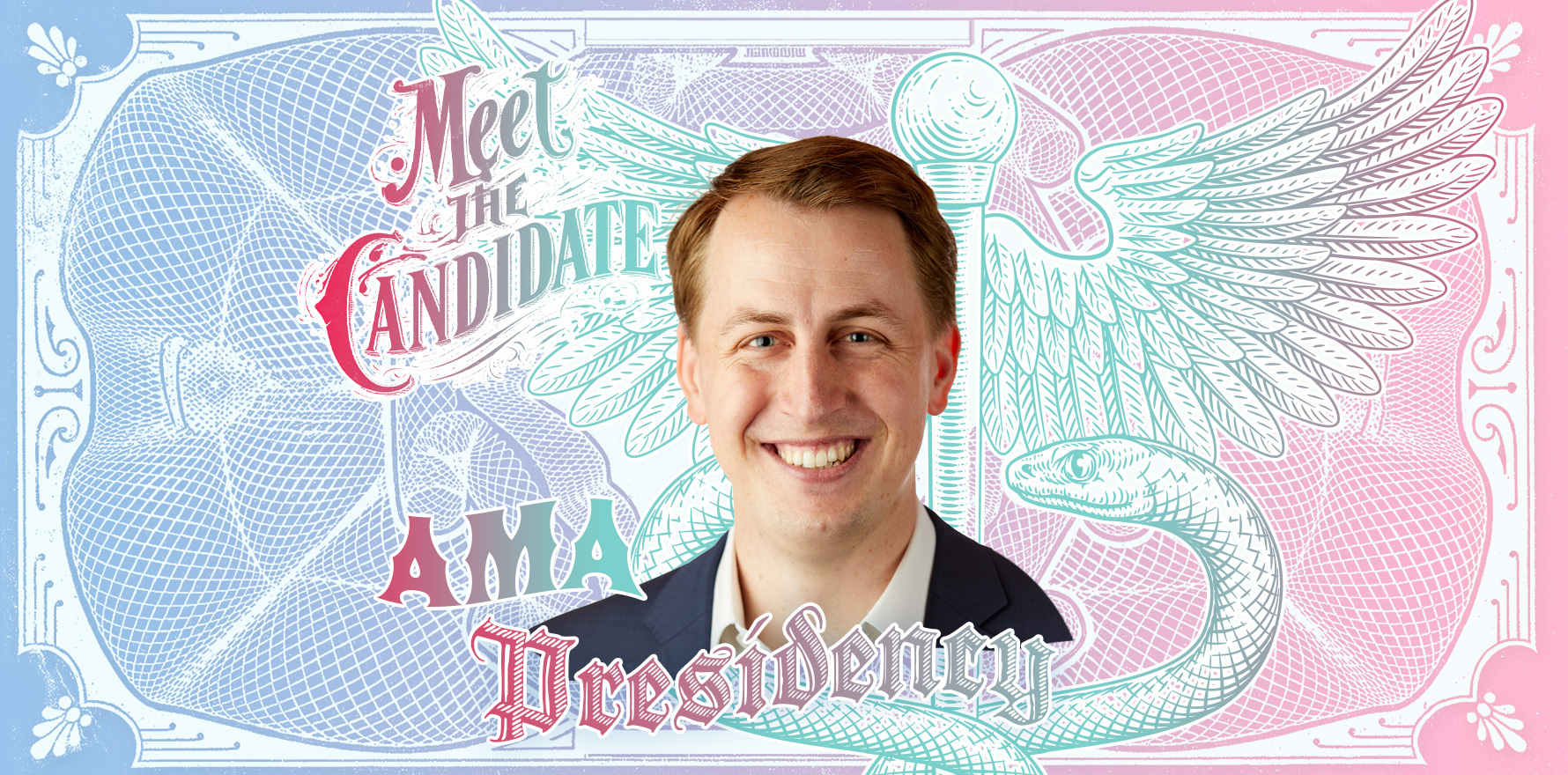
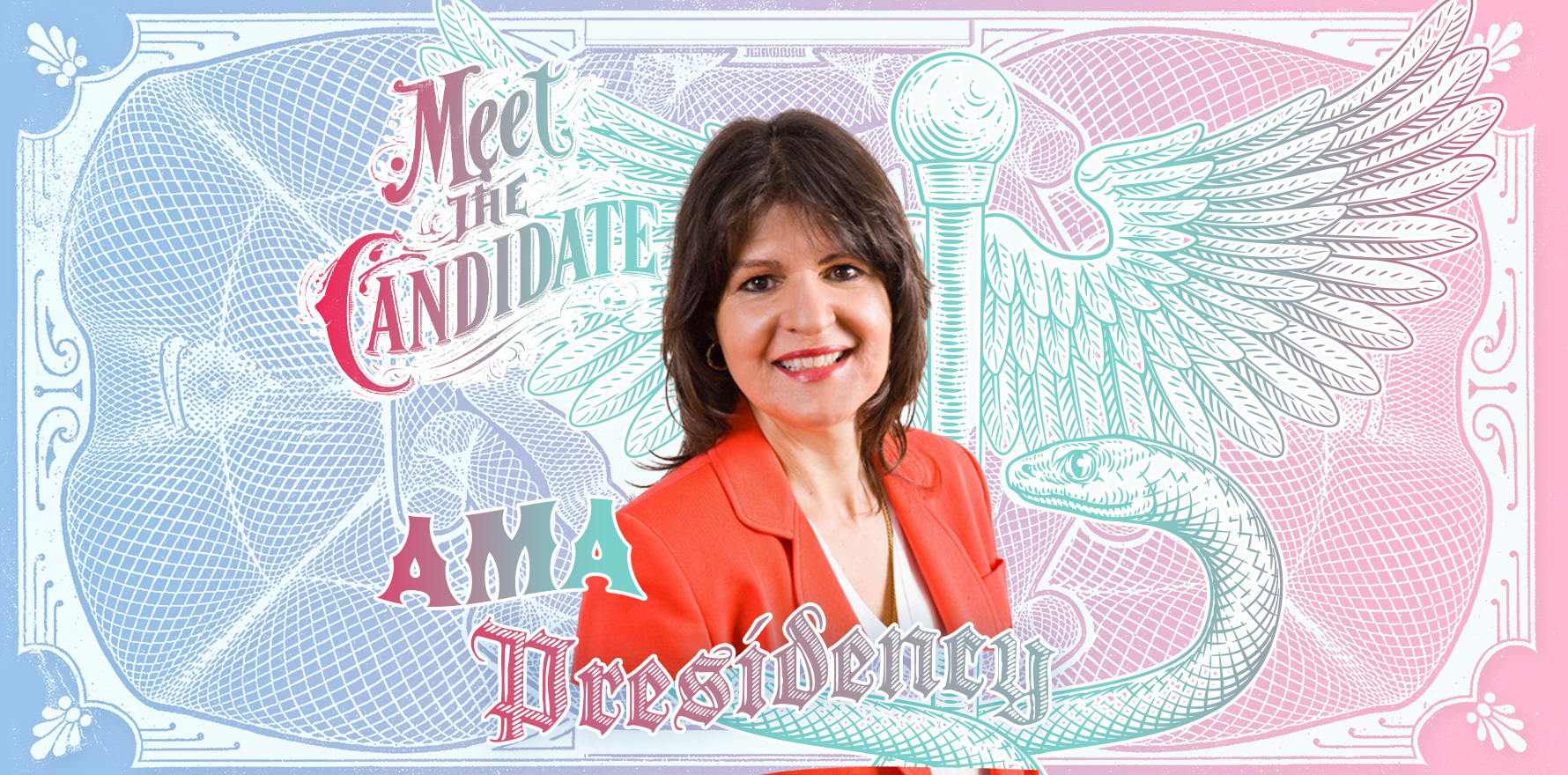
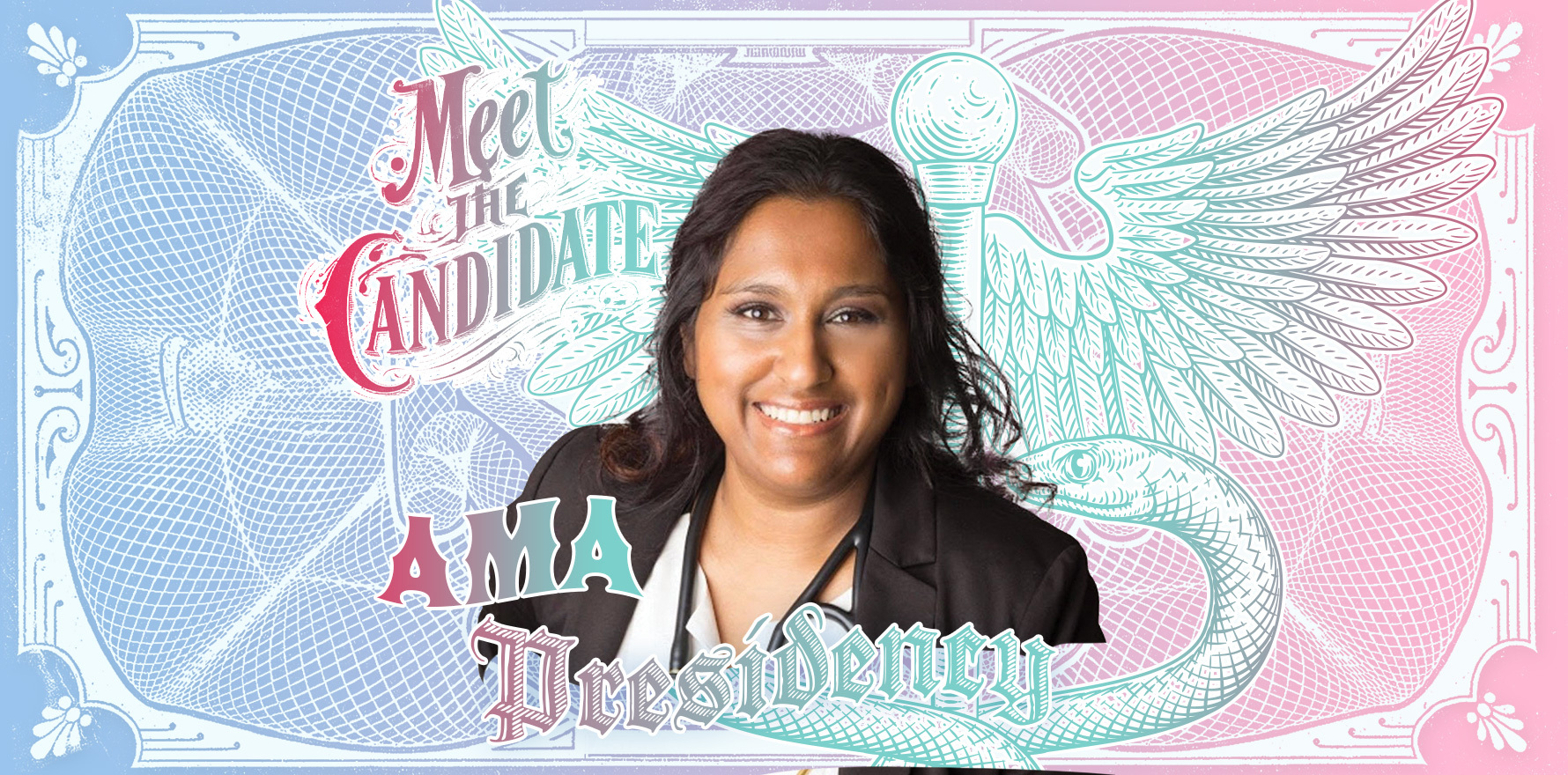
Dr Paddy Dewan, Professor Ted Mah, Professor Owen Ung, and Dr Sarah Whitelaw are all in the running for second banana at the federal AMA election this weekend.
This year’s AMA presidential elections have been particularly hotly contested – and the same can be said for the vice-presidential race.
For the first time in several election cycles, all three presidential contenders – GPs Dr Michael Bonning, Dr Anchita Karmakar and Associate Professor Magdalena Simonis – chose a running mate.
Dr Bonning was running alongside Dr Sarah Whitelaw, Dr Karmarkar’s running mate was Dr Paddy Dewan and Professor Simonis was running with Professor Ted Mah.
One additional vice-presidential nominee, Professor Owen Ung, was running independently of any presidential candidates.
The election itself was set for Saturday August 29 at the annual AMA conference in Melbourne.
The Medical Republic sat down with each of the presidential candidates for full-length interviews earlier this month.
Now, it was the vice-presidential candidates’ turn.
To keep an even playing field, TMR thought up four separate questions and assigned each one to a specific candidate by literally picking names out of a hat.
These were their answers, presented in alphabetical order of first name. Responses were edited for length and clarity.
Dr Owen Ung
Running mate: independent
Specialty: breast and endocrine surgeon
Qualifications: Dr Ung has served as a federal councillor for the AMA and as a member of the AMA Queensland board. He is also the immediate past president of the Royal Australasian College of Surgeons.
Question: What’s the one policy fight you’d prioritise in your first six months if elected?
Answer: I don’t have a policy platform. I don’t represent a faction, a state, or a group.
Whoever is vice president needs to work in lockstep with the president. But we need broad appeal, and I think that’s part of the problem with the way the AMA conducts their elections. We’re not a political party; we’re a member organisation.
The key policy fight going forward is specialist fees and access to specialist care, and that’s very broad, but it’s the key focus of government going forward.
This whole process of [TMR’s] one-question, one-policy platform is not the right way to go. There’s too much happening.
And the problem is that I’m the biggest believer in the AMA. I’ve been on AMA Council. I’ve been on the board of AMAQ, which has sadly separated from the federal. And I’ve been involved with member organisations.
And all our member organisations are facing the same problem: they’re questioning their relevance, and they’re not seeing people there who represent them or can speak for them.
I’m a doctor before I’m a specialist.
But the reason I feel I need to be there is that we’re certainly going to have a GP president, and that’s not a bad thing.
Half our membership is general practitioners and general and primary care; it is critically important, as is preventive health.
If we want our members to come together, we need to see people there who truly represent them, people they can identify with, [and] people who actually have the track record and the experience to deliver. I don’t think we’ve always done that well in the AMA.
Whilst I’ll answer your question … I would hate to think people are going to elect me just to go there and fight for specialists or just to fight for this whole issue around transparency of specialist fees.
I’ll say this on specialist fees. We, as a profession, know that 95% or more of us are trying to do the right thing by everybody, the community, and our colleagues.
But we have people at the fringes, and as organisations, we have to call out those people at the fringes because they’re the examples the government is using to hoodwink the public on the issue of specialist fees and affordability.
There is a system change that needs to be made, and we’re only going to get it if everybody advocates together. If everybody advocates for their particular interest, the government doesn’t need to respond to that. But if everybody advocates together, then the government will need to respond.
My platform would say: please work together so that we can advocate to the government for system change, because that’s the only thing that’s going to fix the problem.
We’ve got one of the best health systems in the world. If you lurch in one direction, you’ll get something like the NHS. If you lurch in the other direction, you’ll get something like the American system.
We don’t want that. We’ve got a great system, but it’s fraying around at the edges now, and we’re in danger of going one way or the other.
Related
Dr Paddy Dewan
Running mate: Dr Anchita Karmakar
Specialty: paediatric urologist and surgeon
Qualifications: Dr Dewan is the founder and chair of the charity Kind Cuts for Kids Foundation and has long been involved with various reform initiatives. He practises in Victoria and is on the AMA Victoria board.
Question: The AMA membership is declining. As part of the leadership team, how would you address that?
Answer: In all I do – in medicine and in my research – the first thing [I do] is to seek to understand.
I do that partly now, from the point of view of the AMA membership, by speaking to people who aren’t members.
[I ask] why they aren’t members, and the thing that I hear is what I felt as a person who left the AMA some years ago – that I wasn’t being heard.
Within the organisation now, I think our listening ability is part of the problem within the organisation for the membership.
That’s what I would hope to communicate to non-members and members who are only just hanging in there; that we’re going to be listening better to the problems that they’re having in the workplace with regulation and with administration that results in them not being able to do the job to the extent that they want to.
At the moment, the structure of the AMA – and in the AMA Victoria, [where I am a councillor] – there is a board, a council, and we have council meetings where the processes are fairly clunky, and there is a sense of resolutions that are reached that then don’t come to fruition, [that being] change for the membership.
One of the things that I particularly tried to assist the AMA with is the recognition of the degree of mal-regulation.
Four years ago [I was involved in having] a motion put to the national general meeting to say we should have a royal commission into the national regulator [AHPRA].
That was defeated at the national meeting, but it’s only voted on by a very limited number of people.
When there is the suggestion that there is a problem, from the membership perspective, about the regulatory mechanisms, then rather than it going to a national meeting, [we should be] reaching out and seeing what the feeling is amongst the membership.
[And we should be doing that] in a way that is much more reflective of the majority rather than those who are in the rarefied atmosphere of the councils and the boards.
As a membership organisation, we should … first seek to understand the position of those who are members, and – so we can increase the ability of the AMA to have impact – seek to understand what the position of the non-members is.
And what I hear very strongly is that they do not feel heard in spaces that relate to regulation administration.
For GPs, it’s the funding for general practice – where we have the funding of the urgent care clinics, which in effect undermines the funding for general practice in general.
There’s a number of things, like the bottleneck phenomenon, where juniors are waiting for senior positions, but those senior positions are short in number.
But we don’t seem to listen to that message. It’s been around for 20, 30 years, and the AMA hasn’t developed a strategy that has come from listening to that message to then impact upon what is actually happening in the workplace.
Dr Sarah Whitelaw
Running mate: Dr Michael Bonning
Specialty: emergency medicine
Qualifications: Dr Whitelaw has previously served as AMA Victoria vice president, chair of the AMA diversity, equity and inclusion group, and a representative on the AMA federal council. In her student years, she was elected president of the Australian Medical Students Association.
Question: Why are you running for vice-presidency now, and what distinguishes your approach from other candidates?
Answer: I’ve never seen our health system under so much strain.
There is a frustrating unwillingness to invest in our health system, our nation’s health, and our capacity to deliver excellent medical care.
There is also a continued focus on doing things more cheaply and using any excuse possible not to invest in health, which we all know is a long-term investment.
When we look at our general practitioners, our public health system, our private health system, and our capacity to train and teach our future doctors, we’re facing real problems.
We have a massive training shortage that will prevent our brilliant junior doctors from practising independently, looking after patients, and delivering the care that’s needed where it’s needed, right across Australia, as independent specialists.
We now have a huge increase in the number of junior doctors in this country, and the idea that we wouldn’t invest in training them to provide the specialist care our patients need is really, really worrying.
We have developed an enormous number of great policy solutions in a really collaborative and consultative way within the AMA, and it is incredibly frustrating that, while some of those policies have been taken up, many are still not being invested in.
Now is the time to ensure the community and our patients know what those policy solutions are and have the opportunity to hold our state and federal governments to account for investing in health and in the solutions we’ve already developed.
Dr Michael Bonning and I – involved in the AMA for 30 and 25 years respectively and having worked together extensively – have a deep understanding of how we’ve reached this point through various government positions and policies [and] what the impacts of that are as an emergency physician and a GP.
We see the impacts of not investing in our healthcare system, including decreased capacity across our public and private systems, affecting our patients every day.
We understand how the AMA has developed over that time, and we have a real appreciation for what the leadership roles require and the next steps the AMA should take: focusing on supporting its members and their needs.
Given the depth of our experience, both in health system advocacy and within the AMA, I think that’s unparalleled among the candidates running for vice president and president in this election.
Professor Ted Mah
Running mate: Associate Professor Magdalena Simonis
Specialty: hand and upper limb surgery
Qualifications: Professor Mah is the founding head and immediate past Director of Orthopaedics and Trauma at the Northern Adelaide Local Health Network. He also holds an appointment with the Flinders University College of Medicine and Public Health.
Question: There are many existential threats to medicine on the horizon, including scope of practice, the government’s war on specialist fees and the medical training bottleneck. What do you see as the biggest?
Answer: They’re all threats. I think the question is the priority, and the priority really comes down to what is workable in the short term compared to medium term compared to the long term.
First of all is the threat regarding the young doctors … they are the future of medicine in Australia, and at the moment they are overworked. They don’t have proper safe hours, and they do not get paid for all of the overtime they do.
And, of course, they stand in threat of violence against them in hospitals.
That, to me, is something that we should fix straight away, because our emerging doctors will be our future. They look after us. If they all get burned out, then you don’t have a workforce anymore.
That should be quite valuable.
Recently, the government refused to support medical students for when they do … training [placements]. And why?
Doctors are not rich people. Most of the doctors [in training] are not coming from a rich family, so you are directly discriminating against them.
That’s something that I think [the AMA] should take care of with the government as well. And yet the hierarchy at the moment are very passive in that area, and the medical students are making a lot of noises.
I say, why don’t we get support from the leadership to let the government know that we aren’t happy about this?
And, of course, automated overtime payment [for junior doctors] – that’s very important, because a lot of them are working overtime without being paid. And we saw recently in Victoria where the salaried medical doctors’ union took industrial action against the Victorian government on that basis.
We should help them to make sure that they are remunerated appropriately. The other thing is that [junior doctors] do speak out from time to time, and rightly so. I think we should offer them some legal protection.
There are things wrong about the system, right? If you speak up, I don’t think you should be penalised.
And [junior doctors also] have issue with college exam fees and stuff like that. Within the AMA, we [should be able to] partner with industry and, for example, create a fund that offers targeted financial subsidies to [some doctors].
[We could also] work with the state and federal government in relation to the [training] bottleneck problem. In other words, there are not enough training positions for various subspecialty training [programs]. It’s not because they don’t want to [provide them], it’s just that they can’t.
There’s not enough infrastructure, and no funding for it. If that’s a physical block like that, why don’t we think about the regional centres, where we can improve the infrastructure in country regional hospitals to create sustainable specialist training to ease the training bottleneck.
To do that, you need a complete shift in the paradigm of thinking, to say that we can cannot just ignore the country’s regional hospitals.
You need to set up block funding to increase the infrastructure so that they can attract people to come and work for them and retain people.
If you are from the country and you train in the country, you are more like stay in the country rather than metropolitan.
But to do that, you need to create infrastructure to support them. Usually, they bring their family with them, if they have young kids.
You need to create that infrastructure for them and, more importantly, create infrastructure within the hospital so that specialists can come and work in the country.
This does two things. One, they actually make your country service quality a lot better for local people, including Aboriginal people.
And secondly, you now get a training position for people who can come train in the in the regional centre now, rather than waiting for the bottleneck in a metropolitan area.
