


Apologies all round after junior doctors at Nepean Hospital were told struggling with ‘absolutely standard’ rosters may not bode well for their future in medicine.
NSW Health has apologised to Junior Medical Officers at Nepean Hospital for an email that appeared to blame them for their own fatigue.
It also made veiled threats that doctors who were struggling with unsustainable workloads should leave the profession.
“Sick leave: this is intended to be used for when you are ill. As rosters are published well in advance if you are rostered and have life events or future engagements .. IT IS YOUR RESPONSIBILITY to swap out of the shifts. Collegiality should result in offers to help those helping you,” one portion of the email said.
“Roster swaps: these are NOT automatically approved. The roster is designed to ensure NO ONE is exhausted and if we have some juniors who are constantly covering, they will have fatigue.
“There is an implicit acceptance when entering medicine, you are going to be exposed to after hours and nights BECAUSE all doctors cover these hours because health care is 24/7,” the email continued.
The final paragraph concluded: “Your careers will be hopefully long .. please come and make contact if you are struggling now as it’s not a great indicator for longevity in the profession if you are already feeling the strain from rosters which are absolutely standard for health.”
ASMOF NSW President Dr Nicholas Spooner said the letter and its sentiments were completely inappropriate.
“NSW Health does not place any maximum limit on the number of hours a doctor can work in a day. A bus driver is legislatively prohibited from working more than 12 hours a day. The attitudes demonstrated in this email make NSW Hospitals less safe.
“Doctors working in the NSW hospitals face excessive working hours, up to 17 hours a day, often back-to-back days for up to two weeks. They deserve safe workplaces and sustainable workloads, grounded in professional, respectful communication free from threats and insults,” he said.
He said the most concerning aspect of the letter was that it was indicative of a broader internal culture and attitude toward doctors inside NSW Health.
“Sadly, this incident is indicative of the blame-shifting attitude NSW Health maintains toward doctors on fatigue management and unsafe hours, which we witnessed at John Hunter Hospital in January last year,” he said.
In that incident, correspondence was inadvertently sent by hospital admin staff to a junior doctor in response to a request related to rostering.
“Seriously! I wonder if any of them realise that they are a doctor and that this is what happens,” the email read.
“Oh that’s right… I forgot. Life style [sic] before career.
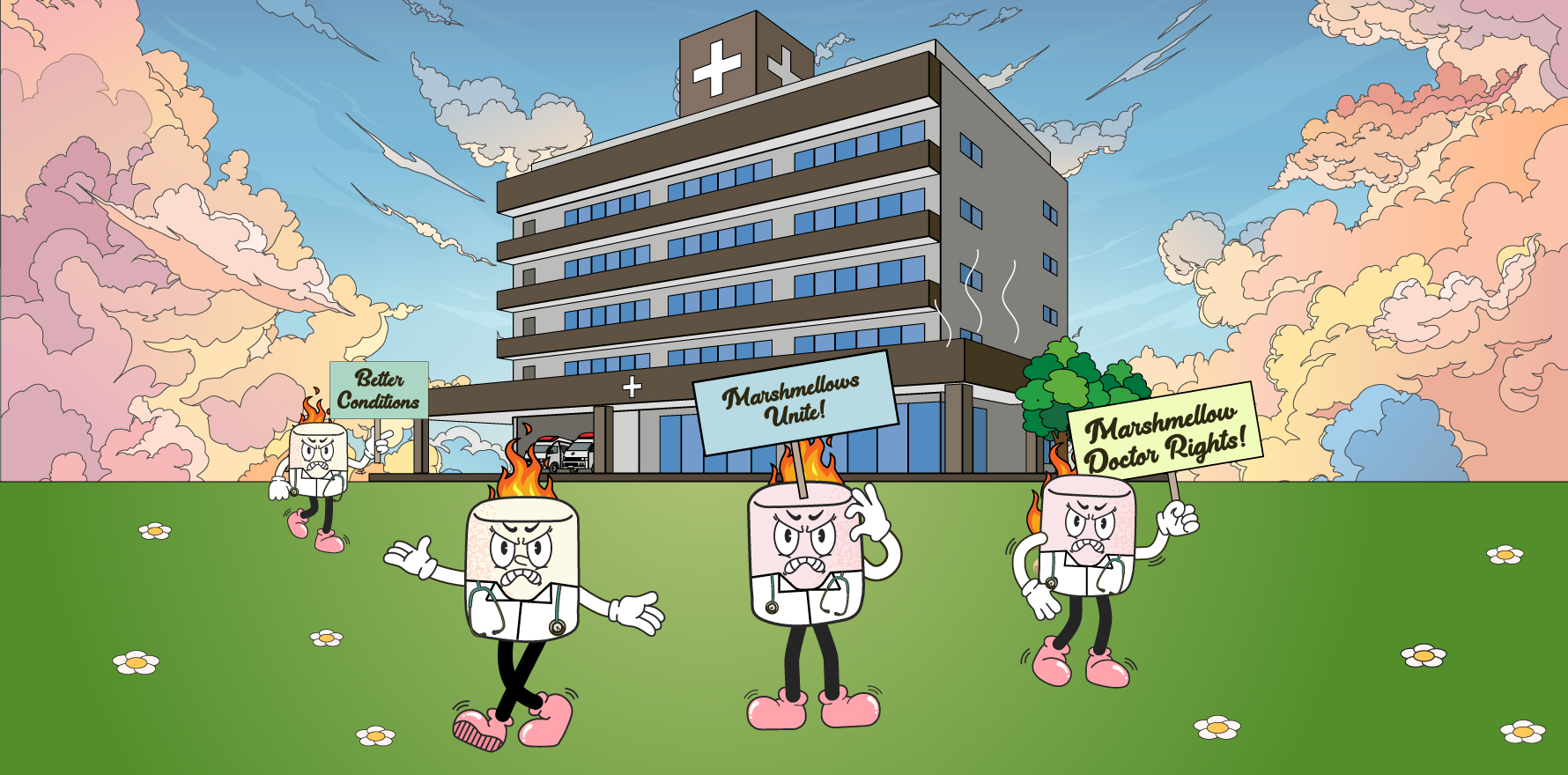
“God help us in the future. We are going to have a workforce of clinical marshmellows [sic]!” the email said.
Related


NSW Health apologises for latest incident
In a statement, Nepean Blue Mountains Local Health District apologised for the email.
“Nepean Blue Mountains Local Health District apologises to our junior medical officers for an email sent around their leave and rostering requirements.
“We know JMOs are the future of healthcare, and we deeply value their contribution to our community.
“Supporting the wellbeing of our JMOs is a priority for our district, and we acknowledge this email did not reflect this,” the spokesperson said.
They confirmed that senior doctors had met with JMOs since the email was distributed to talk about how rostering practices can help support their welfare. They also said rostering is undertaken in line with safe working standards and fatigue management guidelines.
“This includes 14-hour maximum consecutive rostered hours and 10-hour minimum break between rostered shift periods.
“Rostering is continually reviewed to ensure fairness and flexibility, and to ensure JMOs can take necessary leave and ADOs.
“There are many opportunities and pathways for discussion and escalation of concerns and challenges, including formal and informal check-ins with JMOs and protected teaching time for professional growth, development and mentoring,” they said.
An ASMOF NSW spokesperson said while they welcomed NSW Health’s apology, they were disappointed that it gave no indication of how NSW Health would address the disrespectful culture underlying such communications with doctors.
“NSW Health refer to the ‘many opportunities and pathways for discussion and escalation of concerns and challenges.’ However, when the Union raised this issue with hospital management and requested a formal apology, no response was forthcoming.
“Disappointingly, doctors’ experience of using the ‘proper channels’, as NSW Health advises, is that they rarely result in a response or meaningful change.”
In an ausdoc Reddit thread, other JMOs expressed their frustration.
“You’d think they’d learn, wouldn’t you? Clearly not. I don’t want my colleagues working sick and risk infecting patients and other staff. Sick leave is there for a reason and people should not fear using it if it’s appropriate. If they want collegiality, the only thing JMOs could be encouraged to do is to consider taking a future shift from the person who was called in to cover. It’s never nice being called in.
“However, emails like this that try to gaslight people are pretty much always counterproductive,” one poster wrote.
“The reason why sometimes people call in sick when they are not sick is because they just couldn’t bring themselves to go to work. There have been a couple of rare occasions where I was changed into scrubs, made myself a coffee to go, already in my car and i just could not for the love of god start driving to work. And that should a valid and acceptable reason to call in sick. Because how could one expect someone in such mental state to diagnose and treat patients? It would be unsafe, for both parties,” another shared.
Report finds one in three frontline doctors want to quit
Meanwhile, a new report has found that one in three frontline doctors in NSW public hospitals are considering resigning, often because of excessive hours.
The report by the UTS School of Public Health’s Dr Sarah Wise received more than 2500 responses, the largest ever survey of NSW public hospital doctors.
It found:
- one in two (51%) more worked more than 50 hours in the past week
- one in three (33.1%) worked more than 55
- and one in eight (12.4%) worked more than 70.
Nearly two in three (63.5%) said excessive workloads were affecting their health and wellbeing, and more than two in three (69%) said they had worked sick or injured.
Only one in six (16.1%) said their workload was manageable, and nearly one in three said they had made a clinical decision they were uncomfortable with due to resourcing constraints.
These numbers were no surprise, Medical Registrar Dr Isaac Wade said.
“My colleagues and I are regularly working over 10 days in a row, with barely any opportunities for rest or even leave for training and education.
“I know many doctors who have left the NSW Health system due to unsafe working conditions. Every time we see one of our colleagues leave, we know the strain is getting worse, and the shifts will get longer.”
Although junior doctors in training are eligible for overtime, less than half claim it. Many feel pressure to under-report their hours, leaving a large portion of their work uncompensated.
Dr Spooner said NSW Health’s failure to recruit and retain doctors and to properly manage fatigue across the health system was having a severe impact on doctors’ lives and risked compromising the quality of care provided to patients.
“This report shows that doctors in NSW public hospitals are working longer hours than ever, making life or death decisions without the resources they need to protect the health of the people who depend on them.
“One in three doctors are considering walking away because they simply have no more to give.
“Chronic underinvestment in our hospital system has taken too much from us in terms of our health, our wellbeing and our capacity to heal the people who need us.
“The report shows a public health system starved of the resources it needs to protect public health.”
Health Minister Ryan Park was contacted for comment.
