


Ryan Park also told budget estimates that he’s reviewing NSW practices following Victoria’s ban on non-urgent medical procedures on children.
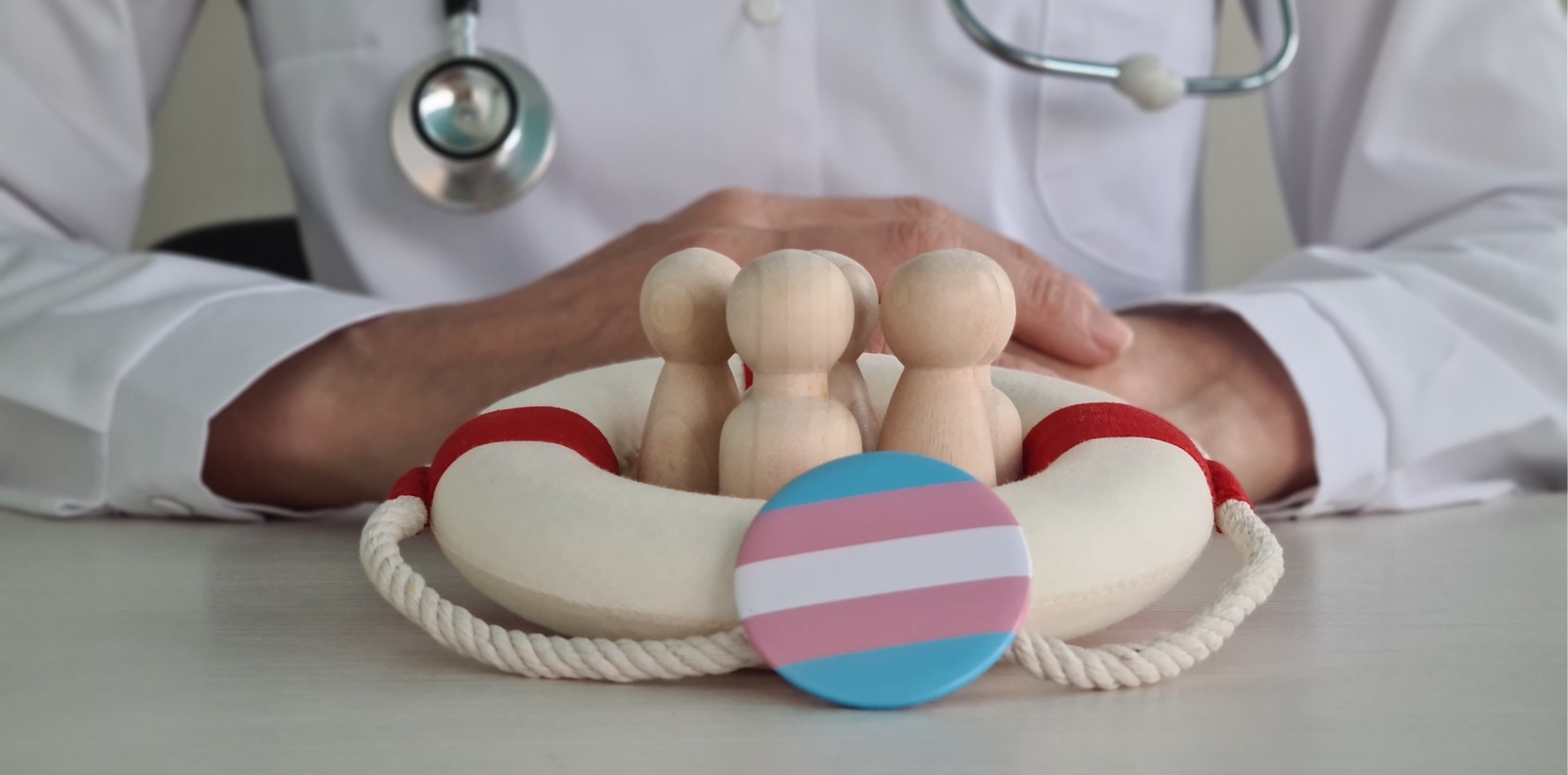
NSW health minister Ryan Park says his state would continue to take an evidence-based approach and would not follow Queensland’s decision to ban puberty blockers for children.
At the NSW Legislative Council’s Budget Estimates hearing on Monday, Mr Park was asked whether NSW would follow Queensland’s move to ban children under 16 with gender dysphoria from accessing puberty blockers and hormone treatments.
The Queensland ban will be in place until at least 2031 when the results of a UK trial are released.
“We as a health system use a very evidence-based approach,” Mr Park told the committee.
“We are constantly looking at the evidence. We are constantly looking at what is happening overseas, and … my expectation is that that [kind of] healthcare, like all healthcare, is evidence-based and is delivered in a way that is tailored, best practice, it’s multidisciplinary, it’s age appropriate, and it’s evidence based.”
NSW Health deputy secretary of health system strategy and patient experience, Elizabeth Wood said NSW Health had provided a written response to the Queensland review.
“It’s important to note that of the recommendations of that independent review that they align with and support the NSW Health current approach,” she told the hearing.
“Queensland have taken a different approach … but our focus very much is on looking at each piece of evidence as it arises with the clinical needs of the young person.”
Ms Wood said NSW Health was participating in the NHMRC advice on puberty suppression, to be released in mid-2026.
“Our consent guidelines for this actual treatment are some of the most robust in the country, if not internationally,” Ms Wood said.
“We have to absolutely at all times have a diagnosis of gender dysphoria achieved from the multidisciplinary team review.
“The young person themselves and the parents have to consent to that treatment.
“If the child is under 18 and they are of Gillick competence, then the consideration has to then go before the NCAT if that’s to be considered the treatment, which would be a special medical treatment.”
When asked about legal action in 2023 in the US regarding breast removal surgery, Mr Park said he could not comment on specific legal action or hypothesise about future cases.
“I know this committee well enough to know that we are being sensitive, but we need to be very careful and sensitive in our commentary, because having met with patients and families in this space, it can be very, very difficult time for them,” Mr Park said.
“I just want to make sure that we exercise during this discourse an appropriate level of decorum.
“The treatment that we provide is evidence based, it is age appropriate, it is designed to make sure that we are giving the very best care to the person at the appropriate time.
“Not every patient goes down a path of puberty suppression or hormone treatment. That’s not … the case.
“Nor do I want the committee to think that after one appointment, a person just walks out with a complete barrage of drugs.
“There’s often a multidisciplinary team, because this is a part of health care that is not just clinical in nature, but … there is a large psychosocial element.”
Mr Park was also asked yesterday whether NSW would follow the Victorian government’s recent ban on non-urgent medical procedures on children with innate variations in sex characteristics until they were able to consent.
“I’d want to have a look at it,” Mr Park said.
“We’re … always committed to making sure our practices are evidence-based and reviewing our current practices. I think that’s an ongoing piece of work that we do.
“I don’t want to comment on specific piece of legislation … because I don’t like to mislead the committee.
“I haven’t read that particular piece of legislation, but … we are constantly reviewing our practices, and we’re constantly making sure that those practices reflect the evidence in this space.”
Mr Park said NSW Health was looking at Equality Australia’s The Missing Voice report into the lived experiences of people affected by unnecessary medical procedures without consent.
Ms Wood said she had met with the chief executive of Sydney Children’s Hospital last week to discuss the report.
“We are looking at … a care coordinator type position specifically for individuals to make sure that they’re aware of the options that are available to them, so we are working very closely on that,” Ms Wood said.
Related


Earlier yesterday, Mr Park was asked about reports in December 2024 that only three of the 220 public hospitals in NSW were routinely providing abortion services.
“The committee has subsequently been told that there are 40 NSW Health sites providing abortion services, but that figure includes sites which only provide abortion in limited circumstances, or where those services are inconsistent,” committee chair Dr Amanda Cohn said.
“Do we really genuinely have reproductive choice in NSW when public services are so limited?”
Mr Park said his expectation was that women had access to affordable and timely care.
“We are having a look at … this policy space right now. You would be aware though that in most cases, medical and surgical abortions can be provided in the community and non-hospital settings, and that may be a private provider or primary care.
“My expectation is that women have access to that level of healthcare in a way that is accessible for them.
“I’m not going to pretend, however, that there are not parts of NSW where that becomes more challenging for women in the same way that when I’m out in regional, rural and remote NSW, I don’t pretend that NSW Health can have every service in every … regional and rural town.
“What I’m interested in … over a period of time is making sure that that accessibility is as good as it can be, and it is as close to where women are located as we possibly can.
“But that doesn’t mean that there are not pockets of challenges at the moment and our commitment is to improve that and to improve safe and transparent pathways to abortion care for women.”
The committee heard that the chief executive of Murrumbidgee Local Health District told the committee in December that there was no surgical abortion provision on request within the Murrumbidgee LHD.
“We are in the process of looking through what that position description will be, and we’re progressing that at the moment,” Ms Wood said.
“What I can say, though, is that there are absolute requirements that every district has got referral processes in place, so if a woman does find herself in a facility that does not provide that service, it is upon the district to make sure that they can have timely access to care for that woman to meet her circumstances.”
Mr Park said the women’s health service provided medical termination of pregnancy through a free nurse-led model that included counselling and consultation with GPs.
“Wagga Wagga and Griffith Base Hospital provide surgical termination for clinically complex cases under 12 weeks,” he said.
“Later justice later gestations are managed medically with surgical intervention if required.
“When the hospital can’t provide a surgical termination service, a referral is provided … for access to surgical termination services in a timely way.”
