


The hydrogel patch senses early biochemical shifts in chronic wounds and releases therapeutic nanozymes on cue, in a design researchers say could be easier to scale for real-world care.
Australian researchers have developed a smart hydrogel wound dressing that can signal early changes linked to infection while also releasing antioxidant therapy designed to support healing, in what they describe as a simpler and more scalable approach to multifunctional wound care.
The work, led by researchers at RMIT University, centres on embedding carbon dots into an ionically crosslinked sodium alginate hydrogel to create a patch that can both monitor the wound environment and respond to it therapeutically.
The technology is aimed squarely at one of the biggest frustrations in chronic wound management – the need to constantly reassess a wound that can shift quickly from a healing state to one marked by rising alkalinity, oxidative stress, inflammation and infection risk.
Details of the RMIT University researchers’ study have been published in Chemical Engineering Science.
Chronic wounds place a substantial burden on health services due to their dynamic care requirements and high risk of infection, yet efforts to combine monitoring and treatment in one device have typically been limited by design complexity and cost.
Conventional dressings can protect a wound and maintain moisture, but they do not actively report on what is happening beneath the surface.
More advanced smart dressings have been designed to either sense biochemical changes or deliver treatment, but combining both functions in a wearable, clinically realistic format has remained technically difficult, the researchers said.
They say their technology moves closer to that goal by using one multifunctional nanomaterial to do both jobs.
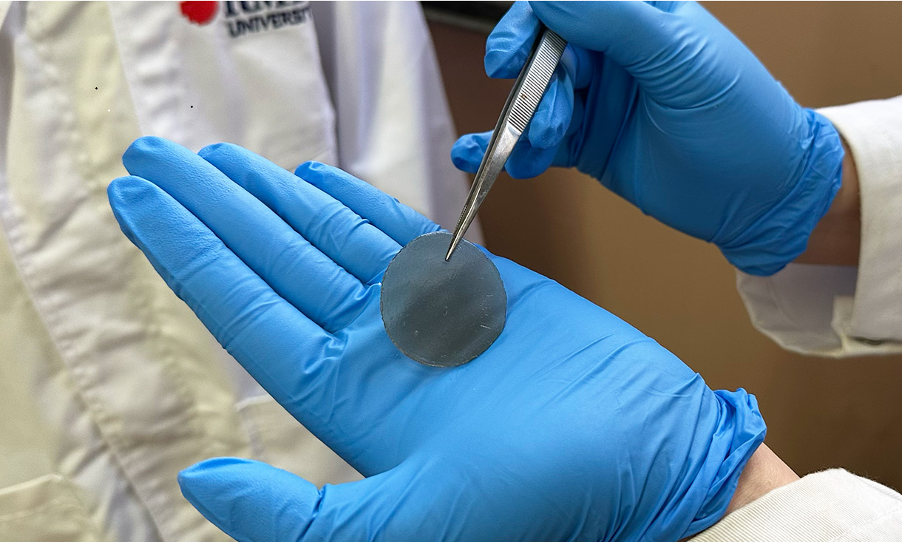
In the patch, the carbon dots serve as pH-responsive fluorescent sensors and as therapeutic nanozymes with superoxide dismutase-like activity.
That gives the dressing two clinically relevant capabilities. First, it can detect changes in wound pH, a known indicator of wound status.
Healthy or healing wounds tend to sit in a slightly acidic to neutral range, while infected wounds often become more alkaline.
In the study, the hydrogel’s fluorescence changed in response to pH across a broad range, with the strongest signal around pH 6, showing that the sensing function was retained after the carbon dots were incorporated into the dressing.
The fluorescence signal is intended to be more than a laboratory readout. The researchers say the colour or intensity shift could be captured by portable smart devices and interpreted using simple RGB analysis, opening the door to point-of-care or even home monitoring.
That could be particularly relevant for chronic wound patients who require frequent review, including those in community care, rural settings or aged care, where rapid access to formal diagnostics is not always straightforward.
The colour change can be easily read out by portable smart devices. When these infection signals are detected, the system automatically releases therapeutic nanozymes into the wound to promote healing.
The release of these therapeutic nanozymes can also be manually triggered by applying gentle pressure to the dressing, allowing clinicians or patients to provide additional treatment if required.
RMIT PhD candidate and study first author Nan Nan said the dual nature of this smart wound patch would support more timely and effective intervention from clinicians.
“Being able to address potential infection at the earliest opportunity is critical to chronic wound management, making this real-time system a potential gamechanger for healthcare,” she said.
Related


Ms Nan said their system using multifunctional carbon dots also cut down on the complexity that typically comes with constructing smart wound dressings.
“Our fabrication process using medically ready materials, such as hydrogels, to embed carbon dots for wound dressing is easy and scalable, with strong potential for commercial translation,” she said.
The material design itself may also have practical advantages. The patch is made using sodium alginate, a familiar hydrogel-forming biomaterial, crosslinked with calcium ions.
Carbon dots are added directly into the alginate solution before gelation, avoiding the kind of multi-step fabrication or expensive sensing architecture that has slowed translation of many other smart dressing concepts.
According to the researchers, the presence of the carbon dots altered the hydrogel network through hydrogen bonding with alginate chains, changing not just sensing behaviour but also mechanical and swelling properties.
For health professionals, the bigger message was not that this dressing was ready for clinic tomorrow, but that it addressed several long-standing translational barriers at once, the researchers noted.
It combined sensing and treatment in a single patch, used relatively straightforward hydrogel chemistry, avoided dependence on bulky electronics, and appeared adaptable enough to incorporate additional functions later.
The researchers suggested future iterations could add antibacterial activity through modified carbon dots or extra therapeutic agents, while degradation and wear time could be tuned through crosslinking chemistry.
They acknowledged there were still significant steps ahead. The current work is based on laboratory-scale fabrication and in vitro testing, not human use.
Validation in appropriate in vivo wound models is the next critical milestone, particularly to assess how the patch performs in realistic wound exudate, bacterial burden, mechanical stress and dressing-change conditions.
Questions around reproducibility, shelf life, sterilisation, regulatory classification, cost and digital integration will also need to be answered before any commercial pathway becomes clear.
Even so, the researchers contended their study offered a compelling proof of concept.
Collaborator and senior lecturer at RMIT’s School of Engineering, Dr Haiyan Li, said their innovation provided a promising and adaptive platform that overcame some of the barriers that have stopped smart wound dressings being brought to market.
“Many smart wound dressings developed in research laboratories are difficult to translate into real clinical products because they rely on complex designs or expensive sensing systems,” she said.
“Our approach integrates sensing and dual-mode therapeutic functions into a single dressing with a simple, streamlined design, which helps address some of the key challenges that have previously limited commercial translation.”
“Importantly, this work has defined concise design rules for future smart dressings.”
The researchers are now looking to partner up with industry to refine and scale up the technology and bring smart wound patches to market.
Study lead and senior lecturer at RMIT’s School of Engineering, Dr Lei Bao says that next steps would focus on further biological testing and preparing the technology for real-world applications.
“Our next step is to evaluate how this technology performs in more advanced biological models and to work with industry partners to refine the design for real clinical use,” she said.
“Ultimately, our goal is to translate this research into practical smart wound dressings and integrate this smart platform into a digital health ecosystem, where the data from the patch is collected, analysed, and used to drive clinical decisions to advance chronic wound management.”
