

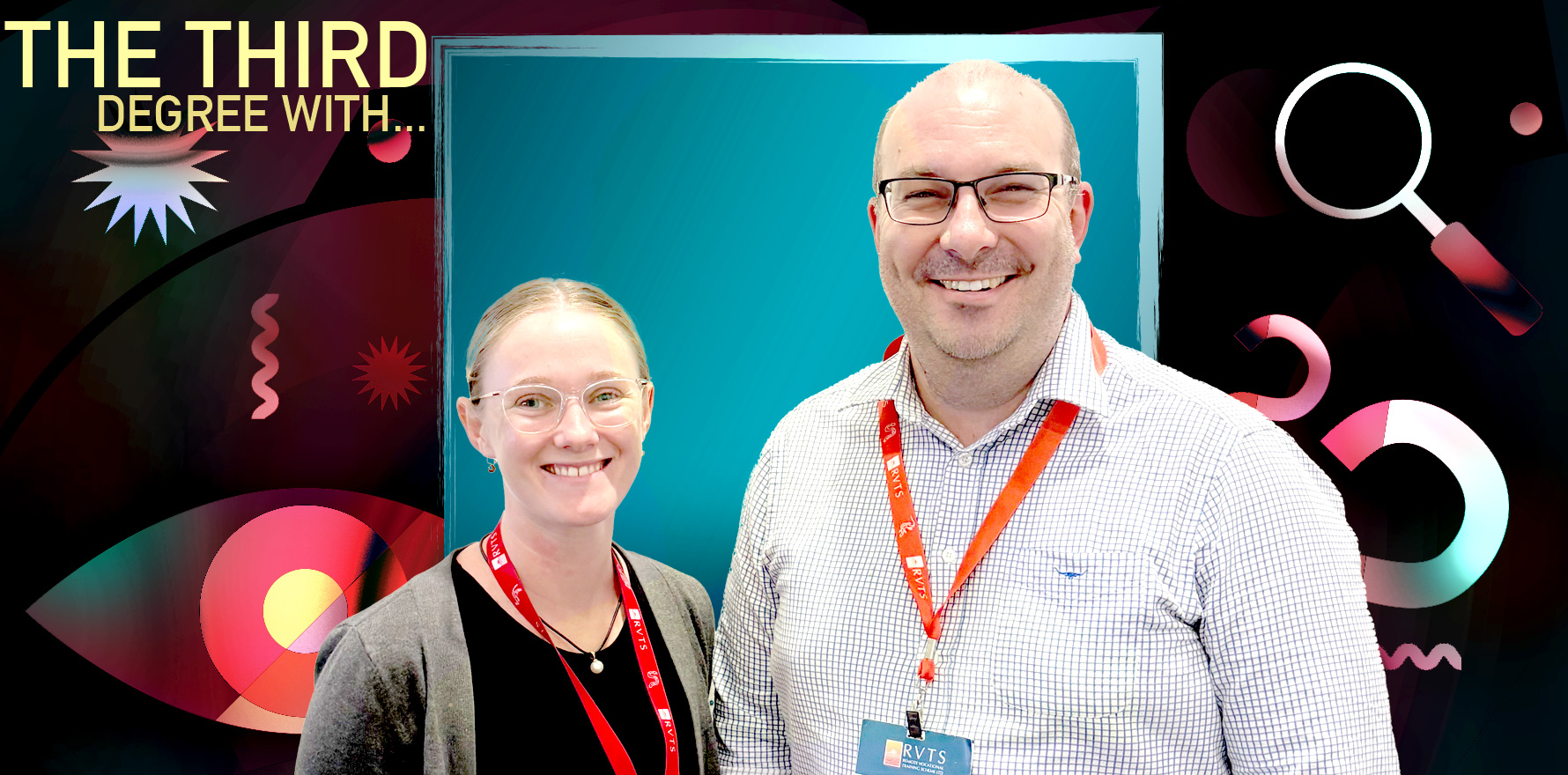
Rural generalist registrar Dr Sarah Rodgers says all doctors could benefit from the unique training program.
Rural Australia tends to be seen as the short end of the stick in terms of registrar placements, but there is a growing cohort of junior doctors who see their future in the bush.
One of these is Dr Sarah Rodgers, a third-year registrar who is just six short months away from attaining ACRRM fellowship.
A rural-origin student, Dr Rodgers has been able to complete almost her entire medical degree – from undergrad right through to fellowship – in the regions.
She’s spent the entirety of her training in Far North Queensland’s Cooktown, despite her supervisor Dr Liam Weber residing four hours’ drive away in Cairns.
Training is made possible by the Rural Vocational Training Scheme, or RVTS, which has supported about 500 doctors to obtain RACGP or ACRRM fellowship.
The pair sat down for a chat with The Medical Republic at an in-person RVTS clinical workshop in Brisbane earlier this year.
Did you both grow up rural?
Dr Rodgers: I did; I’m probably a [James Cook University] success story in a lot of ways, as well.
I grew up near Proserpine and then did most of my medical school up in Cairns at one of the JCU sites and spent a bit of time in Cooktown as a junior doctor.
Then I came back because it was a great place to live and work. I love living in rural areas; that’s why I do it.
Dr Weber: I lucked into it, really.
I’m city boy – north Brisbane through and through – I had been there for most of my life and did all of my schooling there, then I got into med school on a [Bonded Medical Places] scholarship.
So it was always a question of, do I continue [down a rural pathway]?
However, I don’t regret the choice to go rural and stay rural. It’s been a real enjoyment, and I love doing the work that I do.
How does the RVTS works on a day-to-day basis?
Dr Rodgers: It changes throughout your training.
At the start, when you first join the RVTS with training, it’s usually a once-a-week [virtual] meeting.
And so we started off just doing an hour, once a week, usually after work, and we sort of chopped and changed a lot.
It was discussing clinical cases as well as pastoral care, exam preparation, whatever I needed at the time.
And then we have these workshops twice a year for one week, which is in-person, hands-on training, and we have weekly webinars as well, which cover the rest of the course content, plus whatever’s required by the RACGP or ACRRM for exam preparation and passing the requirements to meet fellowship.
Dr Weber: I think the nice thing about the RVTS is it’s tailored to the trainee, so it really depends on what the trainee requires at that particular point in time.
And sometimes that is pastoral care, and sometimes that is, ‘I’ve got some tricky cases that I really need to talk through’, and sometimes it’s professional things like struggling with billing or with supervisors within the practice, or ‘my supervisor is just taken four weeks leave’.
[Sometimes it is just about] how do you then create an environment of safety for that trainee?
Dr Rodgers: [The tailored approach] is a particularly nice thing that RVTS offers that I don’t think either of the other pathways are able to offer.
I have a lot of colleagues that are doing training through AGPT or ACRRM-led pathways, and they just don’t compare.
Registrars are with the same supervisor for the whole time. That must be a real positive
Dr Rodgers: It’s really nice. I know if I have any issues, I can pick up the phone and Liam answers straight away.
Dr Weber: Likewise. I mean, we’ve talked to each other less and less as the journey unfolds, because Sarah is an incredibly capable registrar, but it really it is trainee centred, which is awesome.
Related

What is it that you both enjoy about rural practice?
Dr Rodgers: I like the variation.
If I get frustrated with primary care one day, I know I’m going to be in the emergency department the next day.
It really keeps you motivated and energised at work.
Dr Weber: I like that there is not a day that is the same.
I like the fact that you can work in primary care, you can work in the hospital system and if you’ve got an advanced skill, you’re working within that scope of practice as well.
Mine is in surgery and endoscopy, so I do that not infrequently, and I’m doing medical administration as well, so I get to see where the challenges lie within the health system and then actually affect change.
For me, that’s probably where I get my, my biggest enjoyment.
Dr Rodgers: There are also certain things that you can do in a rural place that you just can’t do anywhere else – fishing, camping, boating – it’s very much a lifestyle thing.
You go to rural sites because you know that there’s a really nice balance. And a lot of people who work in places like that really value that balance.
You’re not working to be absolutely ground down.
You work, and then you have your days off, and that’s all.
What are the qualities that make a good RVTS candidate?
Dr Rodgers: For all of my colleagues that have done GP training in other ways, I don’t think there’s many ways that the RVTS wouldn’t benefit them.
I suppose the exception is the people that are pretty well already done, that don’t need supervision, that more or less just need to make college requirements.
They’re probably people who won’t actually get as much out of the RVTS experience as what other registrars and supervisors would.
Dr Weber: Supervisor wise, I think anyone can do it – anyone who is working in a rural space, who is invested in rural practice and who wants to support rural towns, particularly towns which don’t have a lot of boots on the ground
I think one of the big advantages of RVTS is that it is a workforce solution.
RVTS do a lot of targeted recruitment to these areas of need. And I think that that, for me, is a real positive.
From a supervision point of view, it’s knowing that you can actually influence change and be able to support genuine talent that’s coming through, which is enjoyable.
This conversation has been edited for length and clarity.
