


A decade after Australia's deadliest thunderstorm asthma event, experts warn conditions are ripe for another dangerous pollen season – and too many patients remain on outdated treatments.
Ten years after Melbourne’s catastrophic thunderstorm asthma event killed 10 people and overwhelmed emergency services, a leading respiratory physician has warned that conditions are shaping up for another potentially dangerous spring.
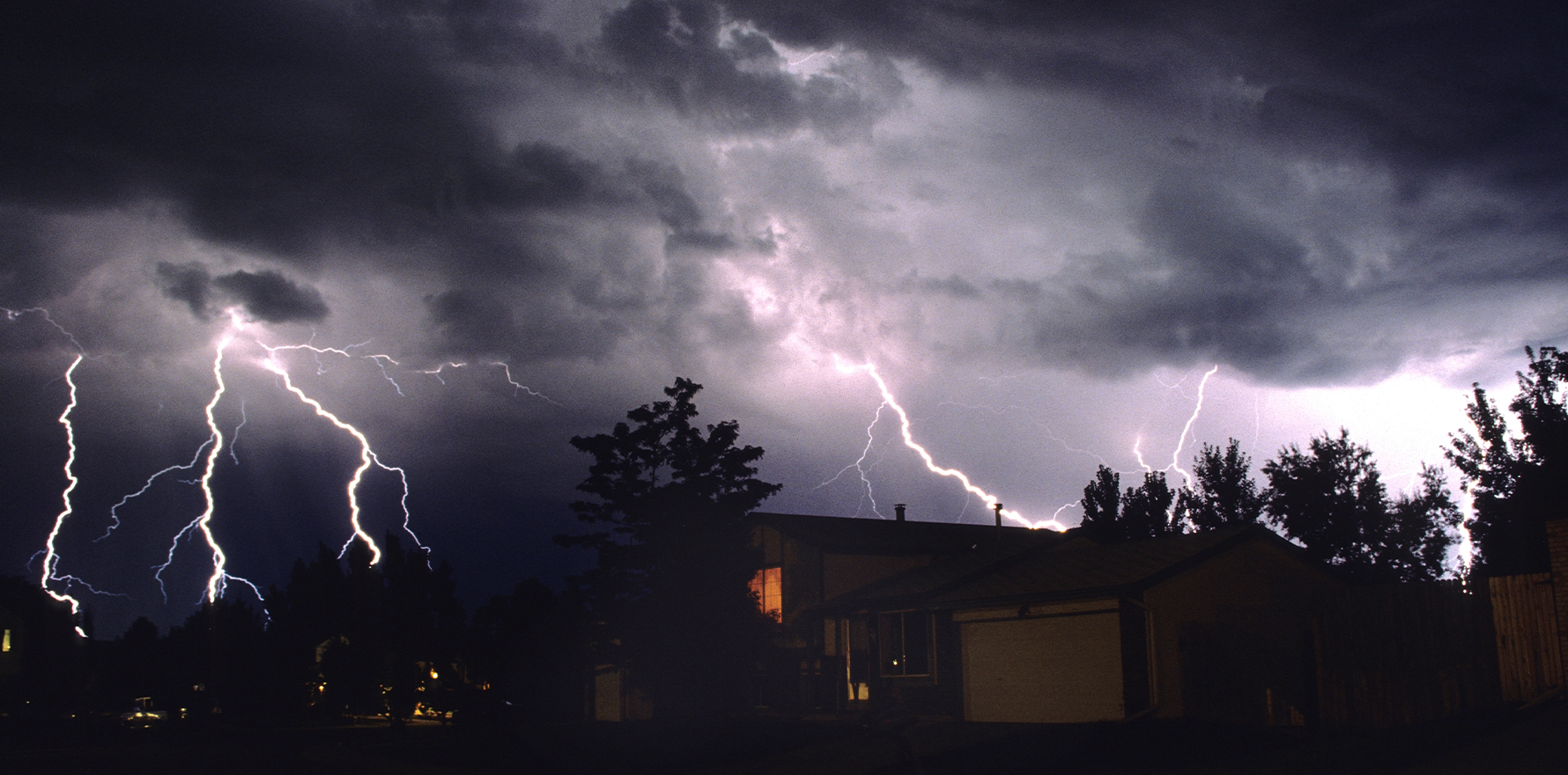
The 21 November 2016 disaster was the world’s largest recorded epidemic thunderstorm asthma event, with thousands of people experiencing breathing difficulties, including many who had never previously been diagnosed with asthma.
Now, as Australia approaches the anniversary, respiratory physician Professor Peter Wark says a wet winter across southeastern Australia has created favourable conditions for grass pollen production, raising the prospect of further thunderstorm asthma events.
“We’re predicting a reasonably active season in terms of pollen and seasonal allergies for people who are allergic to grass pollen,” Professor Wark, also a spokesperson for the National Asthma Council Australia, told The Medical Republic.
“We’ve had that typical winter that had quite a bit of rain in southeast Australia.
“That means there’ll be lots of pollen in the paddocks, and there’s always the potential changes with the weather patterns. It’s certainly on the cards that we may see some thunderstorm asthma events.”

The warning follows an alert issued last month by Victorian health officials of the threat of thunderstorm asthma, as reported in The Medical Republic.
The 2016 disaster exposed the dangers of a phenomenon that can affect not only people with diagnosed asthma but also those with allergic rhinitis who are sensitised to grass pollen.
Thunderstorm asthma occurs when high concentrations of airborne pollen combine with particular thunderstorm conditions, exposing large populations to allergenic particles capable of triggering sudden breathing difficulties.
While Melbourne remains particularly vulnerable because of its geography, Professor Wark warned that similar events could occur elsewhere.
“Regional Australia has all had episodes of thunderstorm asthma over the years,” he said.
“There have been reasonable episodes that have happened in Tamworth, in Wagga, that preceded the episode in 2016 in Melbourne.
“The difference being [that] you had a lot more people exposed to it in Melbourne.”
He said southern Victoria’s position below extensive flat grasslands, combined with prevailing winds and spring thunderstorm activity, made it particularly susceptible.
But the threat extended across southeastern Australia and potentially further afield, Professor Wark said.
“You can get smaller events that happen in Western Australia as well,” he said.
“It’s potentially a problem anywhere where you’ve got grass in any amount.”
On the eve of the anniversary, the National Asthma Council has urged GPs and other health professionals to review asthma and allergic rhinitis management ahead of the peak grass pollen season, which typically runs from October to December.
Professor Wark said the lessons of 2016 remained particularly relevant because many Australians were still not receiving the treatments now recommended to reduce their risk of severe asthma attacks.
“The best way to treat thunderstorm asthma is to control someone’s asthma before the thunderstorm,” he said.
He said the latest Australian Asthma Handbook had introduced sweeping changes to recommended treatment, including moving away from short-acting beta agonist (SABA) reliever-only treatment in adults and adolescents.
“The recommendation is now for anti-inflammatory reliever therapy (with budesonide/formoterol) as needed in those with mild asthma. Or maintenance and reliever therapy (inhaled corticosteroid/formoterol), regularly and as needed,” he said.
“This provides the best protection for most people with asthma against acute attacks.
“The aim of treatment should be for patients to maintain good control of asthma symptoms and prevent flare-ups and using an anti-inflammatory reliever is the best way to achieve this.
“It is important to remind patients that relying only on a blue puffer, or needing it often, means they are at risk of severe asthma attacks, emergency department visits, and hospital stays.
“Now is the time to ensure patients are on the best treatment to control their asthma and to update their written asthma action plan so they know what to do during a spring thunderstorm or asthma emergency.”
Related


For patients with persistent symptoms or exacerbations, maintenance and reliever therapy (MART) with an inhaled corticosteroid/formoterol combination was the preferred approach.
Professor Wark said this was particularly important for patients who considered their asthma mild because they experienced few symptoms for most of the year.
Using an anti-inflammatory reliever meant those patients were more likely to have appropriate treatment available when seasonal triggers caused their asthma to deteriorate.
He acknowledged that proactively recalling patients for asthma reviews was challenging in general practice, where consultations were often driven by acute problems.
“I’ve seen there’s a little bit of data out there about why people present to their GP with asthma, and in fact most of the presentations are for acute destabilising events,” he said.
“Unfortunately, then you’re often playing catch-up.”
Nevertheless, he said every asthma-related consultation should be an opportunity to reassess treatment against the updated guidelines.
“I think any episode of care with an asthmatic should trigger a review of, have I got this person on appropriate treatment, what would now be recommended in the guidelines,” he told TMR.
Professor Wark also urged GPs to recognise patients at risk of severe exacerbations and refer them for specialist assessment before their disease deteriorated further.
Patients whose asthma remained uncontrolled despite correctly using medium-dose inhaled corticosteroid/LABA maintenance and reliever therapy should be assessed for inflammatory biomarkers, including blood eosinophils and fractional exhaled nitric oxide (FeNO).
A history of exacerbations in the preceding 12 months could also help identify patients at increased risk.
“People with high blood eosinophils and high FeNO are at high risk of exacerbations, and they need biologics,” he said.
“And the longer you leave it, the more they’ll suffer, and the less effective the biologics will be.”
While awareness of biologic treatments had improved, Professor Wark said the value of biomarkers in guiding treatment decisions was still underappreciated.
“There’s awareness of the biologics, but there’s not awareness that the biomarkers can really tell you what to do,” he said.
“I would say do the biomarkers before you put someone on triple therapy.”
He said GPs could often obtain useful information from existing pathology results rather than ordering additional tests.
“For nearly all asthmatics, you don’t have to do a full blood count. They’ve already got one sitting on your EMR, waiting for you to look at it,” he said.
Patients referred for lung function testing should also have FeNO measured where available, he added.
The National Asthma Council has also released an updated Allergic Rhinitis Treatments chart, highlighting intranasal corticosteroids and antihistamines, including combination products.
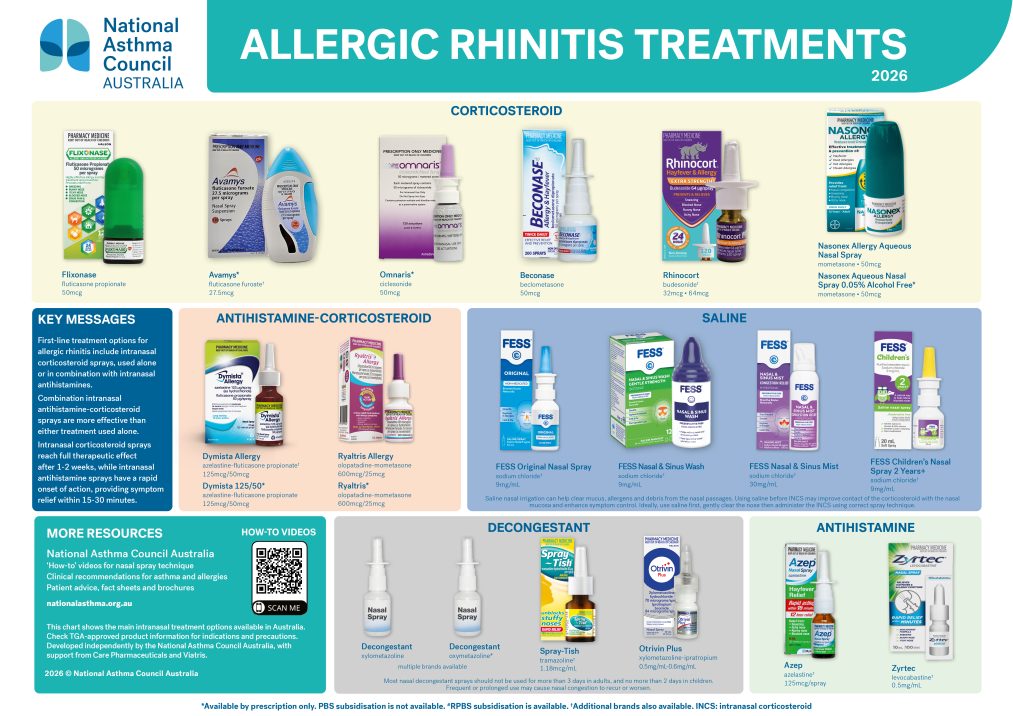
Professor Wark said treating allergic rhinitis could improve asthma control and reduce the risk of serious exacerbations, particularly among people sensitised to ryegrass pollen.
He said first-line treatment options for allergic rhinitis include intranasal corticosteroid sprays, used alone or in combination with intranasal antihistamines.
“Combination intranasal antihistamine-corticosteroid sprays are more effective than either treatment used alone. Intranasal corticosteroid sprays reach full therapeutic effect after one-two weeks, while intranasal antihistamine sprays have a rapid onset of action, providing symptom relief within 15-30 minutes,” he said.
“If patients have allergic rhinitis and asthma, treating their allergic rhinitis can also improve their asthma.
“Allergic rhinitis can cause upper and lower airway inflammation, but even more concerning, allergic rhinitis can lead to an increased risk of serious asthma flare-ups.”
Professor Wark said the greatest protection against another potentially catastrophic event lay in ensuring patients were properly diagnosed and receiving effective treatment well before thunderstorms arrived.
“We see consistently a small but steady spike in asthma activity at this time of year,” he said.
“If you are sensitised to grass pollen, if you have asthma, then the better controlled you are, the less likely you’re going to experience any of the disruptions that occur in springtime.”
See the latest Australian Asthma Handbook here.
