

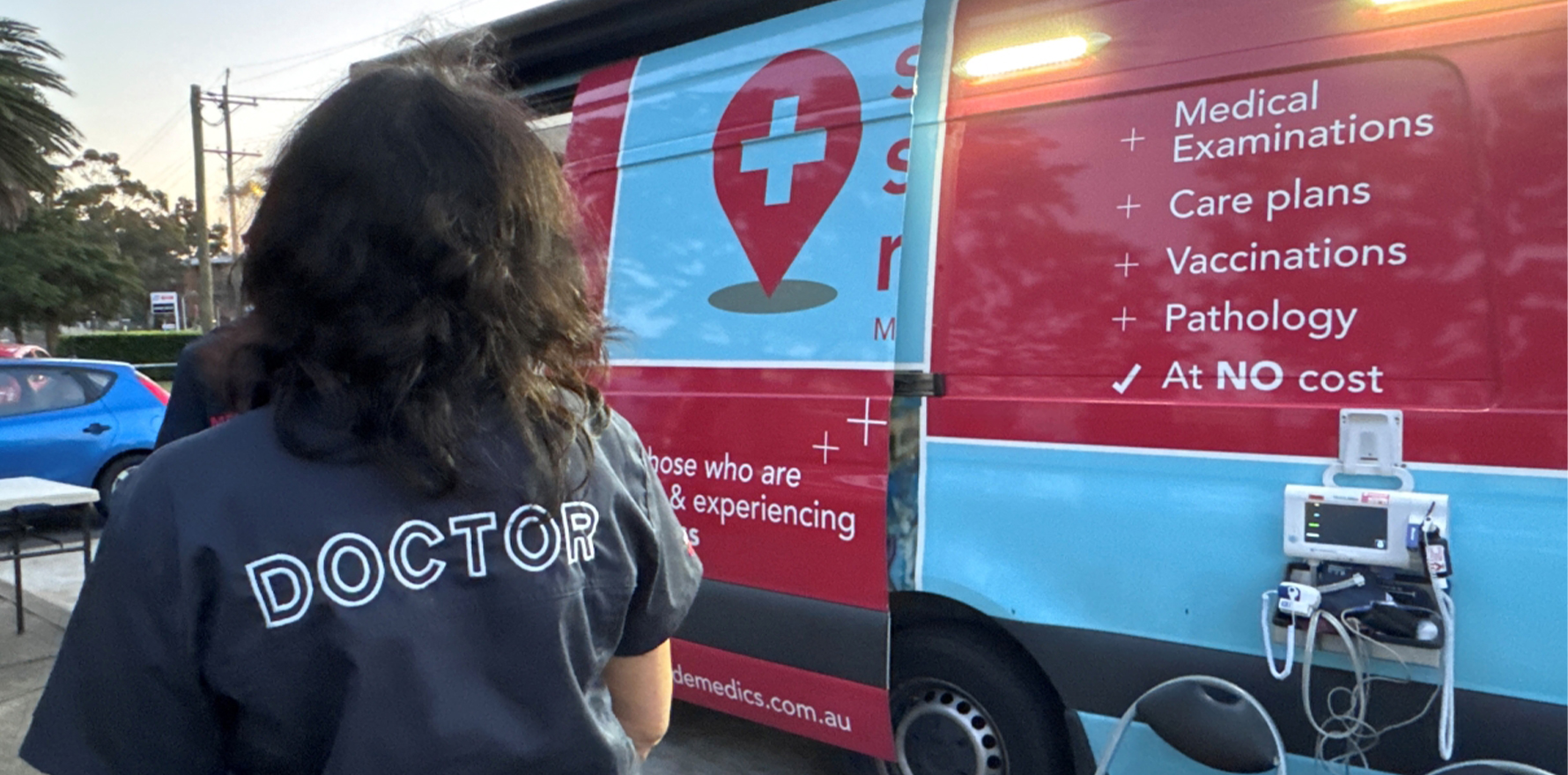
Rising patient demand and winter illness have prompted the callout, with doctors needed to commit for just two hours a month.
Street Side Medics is urgently seeking more Melbourne GPs to volunteer at its CBD homelessness service, warning that rising patient numbers and winter illness are stretching its existing volunteer workforce.
The not-for-profit, GP-led service, which delivers free primary healthcare from fully equipped medical vans, said demand at its Bourke Street clinic had grown steadily since opening in September 2024, creating pressure to recruit additional doctors.
“We’re really trying to get two GPs to the clinic each week if we can,” Street Side Medics clinical manager Jo Plowes told The Medical Republic.
“A lot of our GPs also work in remote areas or travel, so we’re trying to get some more GPs on board so that we don’t have to rely on the ones we’ve got so much.”
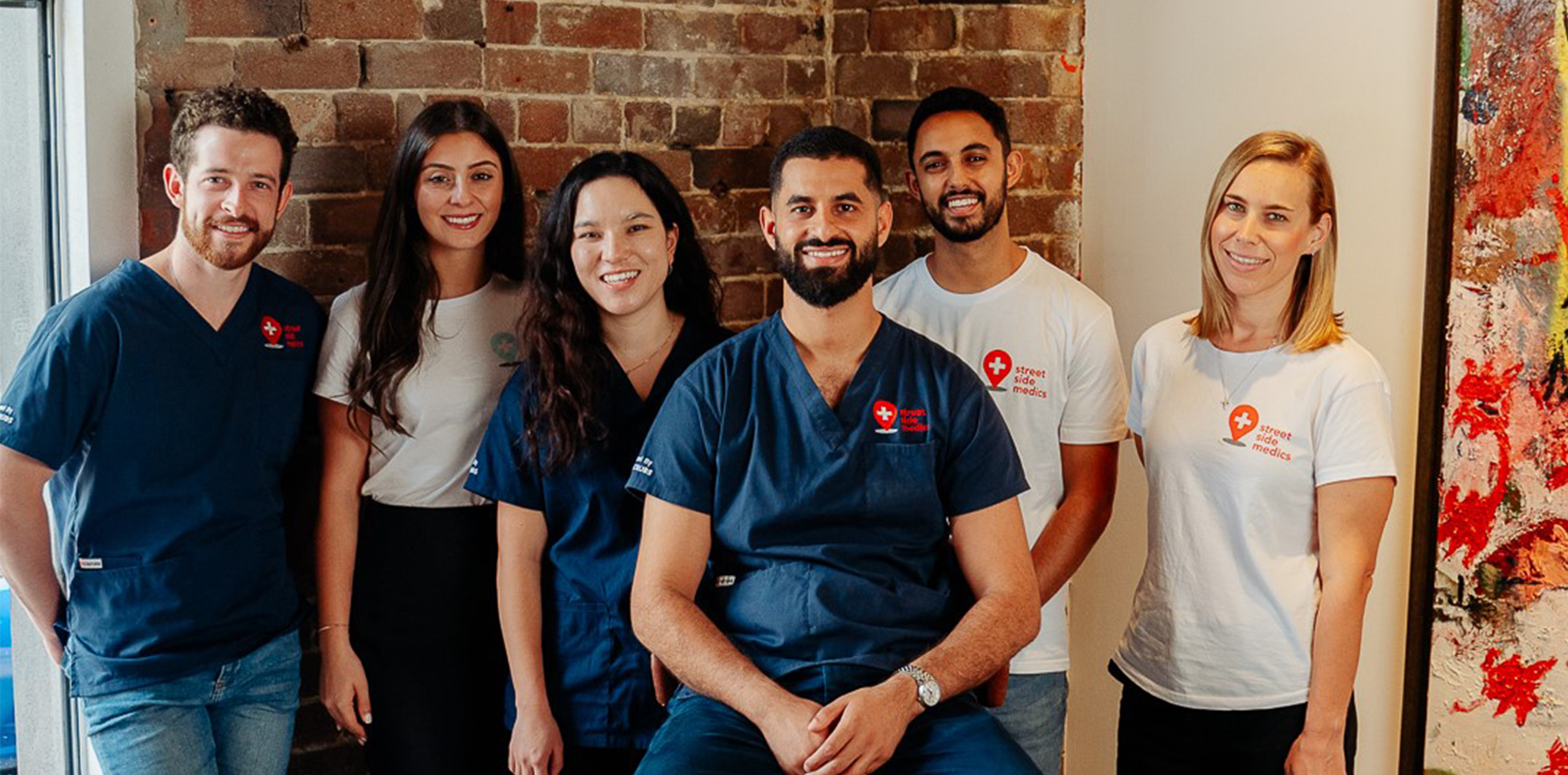
Street Side Medics currently has about four GPs supporting the Bourke Street service and between 15 and 20 GPs across its Melbourne clinics.
Ideally, the organisation would like six to eight GPs attached to each clinic to ensure consistent coverage.
The Bourke Street clinic operates every Thursday night outside The Salvation Army’s Project 614 centre and requires only a minimum commitment of one two-hour shift a month.
Ms Plowes said winter was expected to further increase demand.
“There’s a lot of chest infections and viral illnesses over that winter period, where every day people need to see a GP,” she said.
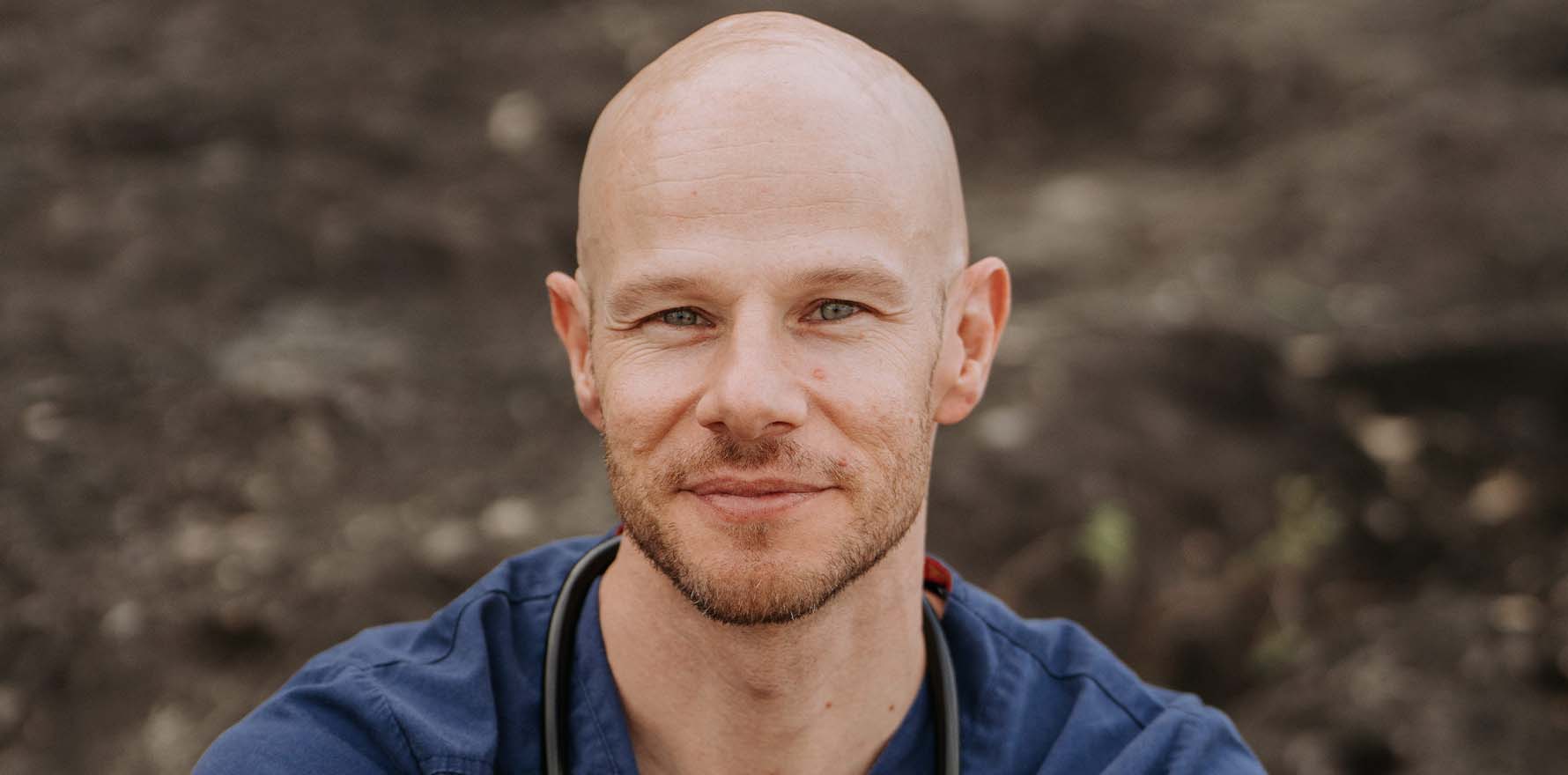
Founded by 2022 Young Australian of the Year Dr Daniel Nour, Street Side Medics focuses on areas with high rates of homelessness and works alongside shelters, food services and community organisations to provide healthcare to people who may otherwise struggle to access treatment.
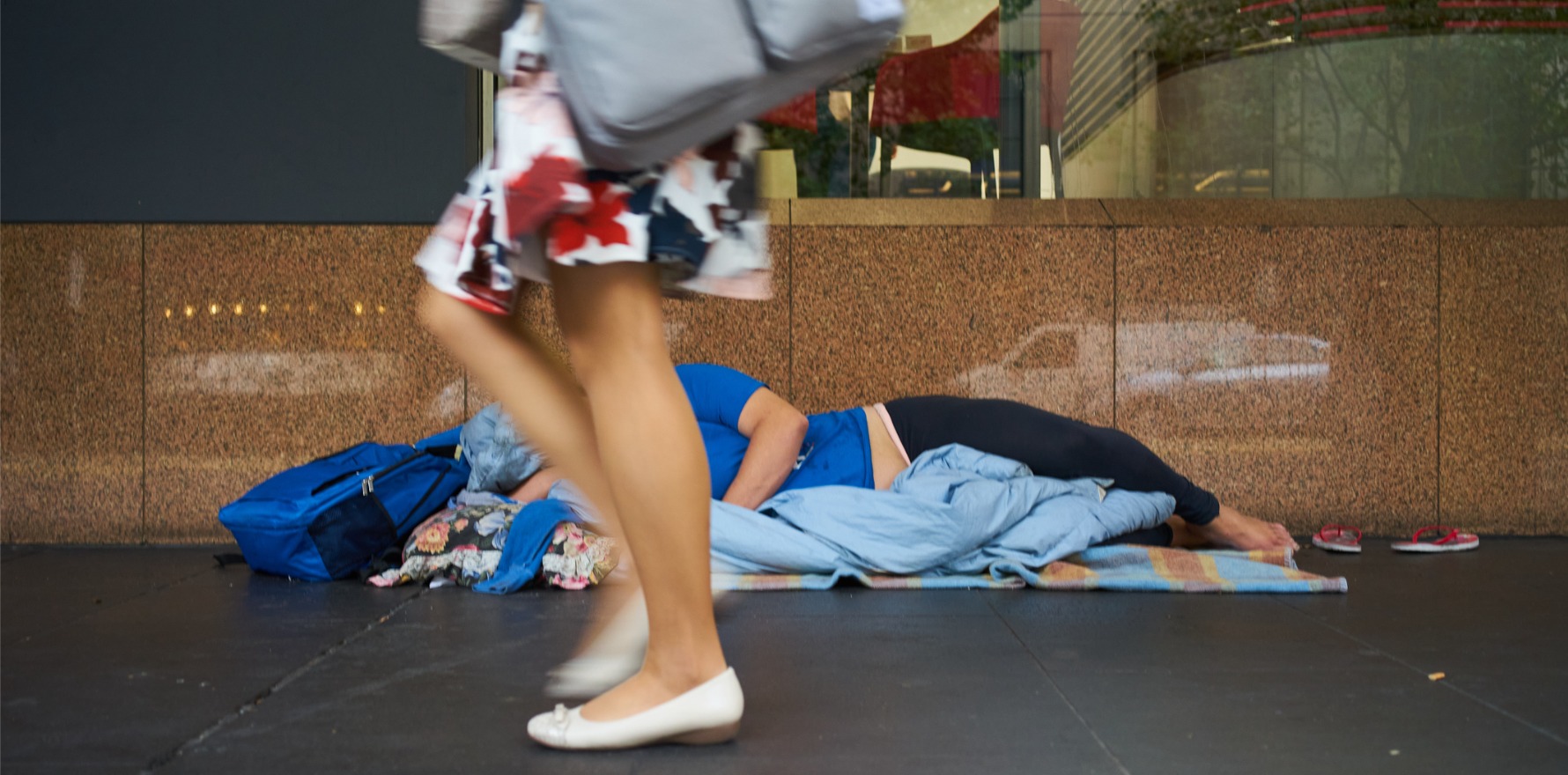
According to the Australian Bureau of Statistics 2021 Census, more than 30,000 people were experiencing homelessness in Victoria.
People sleeping rough or living in unstable housing often face barriers to healthcare including cost, transport difficulties, lack of awareness of available services and previous negative healthcare experiences.
Volunteer GPs work from customised medical vans equipped with examination facilities, pathology collection services, ECG machines and a small pharmacy stock.
“The van’s set up so you can do most things you would do in a normal practice,” Ms Plowes told TMR.
Patients are assessed and treated much as they would be in a traditional clinic, with referrals, investigations and medications arranged on site where possible.
“We try to manage things in that one interaction if we can because a lot of the challenges for our patients are that they don’t follow up with referrals or they don’t come back if they’re transient or they’ve got other priorities,” she said.
The clinical presentations are diverse, ranging from respiratory infections and skin conditions to chronic disease management, sexual health screening and wound care.
“We see lots of acute illnesses. We see lots of respiratory illnesses, lots of skin infections, and we do a lot of blood-borne virus screening and STI screening,” Ms Plowes said.
She said one unexpected benefit for volunteer doctors was the highly collaborative environment.
“A lot of the GPs have fed back that in their normal practices they go into a room, shut the door and are pretty much by themselves all day as they see patients,” she said.
“They really like bouncing ideas off the other doctors sitting together in the van and talking to the allied health professionals outside. It’s quite interactive for them.”
While working with vulnerable populations could raise concerns about safety, Ms Plowes said robust protocols were in place.
“We recently had a safety review done by an external consultant and it was really reassuring that all the things we’re doing for the teams are pretty much what’s recommended,” she said.
For many volunteers, the experience reconnected them with the reasons they entered medicine.
Related
“A lot of them say it reminds them why they did medicine in the first place,” Ms Plowes said.
“They’re helping people who normally wouldn’t approach anyone for healthcare help. They get a lot of satisfaction from just being there.”
Street Side Medics CEO Nic Brown said that even a small time commitment could make a meaningful difference.
“The Street Side Medics model is entirely volunteer-driven, and we are incredibly fortunate to have a dedicated and deeply valued team of medical and allied health professionals supporting our clinics,” he said.
“However, demand at our Bourke Street Clinic continues to grow, and we are urgently seeking more GPs to help us meet the needs of people experiencing, or at risk of, homelessness in Melbourne.
“Even two hours a month from a GP can change the trajectory of someone’s health.
“We would be immensely grateful for any GPs – especially in and around Melbourne’s CBD – to consider volunteering. As patient presentations continue to increase, we need more Melbourne GPs to step forward so we can keep pace with demand and ensure this vital service remains consistently available.”
General practice services provided by Street Side Medics include (but are not limited to): general health check-ups, chronic disease screening, acute infectious screening (including HIV, Hep C, Hep B, STI’s) immunisations, pathology services, diagnosis and treatment of medical conditions, screening tests and Medicare care plans, nutritional advice, minor surgical procedures and referrals to appropriate medical specialists.
GPs interested in volunteering can contact Street Side Medics via volunteer@streetsidemedics.com.au or visit the organisation’s website for further information.
