

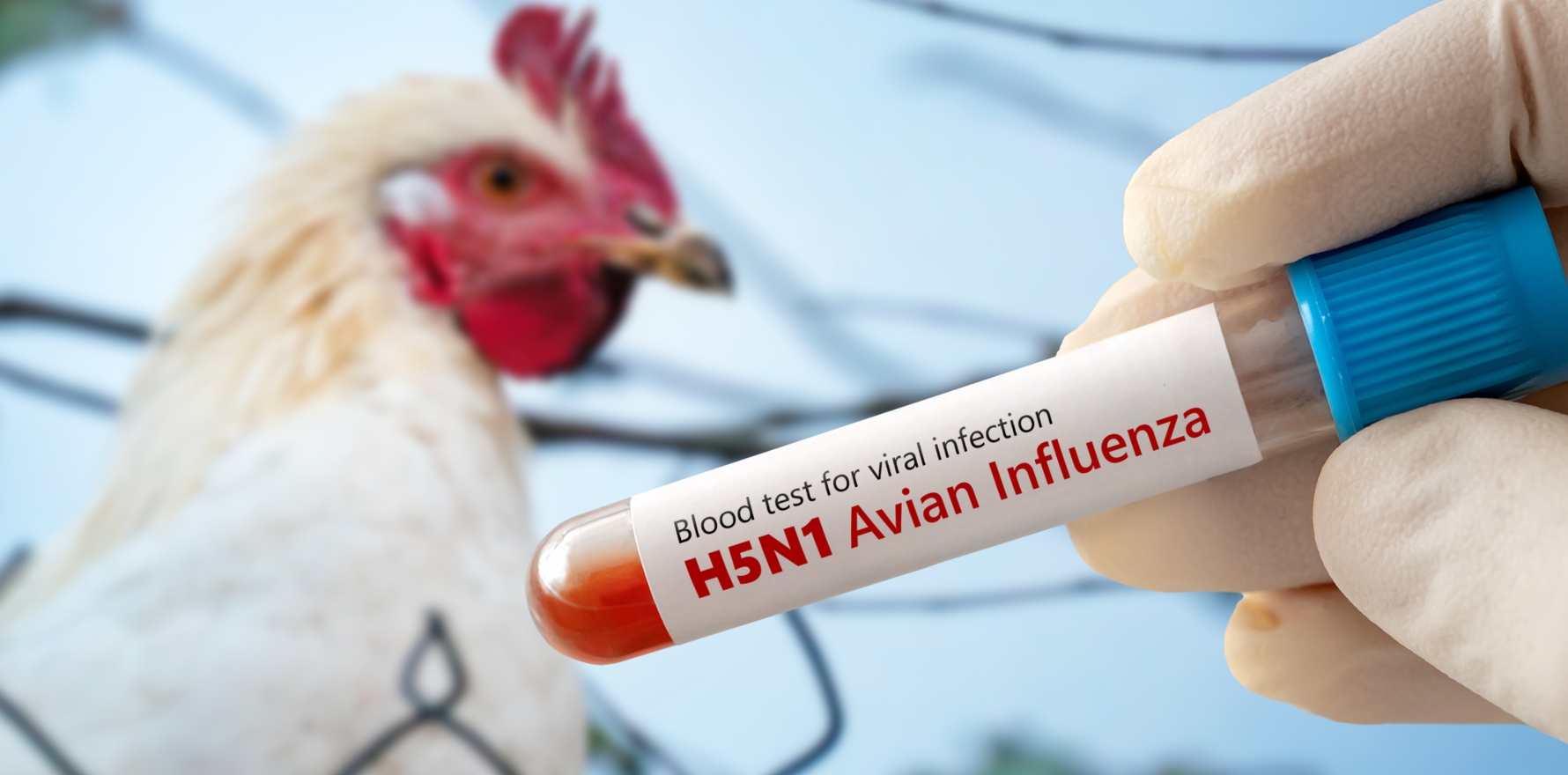
Experts from the Australian Centre for Disease Preparedness say Australia is well prepared to face the highly pathogenic disease.
Being the last continent to have H5N1 until June this year has placed Australia in the best position. But vigilance remains essential, researchers say.
A brown skua and a giant petrel were the first two birds infected in Australia, but the infection has now also spread to local species.
The avian-adapted virus is an RNA virus with a genome consisting of eight separate genetic segments.
When different virus strains infect the same host, their gene segments can be exchanged through reassortment, potentially producing a new virus strain.
Bird flu has sporadically infected over 55 mammalian species, classified into three categories.
Mammals that feed on infected birds, or poultry and dairy farm animals exposed to highly pathogenic bird flu can infect humans – though this is relatively rare and requires specific conditions.
Infected mammals that congregate in large, dense colonies, such as sea lions and seals, can also transmit the virus.
Research scientist Dr Frank Wong at CSIRO’s Australian Animal Health Laboratory said Australia is facing genotype B3.2 of the virus.
Most reported human infections have occurred in the United States of America, in outbreaks on dairy and poultry farms. However, the genotypes associated with infection of dairy or cattle in the US have not been detected outside the country, Dr Wong said.
“You would need an ecological perfect storm for the virus [B3.2 variant] to spill over and impact livestock,” he said.
“We know that this virus transmits pretty efficiently between affected bird flocks. In terms of its long-term sustenance in Australia, it’s probably too early to tell.”
Although the virus hasn’t yet been detected in Australia’s poultry, Dr Wong emphasised the need for vigilance, citing its adverse impact elsewhere, and urged ongoing monitoring with accurate real-time diagnostics from international investigations and outbreaks.
CSIRO director Dr Debbie Eagles told The Medical Republic that GPs and physicians should pay careful attention to patients involved in high-risk activities, including direct contact with sick or wild birds, or to poultry and dairy workers.
However, Dr Eagles said the risk of transmission between birds and humans remained very low, and the disease was mostly mild.
“There were only maybe one or two [US] cases where it was a more severe illness, and they were linked to people who were either elderly or had a predisposed compromised immunity; most cases were either very mild respiratory infections or conjunctivitis,” Dr Wong said.
People working in the dairy and poultry industries were encouraged to keep their seasonal flu vaccinations up to date and to follow sanitary practices, including washing hands and work boots.
“Chickens in general are very susceptible to highly pathogenic bird flu viruses, so we would want the industry… to minimise the interaction between wild birds and their poultry flocks,” Dr Wong said.
“The potential for severe impact to poultry once the virus gets into a farm would be significant,” he said.
Related

Dr Eagles said Australian poultry farms have excellent biosecurity and that past H7 influenza outbreaks in Victoria and New South Wales provided lessons to improve biosecurity practices.
CSIRO can rapidly identify H5N1 strains and genotypes within 15 to 25 hours and assess how closely Australian variants relate to those in Antarctica. It has since made Australia’s first H5N1 genome sequence publicly available on the Global Initiative on Sharing All Influenza Data (GISAID).
Access to regionally relevant viruses, including those from the Asia-Pacific and Antarctic regions, provides a catalogue of samples for the ongoing review of diagnostic tests and for sequencing to compare new detections, CSIRO researchers said.
This information will guide the national response, explained Dr Matt Neave, team leader for sequencing and agent characterisation at CSIRO.
Should changes to the virus’ genome make it more likely to be mammal-adapted, there would be immediate notifications and escalation among public health, state and jurisdictional veterinary, and environmental authorities, Dr Eagles said.
“We are in the fortunate position that we’re a number of years behind other countries in terms of their own responses, which allows us the opportunity to learn from others,” Dr Eagles said.
Researchers believe there have been at least six or seven suspected separate introductions of the virus from Heard Island – an uninhabited, sub-Antarctic volcanic territory – though this is a fairly conservative estimate.
The genotype B3.2 variant, which arose through reassortment in North America and later spread to South America in late 2022, moved down South America’s entire west coast, significantly impacting its poultry industries.
Professor Paul Griffin, director of Infectious Diseases at Mater Health Services, said there was more to be done, but not necessarily regarding bird flu, given the unlikely chance of human cases.
“We certainly don’t need anyone thinking that acute presentations of respiratory viruses are likely to be bird flu.
“We also need to not lose sight of the usual seasonal influenza. We’re really not doing enough just for the viruses we do have to contend with,” he said.
Influenza vaccination coverage in Australia declined from 45.6% in June 2020 to 26.2% in June 2026, according to the National Centre for Immunisation Research and Surveillance.
Increasing seasonal influenza vaccination rates may also reduce the probability of co-infection with bird flu strains, Professor Griffin told TMR.
Professor Griffin advised avoiding contact with sick birds or other animals, including touching or taking them into care.
Suspected cases should be reported immediately to the Emergency Animal Disease Hotline on 1800 657 888.
