

The world is full of small mercies, like not having to co-exist with a 3.5 metre long ‘hypercarnivore’.
Earth is a dangerous, scary and sometimes downright disheartening place to live right now.
From Robert F Kennedy Jr’s latest moves to destabilise America’s Centres for Disease Control and Prevention to some pretty dire estimations of health in the Australian outback to the growth of two-factor authentication (if I have to check my email for a code one more time…), it just kinda sucks.
But there’s no one to put life on our spinning orb into perspective quite like a palaeontologist.
And boy, have they.
A new study published in PLOS One details the discovery of the first crocodyliform specimen from the Maastrictian Chorrillo Formation, which bears large “ziphodont teeth”, a broad snout and a “robust” humerus.
In other words, it’s a big crocodile.
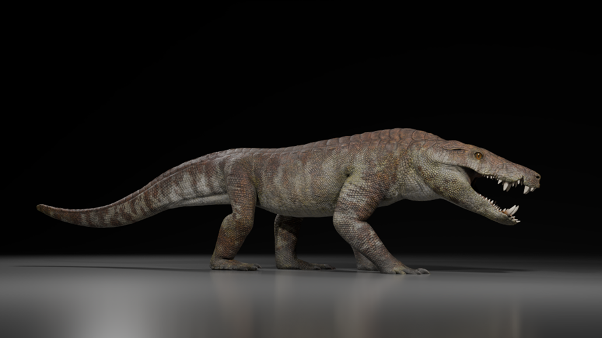
The Argentinian croc reached up to 3.5 metres in length and likely weighed about 250 kilograms when it stomped around earth about 70 million years ago.
Described by researchers as a “hypercarnivore”, the Kostensuchus atrox likely spent its time chowing down on other dinosaurs.
Its teeth are about twice as large as the equivalent teeth in its narrower-snouted contemporaries, leading researchers to believe that it had evolved to bite and subdue larger prey.
The big unit unearthed in modern-day Patagonia is so big, in fact, that it is surpassed only by one other fossil within the Chorrillo Formation.
In all likelihood, K. atrox was one of the apex predators of the Patagonian floodplain.
All that is to say, this humble Back Page scribe is glad that she is approximately 70 million years too late to meet him.
Really makes payroll tax seem like no big deal, huh.
Send creatures borne of your worst nightmares to Holly@medicalrepublic.com.au.
