

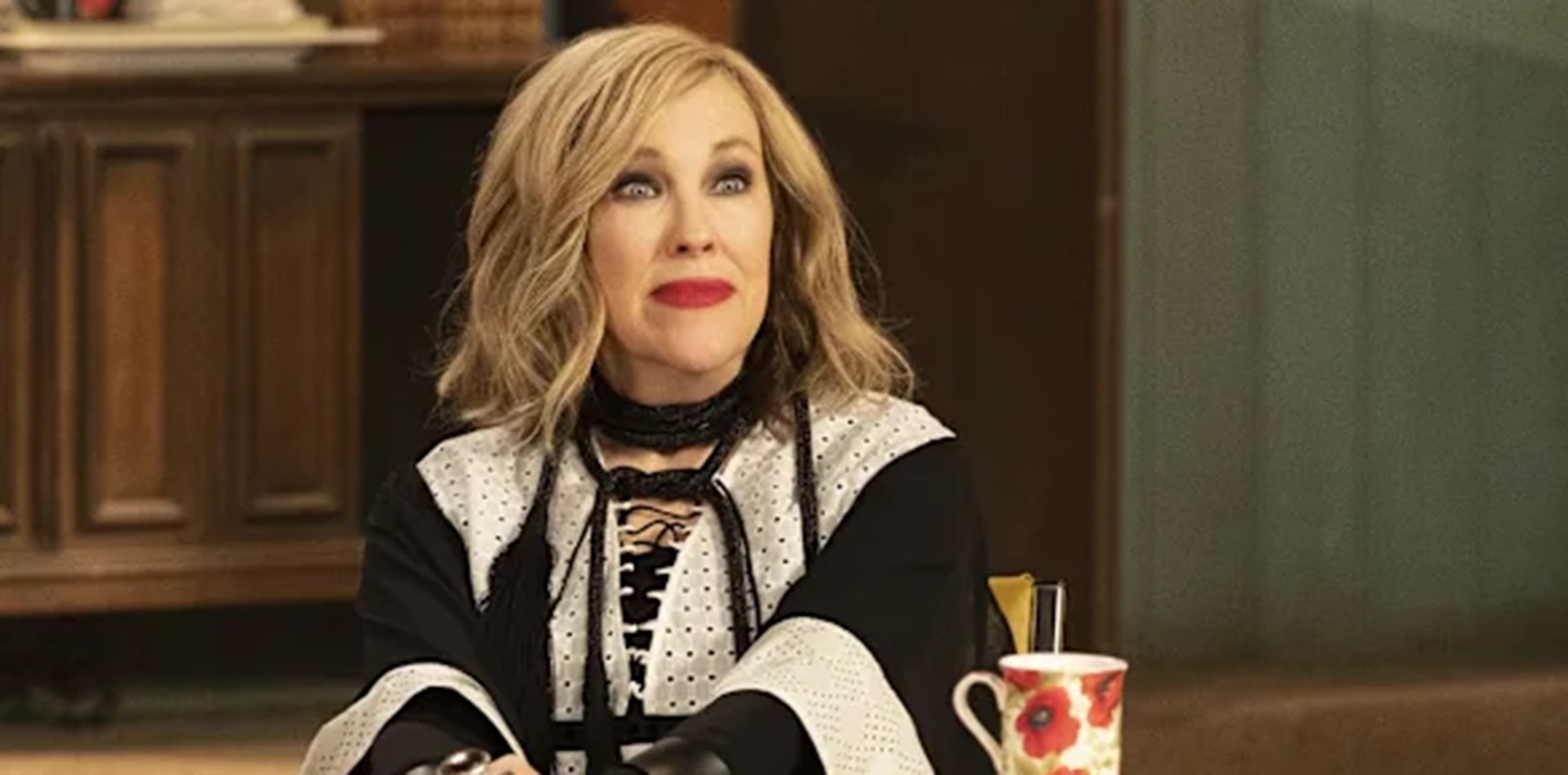
‘Pick up the hammer and nail this coffin shut!’ – Moira Rose, Schitt’s Creek.
Waking up for a weekend ward service in peripheral general paediatrics doesn’t always come with any significance, other than the welcome sensation of boredom, lethargy and dripping in ennui.
However, on this day at the very end of January, the mundanity of medical life was jolted by the horrendous news of Catherine O’Hara’s passing – television’s Moira Rose.
The hospital and messages online, both private and public, were abuzz with this sad news of a comedy luminaire’s departure from a world which, let’s be honest, could hardly bear any more grief.
With most news around the world being so intensely dark at present, it felt for a moment that a big source of light had gone out with her – the same way as making a new diagnosis of an invasive new brain tumour in a child, or a death in the department, immediately sucks the joy out of multiple parts of a hospital for a period of time.
But magically, like it does even after the most grim shifts working with sick children, an opposing force tends to rise to the occasion.
After morning handover on this day, the first thing that came up was the passing of this great woman who healed us all with her love and acceptance of her children and every other person in a town in which she had bravely “endured a cornucopia of trauma”.
In private group chats, memes dedicated to her ingenious comedic acting and timing sprouted like a veritable garden of resilient, shadow-resistant daisies. Never pink carnations, because who would send those to a person announced dead on the Interwebs – ewwwwww EWWWWWW.
It is without a doubt the greatest gift we can receive from anyone, the act of taking the piss to cut through the tension with a laugh – applied responsibly and paired with reading the room, of course.
We all know that humour is an excellent adjuvant therapeutic in the practice of medicine. But unlike the 0% possibility that wine tasting like amoxicillin could be paired with anything but desperation of income, there is no such thing as a 100% certainty in cure either.
Saying, “it’s probably nothing, but I think I’ve killed a man” to your nurse unit manager during accreditation, while objectively hilarious, is very unlikely to go well. One might even argue that it would be dangersome in the extreme.
Humour in the darkest times is a rebellious act of love and hope for better times. It is a most potent recognition that while things are terrible at present, the light in humour could bring us to better times.
So even on those days when we have had to resuscitate newborns aggressively and unsuccessfully, break the worst news to new parents, and we’d kill for a good coma, we find ourselves going to lantern bearers like Moira Rose for comfort.
We all know that when the debriefs and tears are done, and the feet are up in front of the telly, we could count on her fumbling her way through a winery’s ad campaign to bring us back from the edge of darkness. Liveling and Bingo Lingf***er could never. For those moments, we could be blind to reality in a way that would make even Moira herself most proud.
Some days in the never-ending, mind-numbing non-clinical tasks, when you find yourself positively bedevilled with meetings et cetera, a simple act of laughter puts life back into soulless work.
And when you get home from the absolute circus of clinic days and angry families, to the absurdities of well children in your life bouncing about in reckless abandon, does their low comedy incorporating fart noises not fortify you as much as any dazzling peach crabapple Riesling Rioja?

Knowing that the same joyous light of humour is in your family or peers also helps bring us all back from when medicine fills your cup to the brim with poor outcomes, hideous diagnoses, or irksome family dynamics. It is the knowledge that people who can joke about the mundane everyday or darkest times would appreciate the absurdity and unevenness of life. And more importantly, know that we would hold each other in this uncertain world as we go along together trying to figure out as a community how to fold in the cheese, as opposed to keeping it all inside like a bashful clam.
And we all know that there’s nothing worse than a humourless or holier-than-thou co-worker. Sans fun, sans life, sans opinion, and a true unironic believer that gossip is the devil’s telephone, best hang up.
And to those I would say, “be careful, lest you suffer vertigo from the dizzying heights of your moral ground”. It may well be pertinent to band together your same-craic friends and say “it’s coup d’état time”, and perform something impulsive, capricious, and melodramatic such as taking over the unit morning tea fundraiser. And it would be the right to do so.
So, the same way we always return to a familiar lee of a picturesque ridge, where an out-of-work multiple Daytime Emmy nominee is drunk on a musk-melon infused oak chardonnay, we find opportunities to reunite with the world of the living through shared humour and experiences in this one of many tragic days.
And even though the taste of medical life can be awful, if our people are around to laugh through it with us, you can get me another glass.
You’re a bit spooky now Moira, but today I will take a look at your photos and work, and say dear god you were a beautiful thing.
Vale Catherine O’Hara, we love you.
Dr York Xiong Leong is a general paediatrician in Eastern Health, Melbourne, working in public inpatient and community paediatric services, and a medical educator with Monash and Deakin universities. One of the best compliments he has ever received is “Babe you barely live on this planet”.
