

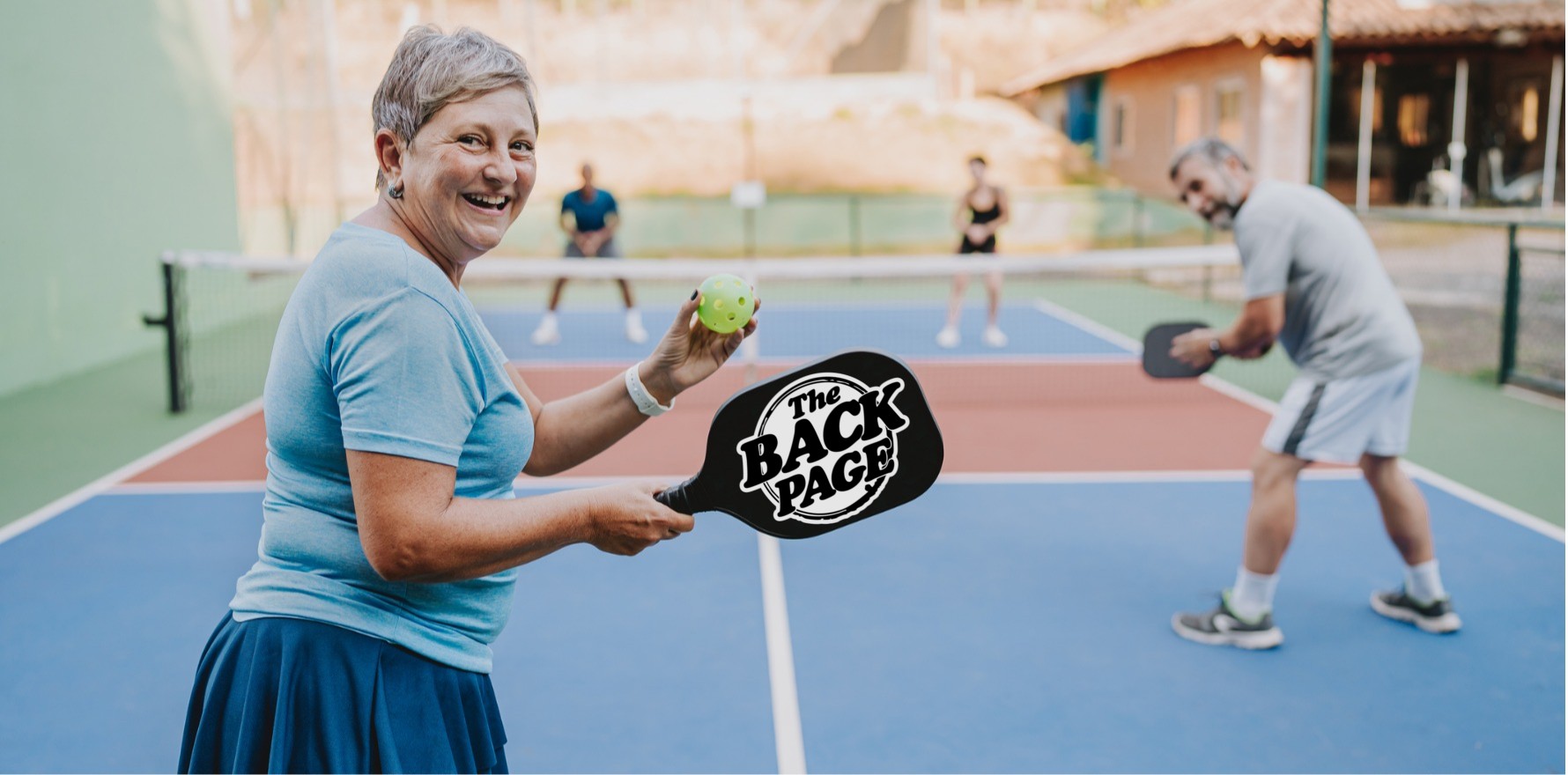
Put the paddle down and step away from the court.
Pickleball – the sport fad beloved by retirees the world over – may not be a contact sport, but ophthalmologists are reporting an “alarming” increase in the number of eye injuries resulting from the ping-pong/badminton/tennis Frankengame.
Invented in 1965 but popularised by celebrities like Ellen DeGeneres over the first phase of the pandemic, pickleball involves using a smooth paddle to hit a hollow plastic ball over a net, usually on a doubles badminton court.
It resembles ping-pong, badminton and tennis but with more rules.
While the largest cohort of players are aged between 25 and 35, the game has proven immensely popular among people aged 65 and up, who make up the next-largest group of players.
According to an original investigation published in JAMA Ophthalmology, the number of pickleball-related eye injuries in the US necessitating an emergency department visit have increased “at an alarming rate over the past four years”.
Around 70% of those injuries were in pickleball athletes aged 50 years or older.
The severity of injuries ran the gamut from corneal abrasions, subconjunctival haemorrhage and periocular contusions to retinal detachments and orbital fractures.
Just under half of the recorded injuries were attributed to impact from the pickleball itself – rather than, say, the player falling over or diving for the ball – with the authors pinpointing an unlikely culprit.
“Biomechanical analyses have demonstrated that a pickleball traveling faster than 82 km/h (30 mph) can deform the cornea, retina, and vitreous and can exert zonular stress sufficient to dislocate the lens,” they wrote.
“This velocity threshold has become increasingly relevant due to recent advancements in paddle technology.
“Modern paddles, incorporating materials such as ethylene-vinyl acetate foam, can now generate exit velocities approaching 96 km/h (60 mph).
“Given that players are often positioned 4.2m (14 ft) apart … these high speeds leave players with limited time to react and avoid impact.
“Understanding how paddle characteristics affect ocular injury risk may help inform future safety guidelines and recommendations.”
In the meantime, though, the authors recommended that players consider wearing shatter-proof goggles.
Volley your story tips to Holly@medicalrepublic.com.au, but mind the eyes!
