

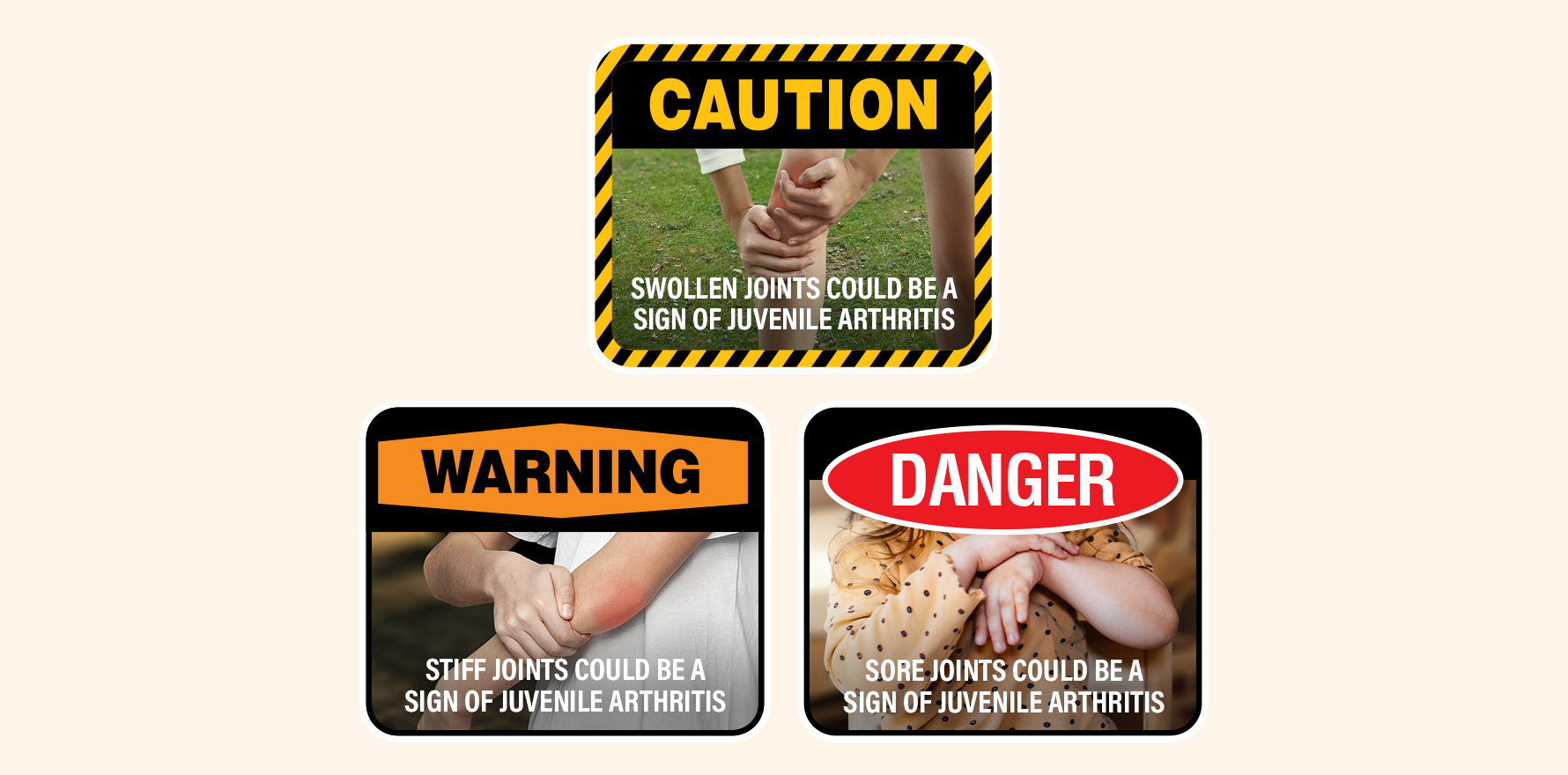
It’s time to reduce time to diagnosis of JIA to 10 weeks.
Act now to reduce unacceptable delays in juvenile idiopathic arthritis (JIA) diagnosis & lifelong consequences.1
Average time to JIA diagnosis: 10 months → Target: 10 weeks by 20301
Juvenile Idiopathic Arthritis (JIA) is a relatively common autoimmune condition affecting children under the age of 16.2
Despite greater awareness, the average time to diagnosis remains ~10 months.3,4

| Consensus Statement on the Diagnosis of Juvenile Idiopathic Arthritis |
Australia’s recently released Consensus Statement outlines a national goal:
To reduce the average time to diagnosis from 10 months to 10 weeks1
LEARN MORE
At www.jafa.org.au/a-giant-step-forward/

Why early diagnosis matters
Despite greater awareness, diagnostic delays for children with JIA have remained unchanged for two decades.3,4 Currently up to 30,000 Australians aged <24 years live with JIA,2 and late diagnosis increases the risk of vision impairment, physical limitations and psychosocial impacts.3 As a result, the average healthcare cost per patient currently exceeds $24,000 annually.4 The good news? Early treatment can support remission and limit disability.3

Role of General Practitioners
GPs are uniquely placed to reduce the diagnostic delay for children with JIA. We encourage GPs to maintain a high index of suspicion in children with unexplained joint symptoms and then promptly refer patients to paediatric rheumatology services. Furthermore, there is an opportunity to share resources and promote awareness among carers and educators to help support earlier diagnosis.
Don’t miss the signs!
Timely identification followed by referral to a paediatric rheumatologist may significantly improve clinical outcomes.3
LEARN MORE
About the signs and symptoms of JIA at jafa.org.au/hcphub
Can you recognise the signs and symptoms of JIA?
*Hypothetical patient for educational purposes.
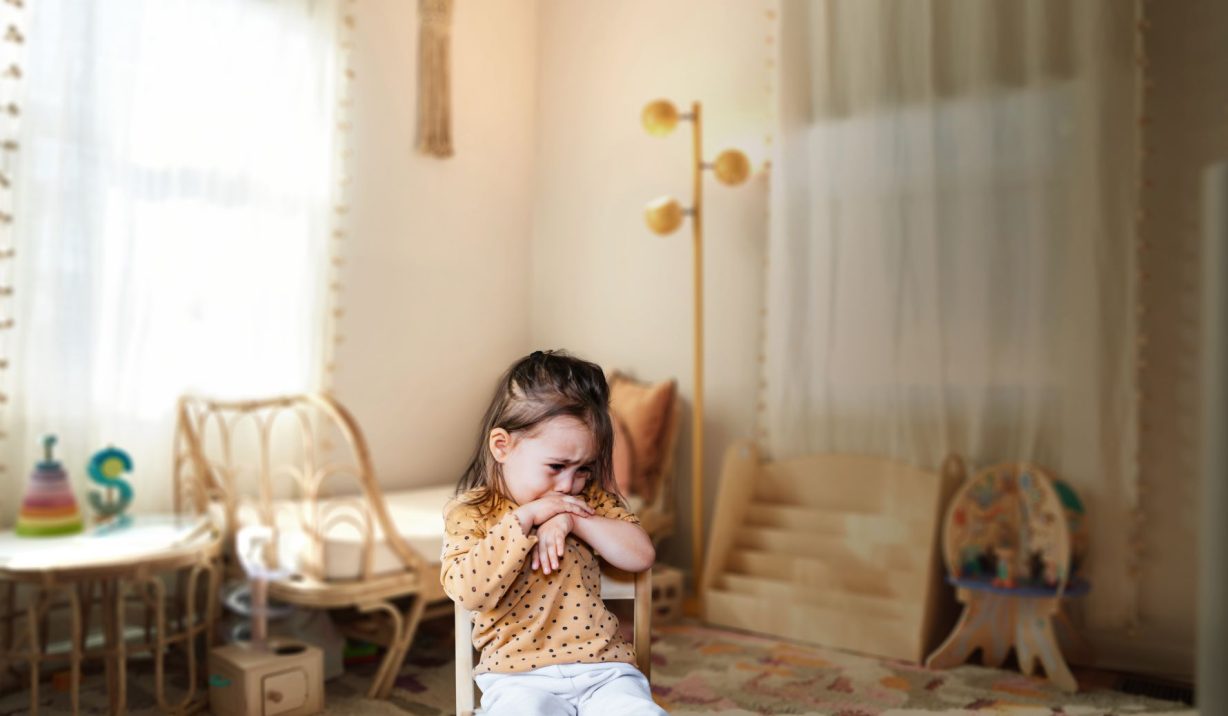
1. Evie is two years old. Her mum tells you Evie was a happy, active toddler until a couple of months ago when she started limping and wanting to be carried everywhere.
• Evie’s symptoms have gradually worsened. Now, she won’t weight bear at all and gets around on her bottom.
• She has difficulty bending and reaching for toys, extending her neck and turning her head. Her sleep is disturbed, and she’s become tearful, tired and clingy.
• Evie is within normal ranges for general growth and development.
Is it growing pains, or should you suspect JIA?
*Hypothetical patient for educational purposes.
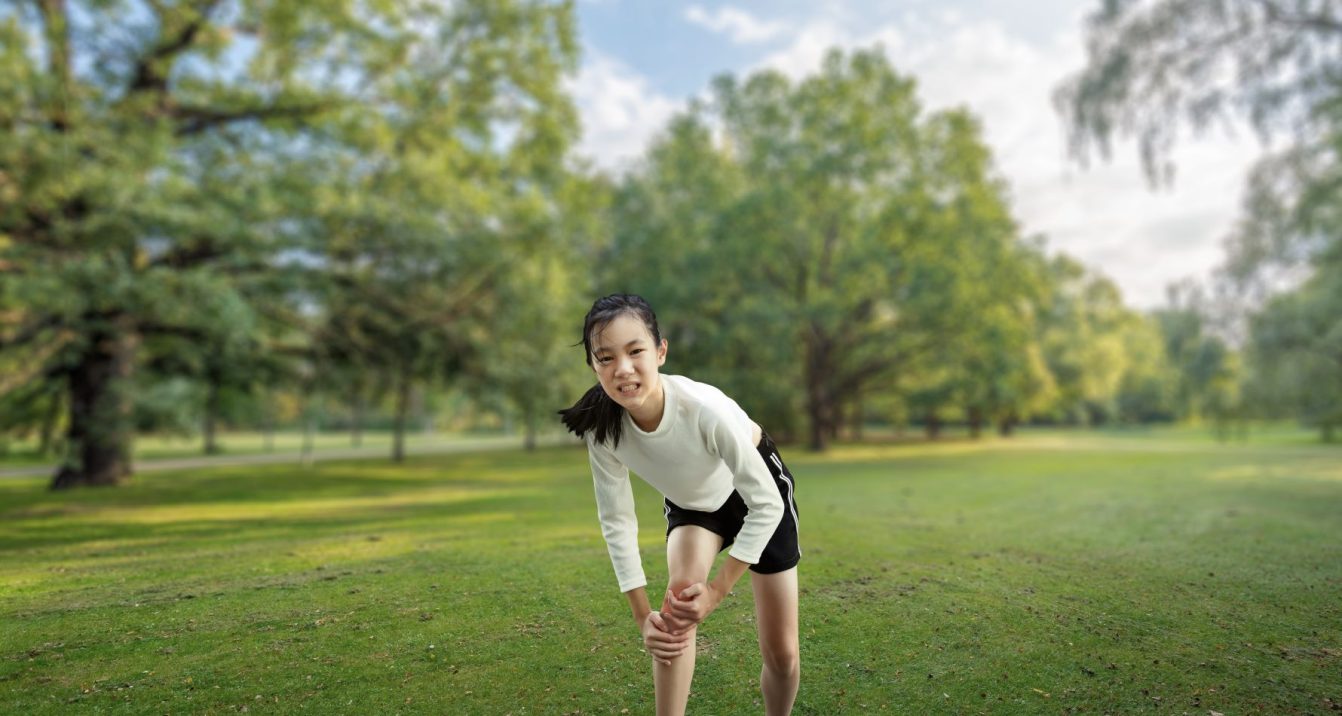
2. Miriam is 14 years old and mad about sport. Her parents bring her to you because her right knee has been painful and slightly swollen for several weeks.
• They initially thought she had injured it but she doesn’t recall an injury and it hasn’t improved with physiotherapy.
• Miriam’s X-rays from consulting another GP show no abnormality. Her symptoms are consistent and cause her to limp.
• Miriam tells you her knee is stiffer and more painful in the morning when she first gets up.
Do you think it might still be an injury or should you suspect JIA?
*Hypothetical patient for educational purposes.
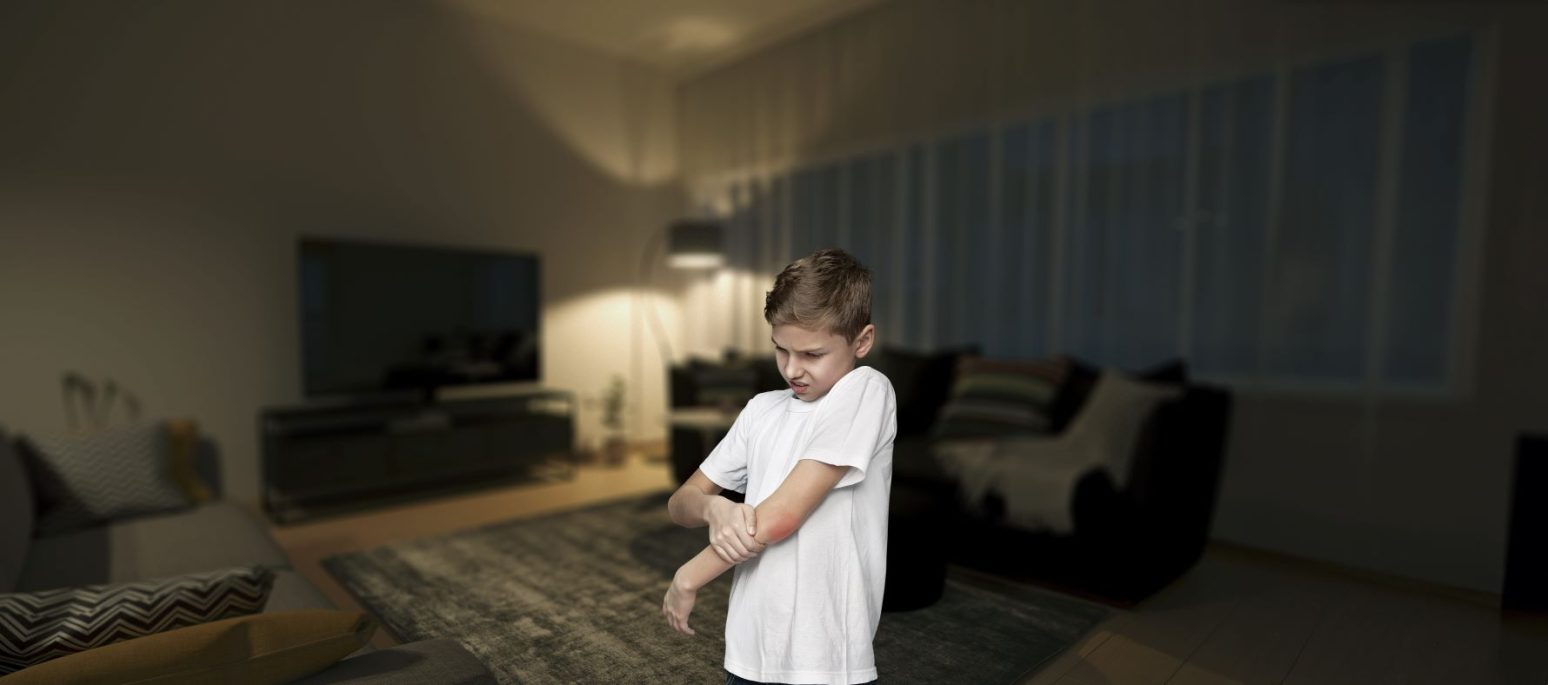
3. Omar is eight years old. Until a couple of months ago he was a fun friend and keen student. Now he’s withdrawn and emotional and his teacher complains he’s no longer trying.
• The learning support teacher is called in and suggests the cause of Omar’s declining handwriting and schoolwork may be due to poor eyesight and a problem with his hand.
• Omar’s visual acuity test confirms poor vision, and you observe signs of inflammation in both his eyes.
• Your examination confirms both wrists and elbows are stiff and sore. His other joints seem fine but his eye inflammation bothers you.
What do you think is the cause? Should you suspect JIA?
THEY ALL HAVE JIA
Learn more about identifying JIA at jafa.org.au/hcphub
Don’t miss the signs and symptoms

Find out more about diagnosing JIA and find a paediatric rheumatologist at jafa.org.au/hcphub
References: 1. Consensus Statement on the Diagnosis of Juvenile Idiopathic Arthritis, Australian Parliament House Canberra – October 9, 2024. Available at: https://www.racgp.org.au/getmedia/b3ee7100-6dc4-4da3-8c64-8c840d8f8840/Consensus-Statement-Diagnosis-of-Juvenile-Idiopathic-Arthritis.pdf.aspx. Accessed August 2025. 2. Australian Institute of Health and Welfare. Chronic musculoskeletal conditions: Juvenile Arthritis. Available at: https://www.aihw.gov.au/reports/chronic-musculoskeletal-conditions/juvenile-arthritis. Accessed August 2025. 3. Manners P. Diagnostic dilemma: delays in diagnosing juvenile arthritis. Med J Aust 1999;171:367–369. 4. Bond DM et al. The IMPACT Study. Juvenile Arthritis Foundation Australia, 2023. Available at: http://www.jafa.org.au/impactstudyreport. Accessed August 2025.
Juvenile arthritis – HCP’s program received grant funding from the Australian Government.

