

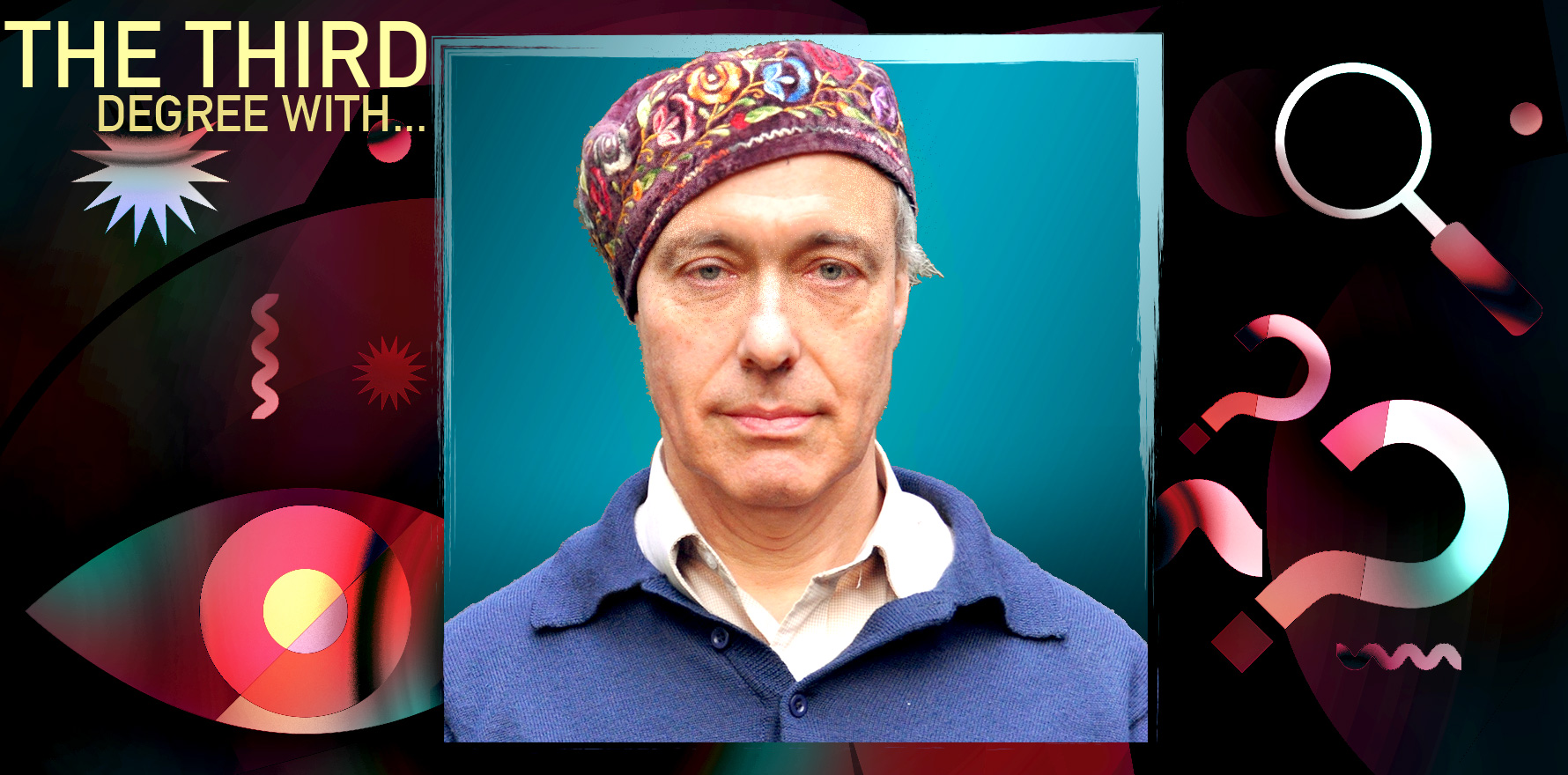
The physician, philosopher and mathematician breaks down what has stunted ethical progress when it comes to assisted dying care.
With progress now being made in Australia when it comes to the controversial topic of voluntary assisted dying, The Medical Republic sat down with the best person to tackle the topic.
Professor Paul Komesaroff is more commonly known for his work in endocrinology as a physician, but has also engaged extensively with discourse on medical ethics.
As assisted dying becomes less taboo, Professor Komesaroff is keen to see how Australia’s healthcare adjusts to the change.
TMR: Where have you seen the most intersect between your work in ethics compared to practice?
Professor Komesaroff: Ethical issues are everywhere.
They don’t refer to events that occur just at the extremes of everyday life or professional conduct, but rather, they’re inherent in everything we do.
We swim in a sea of ethics. Every action we undertake, every interaction that we’re engaged in with other people is saturated with ethics in one way or another.
This is my first point: that ethics is everywhere and we are making many ethical decisions all the time.
The other big point is that ethics really comes before everything else.
We tend to think, from the point of view of Western philosophy, that we come into the world as thinking subjects, as free individuals, as autonomous centres of consciousness, following which we face the problem: how do we relate to other people?
How do we understand other minds? How do we understand other people, so that we can engage with them ethically?
However, it is in reality the other way around. We don’t come into the world as thinking, autonomous sites of consciousness; we come into the world in the midst of our relationships with other people.
So ethics actually comes first, and the problem we face is not to construct ethics from consciousness, but rather to move from an ethical engagement with others to differentiate ourselves as independent thinking subjectivities.
TMR: Where do you think that this interest in ethics came from, initially?
Professor Komesaroff: Following my work in mathematics and philosophy I took to the study of medicine.
When I entered the medical world, not only did I recognise the internal ethical complexity of everything that occurred there, but I also saw that there were very few people working from the inside in relation to ethics.
I recognised that there was a need for people with lived experience of clinical medicine to understand what occurs there and share it with other people.
Bioethics is an interesting discipline. The word was coined in the 1920s but developed as an academic discipline from the 1960s onwards.
It was largely driven by academic philosophical and religious interests, and certainly not by doctors or nurses or health professionals themselves.
The concerns included subjects like euthanasia and the application of high technology treatments and, conceptually, philosophical questions like autonomy and freedom.
But I immediately saw that many of these reflections came from the outside, from people who were not themselves personally engaged in medicine, and had little or nothing to do with what actually occurred on a daily basis.
The philosophers, as competent and skilled as they were, had very little actual knowledge of what happens in that often difficult, fraught, emotionally charged interaction about the huge issues of life and death that are the stuff of everyday medical practice.
I felt that much of the philosophical thinking about ethics fails to capture the intense depth and complexity of the clinical world. This was the origin of my theory of “microethics” and gave rise to my novel “Riding a crocodile”.
TMR: How do you feel Australia has progressed when it comes to the debate on assisted dying?
Professor Komesaroff: I’ve been involved in the voluntary assisted dying debate for many decades.
It had reached an impasse, in the sense that there were essentially two camps that were implacably opposed to each other and were unable even to conduct even a polite conversation.
There were the people who were strongly in favour of voluntary assisted dying or euthanasia or medically assisted dying, and those who were adamantly and intractably opposed to it.
Many of the latter came from religious backgrounds, but not always, and many of the former placed a strong, uncompromising emphasis on free choice.
What the Andrews government in Victoria managed to achieve from 2015 onwards was to facilitate a productive social dialogue that I think has presented a truly admirable model that might be applied in relation to other controversial matters.
We had an open discussion across the state that involved a parliamentary committee and thousands of public contributions. For the first time, people were listening to each other and felt confident that their views were being heard and respected.
I think that in many ways, that was a unique event in Australia’s history, and it really did enable this particular deadlock to be broken.
The form of the breaking of the deadlock was the Victorian Voluntary Assisted Dying Act in 2017, which became active in 2019.
Related


The Act set out a process whereby individuals at the end of life, in full consciousness, could make a decision that they wished to die, and to take active steps to hasten their death.
Because of the high levels of public concern and contestation, the Victorian Government inserted into that first form of legislation, the first in Australia (apart from a brief episode in the Northern Territory in 1996), a number of what they referred to as “safeguards” against abuse.
In fact, they claimed that there were 68 of these and that they would prevent the kind of excesses that they understood the opponents of voluntary assisted dying to be primarily concerned with: for example, the possibility of coercion, exposure to various pressures and uncertainties and a lack of understanding of the alternatives.
TMR: Victoria recently removed the “gag clause” for suggesting voluntary assisted dying, do you see this as important progress for Australia developing more comfortability with death as a concept?
Professor Komesaroff: The so called ‘gag clause’ that you refer to, which was Section 8 of the Victorian legislation, prohibited health professionals from raising the possibility of voluntary assisted dying with their patients.
The idea here was that the government wanted to avoid the possibility of a doctor offering voluntary assisted dying as an option in a manner that could be interpreted as putting pressure on a patient to accept.
While the motivation underlying Section 8 was undoubtedly a sincere one, it has been found that this particular provision hasn’t worked effectively.
There’s been no evidence of coercion by health practitioners in support of voluntary assisted dying, here or overseas, so that is not really something that is a significant cause of concern.
But also it has obstructed or distorted the communication between health professionals and their patients.
So for example, if a patient were to ask, “What are my options?”, the doctor could say, “Well, you’ve got option one, option two, option three… and another option that I’m not allowed to tell you about.”
This is obviously an absurd situation. It was, therefore, recognised over time by many of us that, as well meaning as this provision originally was, it wasn’t effective or appropriate.
Some of the other jurisdictions in in Australia, have included a similar provision, but others have avoided it.
I believe that it is clear that the way that this particular issue is moving in Australia is away from so called gag clauses of this sort.
For this reason and others, I think it’s entirely appropriate for the Victorian Government to change the legislation to omit that particular limitation on the way in which health professionals can talk to their patients.
This conversation has been edited for length and clarity.
