

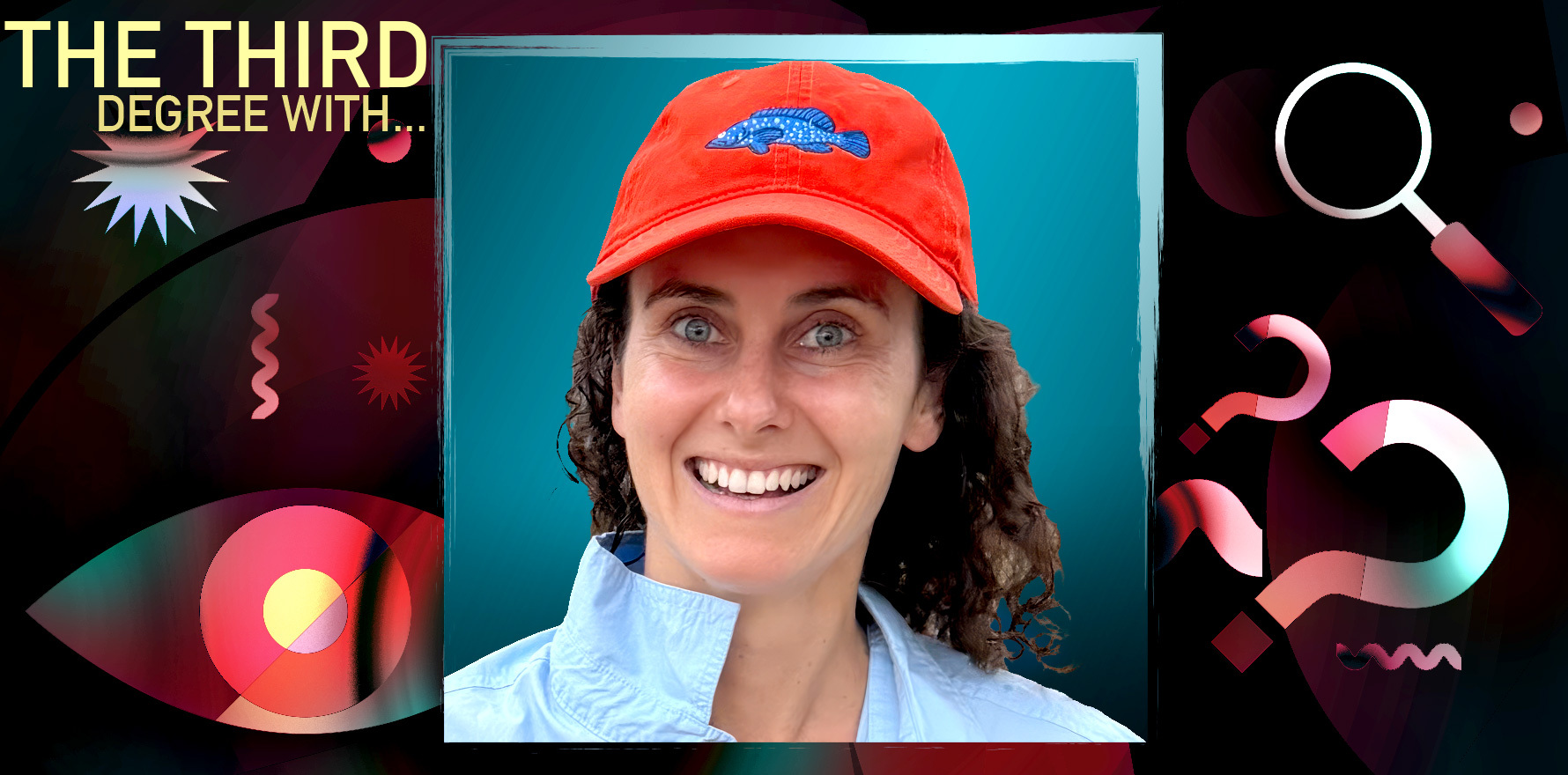
Dr Niamh Fingleton grew up in the birthplace of the Australian gold rush. Now, she’s working as a registrar in Nhulunbuy, a mining town turned tropical medicine posting.
In February, GP registrar Dr Niamh Fingleton left Newcastle and ventured up north to Miwatj Health Aboriginal Corporation in Nhulunbuy, the Northern Territory’s fourth-largest town.
She is the second recipient of the $20,000 General Practice Registrars Australia Kanyini scholarship, which supports doctors in relocating to the Northern Territory for training.
In Nhulunbuy, she’s serving the Yolngu community in Northeast Arnhem Land and working to close the gap in strongyloidiasis, a tropical disease prevalent in Indigenous communities across Northern Australia.
Dr Fingleton dialled in with The Medical Republic for a chat, where she says her interest in tropical medicine dates to a year spent overseas after her junior doctor years.
The Medical Republic: I read that you grew up in Bathurst. What drew you to the career of rural generalism?
Dr Niamh Fingleton: I suppose it wasn’t a single moment, but rather a series of events and self-reflection that occurred during my junior years.
I grew up in Bathurst, a regional town in New South Wales, so I suppose I always wanted to work in a more rural setting.
We lived out of town, about 20 minutes on a little property, and probably had what you’d call an idyllic Australian outback upbringing.
But it always felt like there was a lot of need for high-quality healthcare there, and there’s still a disparity in health outcomes between our more regional, rural, and remote patients and those in the cities.
Part of me was drawn to it because you’d feel like you were serving your community in need, and I also just enjoy the lifestyle a lot.
I enjoy working in a tighter-knit community, where you’re all drawing on your different backgrounds.
And then mentorship – my supervisors and superiors that I looked up to were working within this field, and I think it’s what really drew me to it as well.
You’re never quite sure what’s going to come in the door. You’re not an expert in anything, but you know a bit about everything, and I quite actually liked that style of medicine.
TMR: What advice would you give early-career doctors hesitant about moving rural?
Dr Fingleton: Definitely give it a go. If you have any thoughts about whether you want to work in a rural setting, do a placement as a junior doctor.
Most tertiary hospitals have rural secondments attached, and that was a great way for me to experience what the health systems looked like in that setting.
TMR: What are some of the challenges you’ve faced in this pathway?
Dr Fingleton: I think that moving to a rural setting, or growing up in the city, can mean leaving your support systems behind.
Sometimes the clinical isolation can be a bit confronting. You may feel like you’re out in the world alone seeing patients, but that’s not the case.
You can always call and speak to the specialist departments, and in my personal experience up here, everyone’s more than happy to help.
TMR: What made you want to apply for a grant to take you to the Northern Territory?
Dr Fingleton: I just thought it was an amazing opportunity, to be honest. I went into it thinking I’d put my hat in the ring. So I’m really honoured.
$20,000 is going to take any financial pressure off what it’s going to take to focus on my studies.
I just bought the tickets for the Rural Medicine Australia [RMA] conference in Adelaide in October, and we’ll be presenting a poster on the strongyloides research we’ve been doing up here with Miwatj.
It alleviates all the pressure of the flights, the accommodation, the ticket to go.
TMR: Is there any specific travel experience or community you saw that made you think, ‘oh wow’, and inspired you?
Dr Fingleton: It’s funny that you say that because built into our degree is normally an overseas elective, and I had lined up to go to Saint Lucia in the Caribbean, and then the Cook Islands.
But then covid happened, so that changed those plans.
I actually did part of my placement in Gove [aka Nhulunbuy], so instead of going overseas, I was lucky enough to come up here, which introduced me to tropical medicine.
In 2024, I attended a six-week global health course at the University of Copenhagen, which featured guest speakers from all over the world and sparked a renewed interest in tropical medicine.
Quite a lot was said about Southeast Asia, which really spurred my interest and connected me with people like Dr Lachlan McIver – a rural generalist who works for Doctors Without Borders in the climate change department.
TMR: Can you tell me about your hopes for building a climate-resilient health system, and what that looks like?
Dr Fingleton: I’m quite early on, so I’m not entirely sure exactly what my journey is going to look like. But that’s definitely the area I’m gravitating towards.
We’re on the precipice with climate change, and we’re already seeing its effects.
Often, what gets the most attention is natural disasters, and therefore emergency preparedness and responses as health systems.
Building these climate-resilient health systems is similar to primary health – we need to be anticipating, not reactive to climate change.
There’s a multitude of ways we can do that: government policy, health risk assessments, research, or low-carbon infrastructure and technologies.
It’s going to become increasingly important. Governments will be motivated to act from a cost perspective, but it will really impact those already disproportionately affected by climate change, which also happen to be developing and island nations.
It’s also about managing the environmental determinants of health.
Dr Simon Quilty, who works in central NT, and the Wilya Janta housing collaboration are looking at co-designed Indigenous housing that is climate resilient.
There’s a lot of knock-on effects for the health system if we’re improving the standard of living and all the health-related diseases that come with, say, poorer housing.
Outside of medicine, I love to travel. I took two gap years between uni, and travel and overseas cultural education really played a big role in inspiring my long-term career.
I would love to do some overseas work as well, particularly in tropical medicine and diseases.
TMR: Why did you choose to research strongyloidiasis specifically, and what are some of the misconceptions about it?
Dr Fingleton: I really couldn’t go any further on this topic without mentioning Dr Wendy Page – she’s been a major reason I’ve become involved in strongyloidiasis up here in Northeast Arnhem Land.
She was like, ‘Look, we’re doing all this research and study through Miwatj up in Nhulunbuy. If that’s somewhere you’d also like to train, that could be an option.’
That’s what got me up here, really. The research side fed into the GP job.
Strongyloidiasis is one of the most neglected tropical diseases, if not the most neglected tropical disease globally.
It’s a worm that lives in soil and is classified more as a disease of poverty, where housing and sanitation are poor, and it can live in the body lifelong.
When you look at global prevalence rates and then Northern Australian prevalence rates, we have some of the highest in the world, but it’s relatively absent from mainstream Australia.
So there’s a need to address it from both a public health and a health equity perspective.
A common misconception about strongyloidiasis is that it’s not as acute and therefore not as obvious, because you don’t [usually] get extremely sick from it immediately.
Related
It’s more of a chronic infectious disease, where the disease burden, morbidity and mortality are probably underrepresented [in the Northern Territory] because people present with very non-specific symptoms.
So you could have strongyloidiasis and abdominal pain, cramping and stomach upset for the past 10 years. That can all potentially be attributed to strongyloidiasis, but it’s not tested as a standard here in the Northern Territory or in Queensland.
Over the past 10-plus years, Miwatj has implemented a test-and-treat model here – it’s built into our adult health assessment, but that’s not the case elsewhere.
So part of my research has been examining whether this test-and-treat approach to strongyloidiasis affects prevalence and whether it is a worthwhile model that could be easily incorporated into other Aboriginal medical services or healthcare systems.
TMR: Have there been any standout moments in the six months you’ve worked at Miwatj?
Dr Fingleton: The GP supervisors here are really inspiring and very dedicated to their work.
I’ve been really inspired here by the colleagues I work with, including GPs, complex care nurses, acute nurses, midwives, and the social and emotional wellbeing team. It’s really a huge mechanism.
We’re really lucky to work with the Yolngu community because they’re very open. If you show interest in learning about their culture and language, they’re absolutely happy to explain things, share the Yolngu terms, and engage with you.
I work out at Gapuwiyak as well, about three hours away form Nhulunbuy by car. It has maybe 700 to 900 residents.
You’re not near a hospital, so the medicine’s much more acute, but you really get to know people. You go down to the art centre, and the artists are people you’ve seen in the clinic.
They’re very grateful for any help you’re trying to provide, in what can sometimes be a tough situation, to deliver the best quality healthcare.
There was one lady I was working with who needed a lot of wound reviews – I was seeing her two or three times a week. We were really eager to get her as fit as we could because she needed to go to Adelaide for bypass surgery.
I happened to go out to one of the homelands for camping one weekend, and I didn’t realise that she and her husband were the traditional owners of the land.
I saw him, and he said, ‘Oh, she’s down in Adelaide, and it all went great, thank you so much’.
Then we Zoom called her, and it was just a really nice, personal moment.
TMR: Rio Tinto is preparing to leave Nhulunbuy in 2029. Does Australia need plans for towns whose economies rely on mining or other natural resource infrastructure?
Dr Fingleton: It’s a really interesting time to be here. There’s a transition phase that’s happening in Nhulunbuy – originally a mining town that is now winding down.
The local Yolngu community relies on the town. The question is whether Rio Tinto has a responsibility to ensure that when they leave, all the infrastructure they’ve built and made all of us reliant on will continue.
The only GP practice that’s not an Indigenous medical service has closed, so the only way non-Indigenous people can access healthcare is via telehealth, which is something, but it’s not the best quality care.
The Woollies is going to close down midway through next year too. So it’s not just the town; a lot of the smaller Indigenous communities and homelands around here depend on the Woollies for food.
There’s been a lot of talk around town about how Rio can meaningfully engage with the Indigenous clans here, like Gumatj and Rirratjingu. We’ll just have to see which way that’s going to go.
Responses have been edited for length and clarity.
