


It’s hard to make an organisation accountable when we can’t see what they’re being required to do. Meanwhile, the $1.5m rescue package does little to fix the Medicare settings starving community health of sustainable funding.
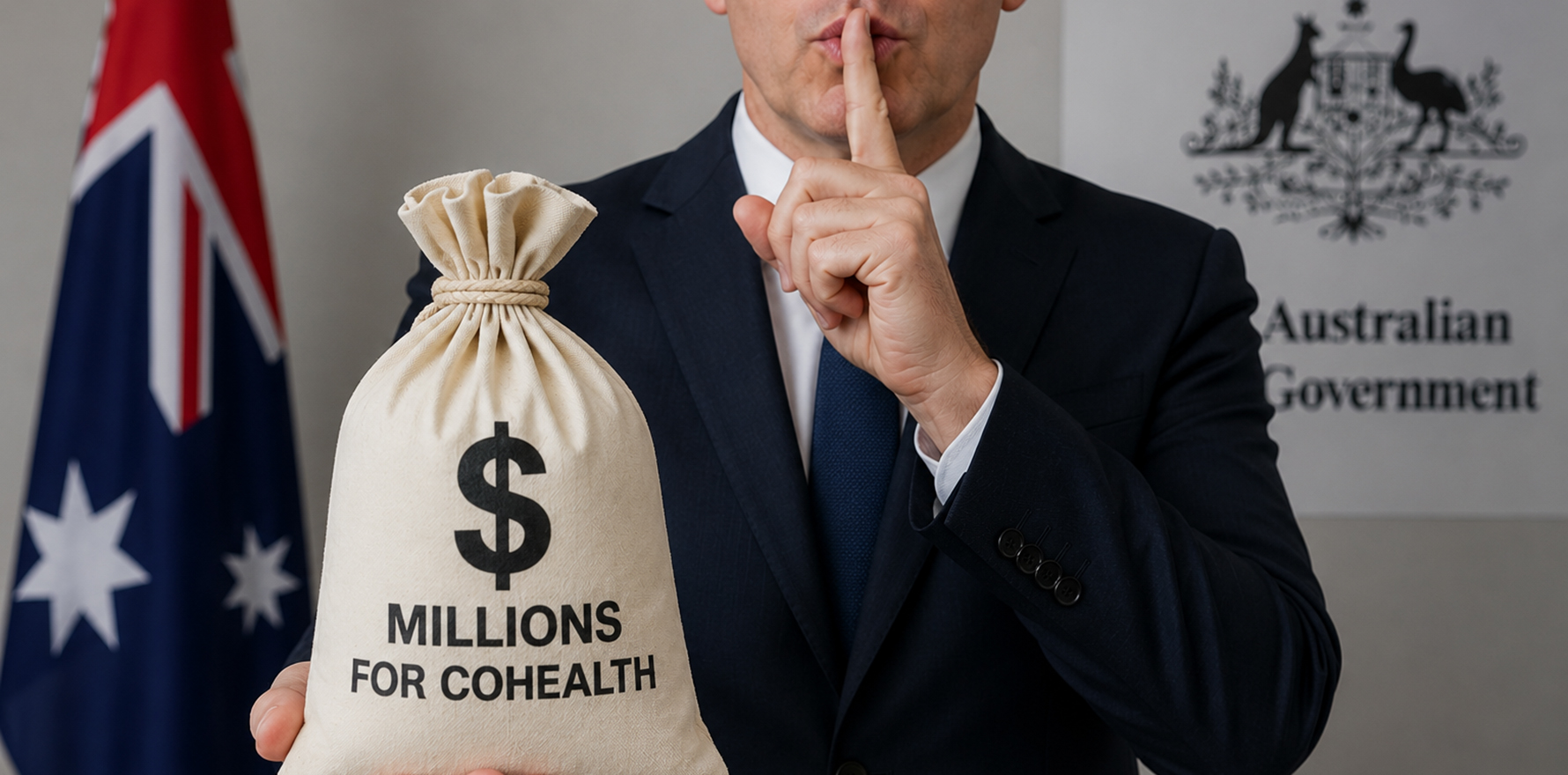
Advocacy groups and doctor representatives have questioned how troubled community health hub Cohealth can be held accountable for the additional $1.5 million given to it if the report which prompted the bailout is not made public.
Last Friday, federal health minister Mark Butler announced the additional funds while referencing an as yet unreleased report from the Stephen Duckett-led review into Cohealth.
With release of the report apparently contingent upon consent from the taxpayer-funded Cohealth, advocates were sceptical about how the organisation could be made to adhere to opaque requirements to strengthen senior management and board governance.
Dr Stephen Alomes said he was concerned that the Cohealth management problems would not be solved until the review report and its recommendations were made public.
“The big questions are how will they be held to account, and how will real change occur given the publicly documented failings of Cohealth management and board?” he said.
In the absence of the full review, community groups continued to demand accountability and transparency.
This article originally ran on TMR’s sister site, Health Services Daily. TMR readers can sign up for a discounted subscription.
The Doctors Reform Society said the communities served by Cohealth had been let down.
“Minister Butler has let down the people of inner Melbourne, and the fact that the report has not been released suggests he has no interest in addressing the underlying funding issue,” said the group’s statement.
“Patients will suffer because of his inaction. General practices in these community health centres may have to restrict services in the future simply to survive financially.”
Dr Antony Bolton, a GP and addiction medicine physician who has previously worked for Cohealth, said Cohealth was “a canary in the coalmine” for GP care delivered through the community health sector.
“The patient cohort is generally more complex and less able to access care elsewhere,” Dr Bolton wrote on LinkedIn.
“Long consults are the norm, and the bolt-on services the community health sector benefits from are essential for this group – they cannot afford the hundreds of dollars a month that is often needed to see allied health and other practitioners.
“But the sector is also dependent on GPs accepting they will earn significantly less than their peers working in mixed-billing or private-billing clinics.
“The income inequality is increasing with time. The government’s changes to bulk billing, including the PIP, have not made much of a dent in this.
“My anecdotal experience is also that the community health sector medical workforce is older than the general GP population, which is already facing a huge retirement crisis in the near future.
“The business model is not sustainable in its current form and will become increasingly difficult for all community health services to maintain.”
Dr Tim Woodruff, president of the DRS, agreed.
By giving another $1.5 million to bail out Cohealth, the federal government was completely ignoring the deeper deficiencies in the funding model for community health, he said.
“An independent panel whose report has not been released would have informed the minister that while Cohealth had governance issues unique to it, adjacent community health centres are running general practices which are not financially viable because of underfunding by the state government, but more importantly because the funding model for such general practices is totally inadequate,” Dr Woodruff told The Medical Republic.
“Currently, some of the GP payments are adjusted to take into account rurality and remoteness. But they’re not at all adjusted for patient need – either the complexity of their disease or the complexity of their presentation.
“The challenge to look after them is much greater than somebody who is a well-educated billionaire in Brighton, but the federal government funds them exactly the same way if they take longer to see the patient.
“The craziness of the situation is that a longer consultation is actually funded less per minute than a short consultation, which is completely against the idea of looking after complicated patients optimally,” he said.
Meanwhile, another comment on a Seek job advert run by Cohealth highlighted the toxic workplace culture at the organisation.
On Friday, TMR reported on comments on the organisation’s Seek Reviews page, including:
- “Poor management, too much focus on expanding as an organisation, severe lack of support”
- “toxic culture, incompetent management”
- “Horrid. I experienced a toxic workplace. Management talk the talk but cannot walk the walk”
- “Management, particularly senior management and executives, and the lack of responsibility and accountability (as many other reviews have stated), which results in a toxic and disconnected workplace.”
Over the weekend, a former employee added their opinion to the rest, saying:
“Management was appallingly toxic. Poor rostering and recruitment practices, nepotism, huge conflicts of interest. Management dismissed staff members’ concerns. Unsafe workplace, staff are blamed following client aggression. If you want to be gaslit, patronised then work here. This organisation is broken.”
Related


TMR asked Cohealth to respond to last week’s report about a toxic culture at Cohealth, their response to calls from the Save Our Community Health group to bring in an administrator and some more information about the CEO recruitment process.
This was their response, attributable to a Cohealth spokesperson:
“On Friday, the Commonwealth government and Cohealth announced a joint funding commitment of $1.5 million each, to ensure our general practice services remain available for Collingwood, Fitzroy, and Kensington communities for 12 months from 31 July 2026.
“This identifies the importance of Cohealth and government continuing to work together on the necessary change and the support required to strengthen the long-term sustainability of services beyond this short-term funding injection.
“Cohealth will work with our communities and clinicians to help co-design the future of local services, with a clear focus on continuity of care, and a stronger, multidisciplinary, and more sustainable model for the communities we serve. The future of services will be shaped by these communities.
“Cohealth is committed to retaining and supporting its 1000-person strong workforce through an inclusive culture where staff are able to bring their whole selves to work, where uniqueness is valued, and people experience a feeling of belonging.
“We’re an organisation that is proud of our workforce diversity and we have a robust program of support and development processes to ensure staff feel valued and supported.
“Cohealth is finalising arrangements to appoint a specialist executive recruitment firm to lead the Chief Executive recruitment process. Other available roles are advertised publicly on Cohealth’s website.”
A public meeting for the Save Our Community Health Group will take place at 10am on Saturday 16 May at the Holy Rosary Catholic Church in Gower St, Kensington.
