

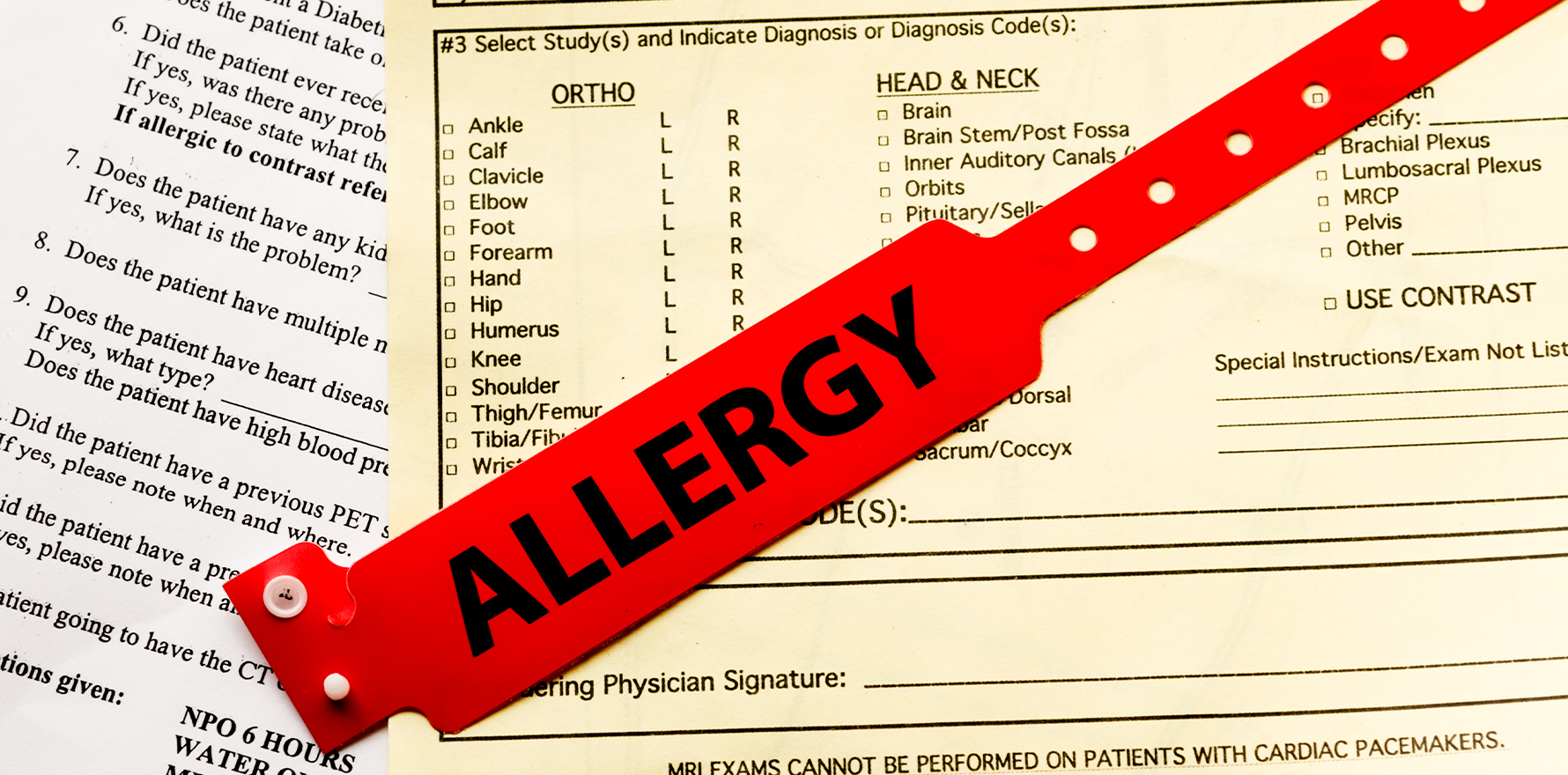
New guidelines empower GPs to tackle millions of potentially incorrect allergy labels, improve antibiotic prescribing and reduce healthcare costs.
New national guidelines will support GPs to assess patients with reported penicillin allergies and identify those suitable for supervised oral challenges in general practice, potentially reducing unnecessary antibiotic use and specialist referrals.
The updated Australasian Society of Clinical Immunology and Allergy (ASCIA) guidelines, developed in collaboration with the National Allergy Centre of Excellence, provide clearer criteria for identifying adults and children at low risk of serious allergic reactions who may be suitable for assessment and delabeling in primary care.
The changes could have significant implications for antibiotic stewardship and healthcare costs, with research suggesting up to nine in 10 Australians who report a penicillin allergy are not actually allergic when properly assessed.
Around 10% of Australians, or approximately 2.8 million people, report a penicillin allergy, although fewer than 1% of the population are thought to be genuinely allergic.
Dr Nick Cooling, GP and chair of the RACGP Specific Interest Group in Allergy, told The Medical Republic the guidelines represented a major shift in the role of general practice in managing penicillin allergy.
“I think the guidelines have significantly updated the 2020 previous set of guidelines in the sense that they’re more standardised, and they’ve now got consumer input, and also a lot more consensus amongst the specialists about the criteria for both assessment and also the delivery of the challenges,” he said.
“They’re much clearer for GPs to make a decision regarding what is a low-risk assessment of penicillin allergy.
“And finally, they do encourage GPs for the first time to make that assessment and then to carry through a low-risk challenge in their practice.”
Dr Cooling said expanding assessment into general practice was essential given the scale of the problem and the limited specialist workforce.
“Unless you scale it up, the 330 immunologists aren’t going to get round to the 2.6 million Australians who reckon they’ve got a penicillin allergy,” he said.
“They realise that there is a resource issue here, and that GPs must be involved in this if we’re going to make an impact on reducing this mislabelling.”
The National Allergy Council, a partnership between ASCIA and Allergy & Anaphylaxis Australia, has launched an awareness campaign encouraging patients to discuss historical penicillin allergy labels with their doctors.
Professor Michaela Lucas, clinical immunology and allergy specialist and co-chair of the council’s Drug Allergy Working Group, said many labels originated from childhood reactions that were never subsequently investigated.
“For many patients, a penicillin allergy has simply followed them through life, sometimes because of a rash that happened as part of an illness when the child was started on penicillin, without ever being properly assessed,” she said.
“We encourage health professionals to consider whether a longstanding penicillin allergy label is still appropriate and, where indicated, start a conversation with their patient about a medical assessment.”
Dr Cooling said incorrect allergy labels could force clinicians to prescribe broader-spectrum antibiotics that were less appropriate for the infection being treated.
This could contribute to antimicrobial resistance, disruption of the microbiome, longer hospital admissions and increased healthcare costs.
“Penicillin is such a good drug. It’s very narrow spectrum. It’s often the first-line drug for many bacterial infections, including respiratory infections,” he said.
“If we can use penicillin more, we’re going to have a lot more appropriately targeted treatment with less side effects to the patient, and it just gives the clinician more options.”
An Australian exploratory economic evaluation has highlighted the potential financial benefits of penicillin allergy delabeling, finding that low-risk hospital patients who underwent assessment and had their allergy label removed spent an average of 4.41 fewer days in hospital and incurred $9468 less in hospital costs than those receiving usual care.
While the findings suggest potential savings from addressing inaccurate allergy labels, the exploratory evaluation does not establish that equivalent savings would be achieved through general practice.
The need for improved allergy assessment has also been highlighted by Western Australian research, co-authored by Professor Lucas, which found that only 9% of health professionals who routinely assessed medication allergies met Australian standards for allergy assessment.
The study also found that clinicians who had recently undertaken penicillin allergy education demonstrated significantly greater knowledge.
Under the new guidelines, GPs can assess a patient’s allergy history and determine whether a supervised oral penicillin challenge is appropriate.
Dr Cooling said the procedure was well within the scope of general practice, although clinicians would need training, appropriate protocols and access to emergency treatment for allergic reactions.
He envisaged patients initially attending a consultation for assessment and risk stratification before returning for a supervised challenge involving one or two doses of penicillin.
The procedure would generally take around 90 minutes, with practice nurses monitoring patients and a GP available to manage any adverse reactions.
“Because it’s low risk, there’s a very low chance of adverse effects. That’s why they’re capable of doing this in the community,” he said.
“Obviously, they need to be aware that there’s a small risk of anaphylaxis, they should be able to manage that.”
He compared the process with other protocol-driven procedures routinely undertaken in general practice, including iron infusions and vaccinations.
However, patients with a history suggesting intermediate or high risk would continue to require specialist assessment, he said.
Dr Cooling said patients with a history of anaphylaxis, particularly within the previous five years, or severe delayed cutaneous adverse reactions would not be suitable for challenges in general practice.
Despite the potential benefits, Dr Cooling warned that funding could be a significant obstacle to widespread implementation.
There is currently no dedicated Medicare Benefits Schedule item for penicillin allergy challenges in general practice, although ASCIA has submitted an application seeking new items for antibiotic challenges.
“At the moment, there’s no specific MBS item number for it,” he said.
“However, ASCIA has applied to the MBS to get a set of item numbers for antibiotic challenges. Hopefully by the end of next year sometime.”
He said practices could potentially charge existing consultation items alongside a private fee, but this would create additional costs for patients and could discourage participation.
“If you really want to make this impact, you need to get people paid for it,” he said.
Dr Cooling expected implementation to be gradual, with practices initially focusing on staff training, establishing clinical protocols and determining how to accommodate challenges within existing workflows.
The new guidelines are accompanied by online training and practical resources to support GPs in taking allergy histories, identifying low-risk patients, making appropriate referrals and documenting allergy status.
GPs and rural generalists can also access free specialist advice through the National Allergy Council’s allergy assist platform.
Dr Cooling suggested practices could eventually use their clinical software to identify patients with penicillin allergy labels and undertake systematic reviews as part of quality improvement activities.
GPs could work with practice nurses to assess a manageable number of patients each year, potentially incorporating the activity into continuing professional development requirements.
Related



However, he warned that successfully removing an incorrect allergy label was only part of the challenge.
Ensuring the updated information followed patients between general practice, hospitals and specialist services would be critical to preventing inaccurate labels from reappearing.
“The problem is they don’t stick,” he said.
“They go to a hospital and they’ll say, ‘Well, I don’t know anything about the general practice doing the oral challenge. We’re still thinking the person is allergic.'”
Dr Cooling recommended using multiple approaches to document successful challenges, including updating My Health Record, sending correspondence to relevant hospital clinics and providing patients with a wallet card confirming their negative challenge.
“I think there’s multiple methods. I think there’s no foolproof method,” he said.
He said the initiative also presented an opportunity to strengthen collaboration between general practice and specialist immunology services.
With GPs managing appropriate low-risk patients, specialist services could concentrate on more complex cases.
“I think this is one of the first examples of how we can work together to make a bigger impact by scaling up an initiative by using GPs,” he said.
He also called for research to evaluate the guidelines’ implementation and measure whether increased delabeling translated into improved prescribing, reduced antimicrobial resistance, and healthcare savings.
“I think we should be tracking that actually, because I think we’ll be able to look at some milestones over the next year or so, as to how much GPs are implementing this new guideline,” he said.
“It’s all very good to say it feels great, we’re doing all this wonderful stuff, but if we don’t see some hard outcomes, we’ve missed an opportunity.”
While he hoped to see measurable progress within two years, Dr Cooling said meaningful uptake would likely depend on securing appropriate Medicare funding and support from professional organisations.
He said the initiative demonstrated the value of shared care between GPs and immunologists, particularly as the health system faced growing financial pressures.
“This is about saving Australia’s very limited health budget, but also improving patient care,” he said.
The new guidelines and accompanying resources are available through the National Allergy Council’s penicillin allergy website.
