


The department denies that two substantive changes it made to the NDIS impact analysis will affect the result of the overall analysis.
The credibility of the federal government’s narrative about NDIS reforms has been undercut by an update to its own impact analysis, which the Department of Health, Disability and Ageing has “sneakily” published.
The impact analysis underpinning the government’s proposed National Disability Insurance Scheme reforms was updated twice – once on 6 June and once again on 1 July – making at least two substantive changes to the document without an accompanying public explanation of what was revised.
The DoHDA, for its part, claims the updates are “administrative only”.
The updated impact analysis, published on the Office of Impact Analysis website as “Impact Analysis (01.07.26 Update)”, retains a May 2026 cover date but changes both narrative text and statistical information contained in the original document.
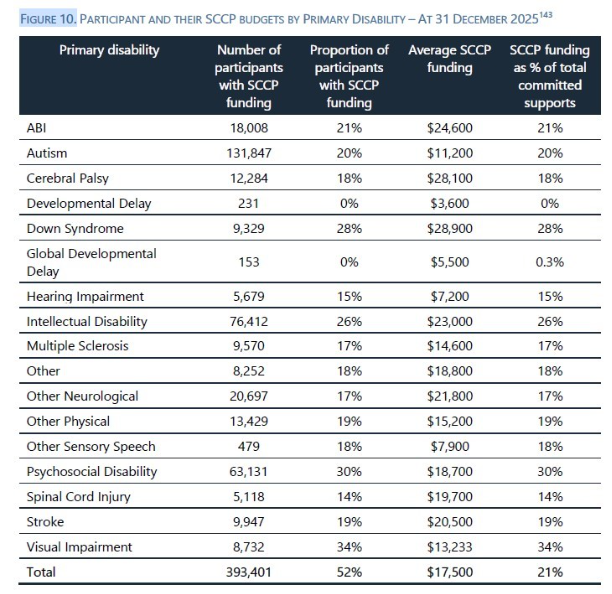
The updated document corrects a table (Figure 10, page 60) describing participant access to Supported Capacity and Capability Program (SCCP) funding.
In the original version (below), the table understated the proportion of participants with SCCP funding across multiple disability cohorts. For example, it reported that 21% of participants with acquired brain injury (ABI) received SCCP funding.
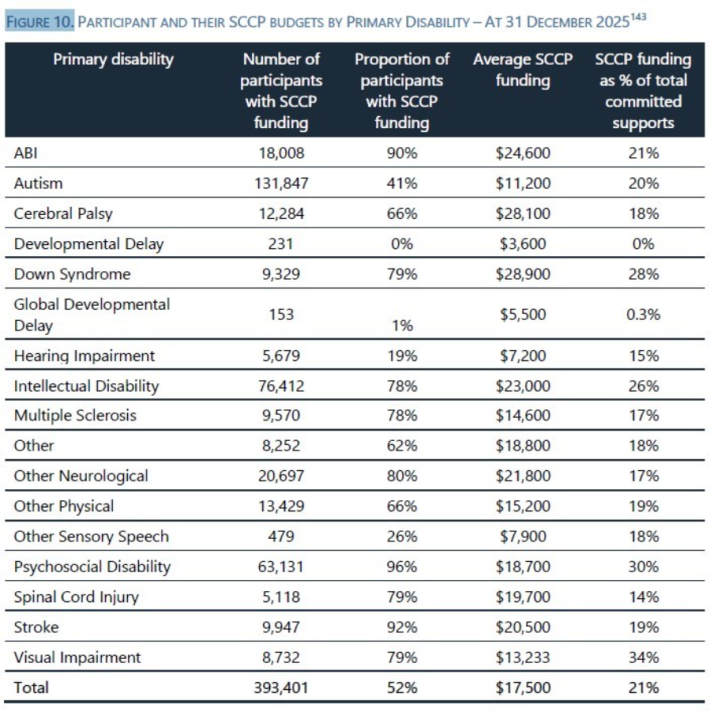
The updated version (below) revises that figure to 90%.
Similar changes were made across a range of disability categories, including autism, psychosocial disability, stroke and intellectual disability, while participant numbers, average SCCP funding, and the proportion of total committed supports remained unchanged.
The changes suggest that the number of participants who will be impacted by the department’s proposed 50% cut to SCCP funding is far more than they admitted to when the bill was first put to parliament.
Opposition spokesperson for the NDIS and disability Melissa McIntosh told TMR that:
“The Albanese Labor government has sneakily published an update to the impact analysis of its NDIS reforms which show a significant increase in the number of participants which will be impacted by these cuts.
“The initial impact analysis showed 21% of participants with an acquired brain injury have SCCP funding that would be reduced under these reforms – this has now increased to 90%.
“Participants with cerebral palsy has increased from 18% to 66% and people with Down syndrome who would have their plans cut was 28% and is now 79%.
“Across each and every disability category these numbers have significantly increased – this is a completely different set of data than what was originally presented and not a word from the minister.
“What confidence can Australians have that the government will get these reforms right, when it can’t even get accurate data on how many people will be impacted?
“For a government that was elected on a promise of transparency, the Albanese Labor government has proven to be anything but, and the minister needs to explain why this data was published under the cloak of darkness and exactly how many people will be impacted by these changes.”
The other revision is a change to one of the impact analysis’ central claims about fraud among NDIS plan managers.
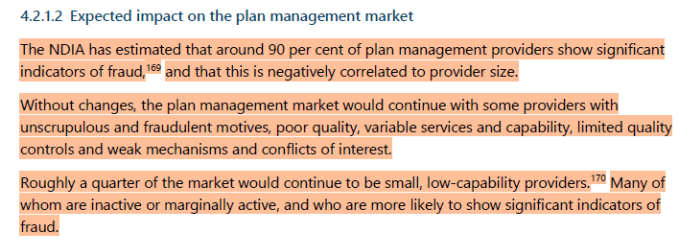
The original May version stated:
“The NDIA has estimated that around 90 per cent of plan management providers show significant indicators of fraud, and that this is negatively correlated to provider size.”
The updated version now states:
“The NDIA has estimated that around 90 per cent of plan management providers who service fewer than 100 participants show significant indicators of potential fraud or non-compliance.”
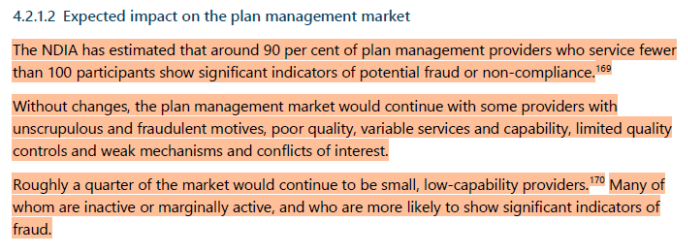
The revised wording narrows the claim to smaller plan management providers and replaces “indicators of fraud” with “indicators of potential fraud or non-compliance”.
This weakens the government’s ongoing narrative that fraud is a major driver of the NDIS’ cost blowouts.
The Medical Republic asked DoHDA several questions, including how the errors were found, whether the ministers and Office of Impact Analysis were informed and asked the government to justify how the errors made no bearing on the conclusion made in the impact assessment.
A department spokesperson responded:
“The Department of Health, Disability and Ageing and the National Disability Insurance Agency identified the errors after publication of the Impact Analysis, and notified the Office of Impact Analysis as soon as possible.
Related



“The errors are administrative only, and do not affect the results of the overall analysis which correctly identified the overall number of participants affected.
“A table with the corrected data was proactively tabled by the Department at Senate Estimates, and published by the Office of Impact Analysis shortly after.
“As is the standard process, corrections were noted on the Office of Impact Analysis website and in the Impact Assessment itself.”
TMR sister site Health Services Daily identified the changes after comparing the original May impact analysis with the updated version published on the Office of Impact Analysis website.
The OIA acknowledged the corrections, saying that the department identified errors in the percentage estimates in Figure 10 following the decision, and “these errors were corrected on 9 June 2026”.
“The Department advised OIA that this error had no bearing on the conclusions made in the IA,” said the OIA.
“An additional error was identified by the Department on pages 17 and 72 regarding fraud indicators, and this error was corrected on 1 July 2026.”
The impact analysis was prepared by the Department of Health, Disability and Ageing to support the government’s proposed NDIS reforms and assessed by the Office of Impact Analysis.
TMR has Opposition health spokesperson Senator Anne Ruston, independent Senator David Pocock, Greens disability spokesperson Senator Jordon Steele-John and Senator Penny Allman-Payne.
This story will be updated as responses reach us.
