

The anxiety about AI and the reliance on health technologies is founded in both our fears and fascination of living without them.
Dystopian literature and films are among the most popular of genres.
In one vision of dystopia, humanity has been all but wiped out and the future relies on uniquely attractive and resourceful young men and women to find scarce supplies. They survive without digital devices and modern health technologies.
In the other concept, humans are controlled by medicines, machines and medical process. “Health” is a euphemism for evil; it’s a fearful mechanism of suppression.
One reason for the popularity of dystopian scenarios is that our future either doesn’t involve technology; or humankind defeats technology.
Typically, a few heroes survive the apocalypse without digital devices, internet or AI.
What we call “healthcare” today is tomorrow’s weapon of choice for your vicious overlord or ruling master.
Perversely, we humans delight in reading and watching about a world where digital health and health technologies are turned against us or used to coerce, harm and control us; or else they don’t exist and the hero’s ability to heal thyself and medicate others saves the world.
In The Handmaid’s Tale (1985), Margaret Atwood’s sensational novel (and later, TV series), reproductive medicine is used to control women’s bodies and fertility.
Medicine and reproduction are institutions manipulated by a totalitarian state.
In A Clockwork Orange (1962), Anthony Burgess’ disturbing novel (made into an even more disturbing movie), Alex’s free will and behaviour is controlled by medical practitioners and health scientists, with frightening effect.
The wonderfully entertaining movie Gattaca (1997) paints a future where genetic information and advanced healthcare technologies are used to determine social status and employment. DNA becomes terrifying medical data, used to identify, judge and exclude people.
Never Let Me Go by Kazuo Ishiguro (2005) likewise depicts medical technology as an evil. The novel, set in a seemingly serene English boarding school, shocks us when we discover it’s an organ harvesting factory using human clones. Those evil medical researchers …
Children of Men, written by PD James in 1992 and brilliantly filmed by Alfonso Cuarón in 2006, foretells of a future facing extinction by infertility; which medical science cannot prevent. Pregnancy is a miracle and assumes sinister significance in a Britain ruled as a police state.
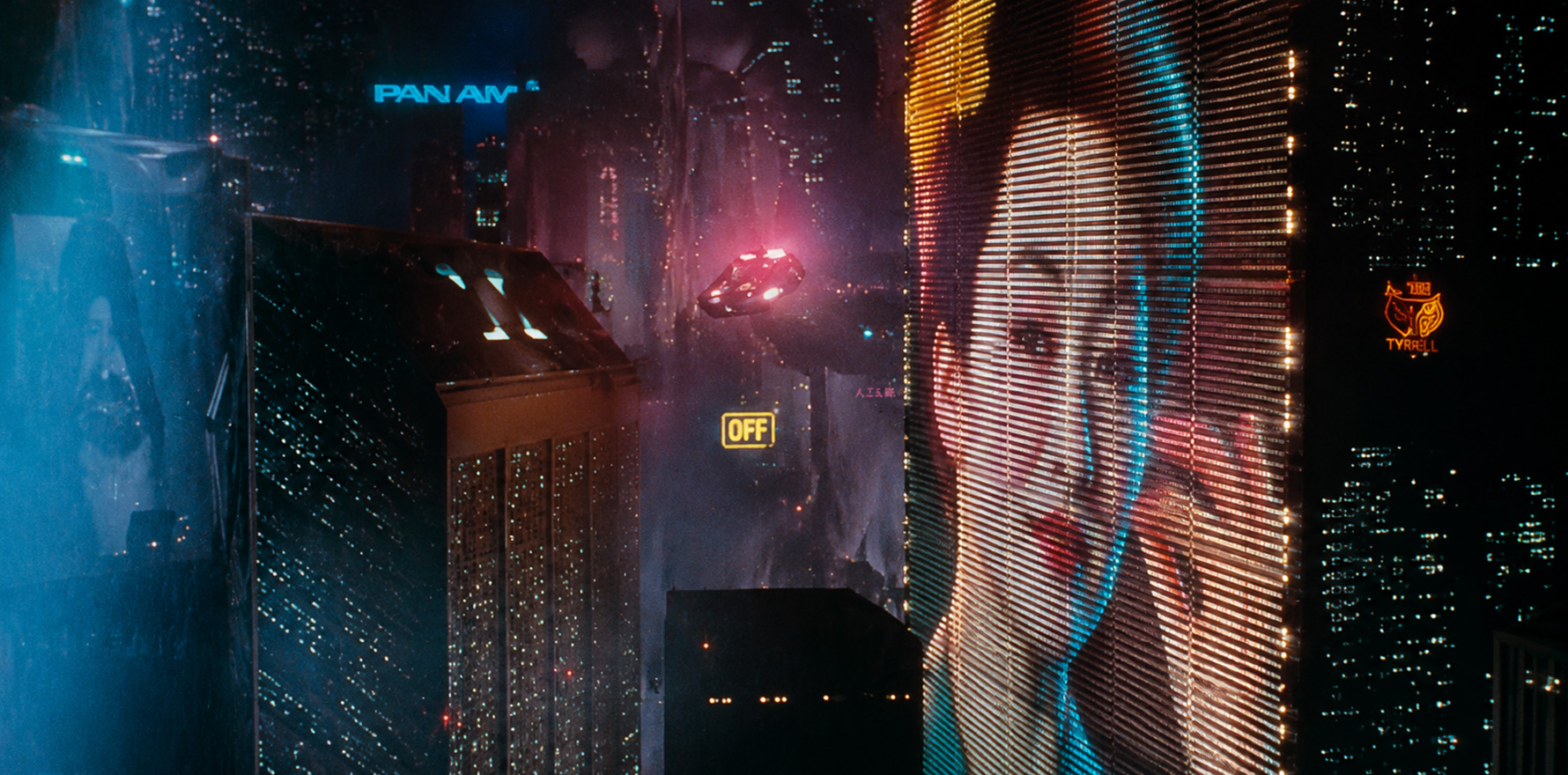
In a not similar scenario Blade Runner(1982) visualises a decaying, corporate-controlled Los Angeles, where replicants are hunted by violent authorities. The deliberately opaque distinction between humans and biotechnology gives the film its distinctive edge, and many debates about what is human and what is, essentially, AI controlled and engineered beings.
In these works, and others, medical technologies and sciences are instruments to be feared; tools of fascist political structures, almost always used to control and repress, especially women and those with a rebellious nature.
The other dystopian scenario is a future without healthcare, digital or otherwise; and definitely no AI.
The Road by Cormac McCarthy (2006, filmed in 2009), arguably one of the most important novels of the modern era, sets us in an America destroyed for reasons never explained. A father and son attempt to navigate their way to safety, armed only with a shopping trolley of their worldly possessions.
Deaths occur from what are routine injuries today. The lack of medical care adds to the tension.
As with the Mad Max series of movies, the future is devoid of hospitals, GPs (no urgent care clinics), antibiotics, referrals or specialists.
The rightly acclaimed novel (and also TV series) Station Eleven (2014) by the talented Emily St John Mandel is set in a world all but obliterated when a deadly contagion (the Georgia Flu) reaches America.
Station Eleven follows a small group after the complete breakdown of social and institutional structures. Once the pandemic overwhelms society, hospitals, doctors, drugs and emergency services, systems rapidly become unsustainable.
The protagonists inhabit a land that’s lost all health services and access to pharmaceuticals and basic health care. There’s no petrol (transport), electricity (refrigeration), communications (phones or landlines) and almost no qualified medical practitioners.
The Mad Max series, each version set in differingpost-apocalyptic wastelands controlled by tyrannical warlords, follows similar scenarios – in the future, humanity will have to survive without organised, modern medical care and reproduction will be more stone age than digital health.
We never know how Imperator Furiosa (Fury Road, 2015)builds her mechanical prosthetic arm in a world without Medicare, or specialists, or a medical regulator, but she does show resourcefulness.
We’re fascinated because it’s an insight into the pre-modern world. At Day’s Close: Night in Times Past by A Roger Ekirch (2004) is a non-fiction account covering illness and injury when candlelight was the only illumination after dark.
It’s rebelliously naughty laughing about how many people died falling into holes, ditches, down wells, or off cliffs while walking after sunset; and how many men died from being drunk in the dark.


Beyond the physical calamities posed by dystopian works, two classic dystopian novels – 1984 by George Orwell (1949), and Brave New World by Aldous Huxley (1932) focus on psychological manipulation and mental torture as a means of control and coercion.
In 1984, Winston is not a well man, physically. The use of psychological weapons is more confronting because there’s no medical care available.
Psychiatry is an obvious “evil” for dystopia. Mind control has been a staple of science fiction and even thrillers like The Manchurian Candidate (by Richard Condon, 1962) when health scientists used brainwashing as a weapon.
In Fahrenheit 451 (1953), author Ray Bradbury writes of a world that offers modern medical care and technological advancement; yet, society is meaningless, an emotional void where reading and knowledge is a crime. It’s eerily relevant today.
Of course, in the hugely popular movie series The Hunger Games (based on the 2008 book by Suzanne Collins), the absence of health and medical care is a deliberate tactic by the malevolent government to ensure combatants fight to the death. Again, the denial of health and medical treatment is a tool for control and coercion.
Dystopian novels and films brings to the fore an existential question – does living (surviving) have purpose and meaning without healthcare; and what is the role of healing and medicating when social structures, communities and relationships no longer exist?
To what extent does modern healthcare rely on medicine and medical practitioners; and can healthcare be provided when the structures of civilisation are taken from us?
Our greatest fear, exploited by horror and dystopian genres, is living in a world where basic injuries and diseases once again become deadly.
They highlight human frailty.
We’re perversely fascinated by watching and reading just how quickly complex, expensive digital health systems can collapse.
The anxiety about AI and the reliance on health technologies is founded in both our fears and fascination of living without them.
Simon Tatz was director of communications for Mental Health Australia, director of policy for Mental Health Victoria and co-author of The Sealed Box of Suicide: The Contexts of Self-Death. Most recently he was the AIDH’s general manager of policy, advocacy and workforce advancement.
